

Biblical Engagement eBooks
Get to grips with the Bible through our author's wisdom and insight. Struggling with a particular book of the Bible? Wanting some insights for a sermon? Looking for tips to help you engage with the Bible? Look no further.
You might also be interested in our Bible reading notes available in both print and digital.
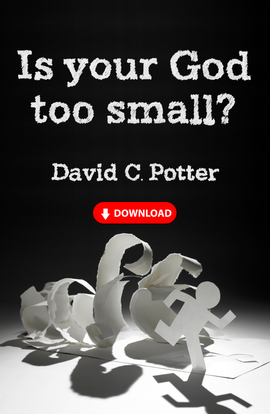
{"id":14779701690748,"title":"Is Your God Too Small?: Enlarging our vision in the face of life's struggles","handle":"is-your-god-too-small-enlarging-our-vision-in-the-face-of-lifes-struggles-1","description":"\u003cp\u003e\u003cspan\u003e\u003cspan style=\"color: rgb(255, 42, 0);\"\u003e\u003cstrong\u003eDigital eBook Only - \u003c\/strong\u003e\u003c\/span\u003e\u003c\/span\u003eJob struggled, as we do, with huge questions - his own and the world's. He and his friends looked for an answer in the past, but discovered that the answer lay elsewhere - in God himself, and in the divine presence in his life.\u003c\/p\u003e\n\u003cp\u003eIn an accessible way, David Potter opens up fresh insight into the book of Job, with a different perspective on our sufferings and perhaps on God.\u003c\/p\u003e\n\u003ch5\u003eEndorsements\u003c\/h5\u003e\n\u003cp\u003eI have loved reading David Potter's book on Job. It reads really well and gives the most accessible introduction to the book that I've ever come across. I will gladly commend it to others. The author's warm evangelical heart and pastoral sensitivity have made it an extremely valuable volume.\u003cbr\u003e\u003cstrong\u003eJonathan Edwards, formerly General Secretary of The Baptist Union\u003c\/strong\u003e\u003c\/p\u003e\n\u003cp\u003eDavid Potter has had another book published and while, regrettably, I am not an avid reader ... I have to say this is a great read... Yes, it is about suffering, poor ol' Job and his 'helpful' friends, but it's more about Job's - and our - great God. It is very engaging. I am nearly at the end of the book and can (must) recommend it to you. For those of you who know David, you will be able to 'hear him' as you read.\u003cbr\u003e\u003cstrong\u003eDavid Bentley, formerly Chair of Trustees of Prospects and Trustee of Livability\u003c\/strong\u003e\u003c\/p\u003e\n\u003cp\u003eI have greatly enjoyed and profited from reading 'Is your God too small?', and have recommended it to several people. David Potter cuts through some of the detail to get to the heart of what the book is about, and its applicability to our contemporary culture - clearly the fruit of much reflection and prayer. Thank you.\u003cbr\u003e\u003cstrong\u003ePJL\u003c\/strong\u003e\u003c\/p\u003e\n\u003ch5\u003eAuthor info\u003c\/h5\u003e\n\u003cp\u003eDavid Potter is a Baptist pastor. He was the co-editor of The Evangelical Times, and one of the founding directors of Evangelicals Now. However, his life's work until early retirement has been as the founder and director of Prospects for people with learning disabilities. David received an MBE in 2002 in recognition of his services in the field of Learning Disabilities. \u003c\/p\u003e\n\u003ch5\u003eMedia reviews\u003c\/h5\u003e\n\u003cp\u003e\u003cstrong\u003eThe Reader, Spring 2019. Review by Claire Didsbury\u003c\/strong\u003e\u003c\/p\u003e\n\u003cp\u003ePotter takes us through the book of Job, chapter by chapter, trying to answer the question: 'where is wisdom to be found?' This is not a scholarly book, but a practical and accessible one that encourages us to enlarge our view of God and so find God's presence and comfort when our lives get difficult. Potter was a Baptist pastor and became one of the founding directors of 'Evangelicals Now'. He received an MBE for his work with Prospects, a charity that works with people with learning difficulties, and uses stories from his own life to illustrate some of his points. One of his key verses is Ephesians 1:11, ' works out everything in conformity with the purposes of his will'. He encourages us to accept whatever God sends into our lives, continuing to trust in his loving purposes for us and those dear to us, even though they may be inscrutable to us. Wisdom is to be found in the fear of the Lord. But for him the answer to these questions is finally to be found in contemplating the cross.\u003c\/p\u003e\n\u003cp\u003e\u003cem\u003eReview by Claire Didsbury\u003c\/em\u003e\u003c\/p\u003e\n\u003cp\u003e\u003cstrong\u003e'evangelicals now', February 2019. Review by Louise Morse\u003c\/strong\u003e\u003c\/p\u003e\n\u003cp\u003eIs there anyone who hasn't known suffering? Who hasn't asked, like Job, 'where is God in this?'\u003c\/p\u003e\n\u003cp\u003eDavid Potter, retired pastor and founder of Prospects, the charity that cares for people with learning disabilities, studies the book of Job to 'enlarge our view of God and his goodness in difficult times', making it a teaching book with learning topics listed beneath chapter headings, and 'how to use this book' instructions on page six. It's excellent material for house groups.\u003c\/p\u003e\n\u003cp\u003eNot much is known about Job, except that he was a prosperous businessman and eminent civic leader, who excelled in charitable works and, according to God himself, was 'an exceptionally good man'. He says as much to Satan, who responds by accusing Job of acting out of self-interest. God responds by allowing Satan to ruin Job in every sense, to prove that Job cherished him for himself, not merely his blessings. Perhaps Job would have felt the unfairness even more deeply, suggests the author, had he known. Readers may feel that, on the other hand, Job may have felt strengthened in knowing that God could trust him.\u003c\/p\u003e\n\u003cp\u003eJob's was a wisdom-based society where there were regular council meetings, suggesting democracy, and with moral values where the elderly were revered (Job 12:12, 32:4). Yet Job's friends' monologues reflect post-truth relativism rather than wisdom, looking for facts to fit their theory of cause and effect, i.e. that Job was suffering because of hidden sin. A question David Potter asks is: 'Should Job have made more effort to show his appreciation for the fact that his friends were ... trying to help him?' The author's reflections and questions reflect discussion throughout.\u003c\/p\u003e\n\u003cp\u003e'The loss Job felt most keenly... was the companionship of God.' He longs to see him, to hear from him. Then he has a lightening flash of revelation, in which he sees God as his Redeemer (Job 19:23-27). In that moment, Potter writes, he 'knows that he has a future... he will see God.' Eventually God speaks, revealing his immeasurable vastness by taking Job on a virtual tour of creation. 'Now I see him,' says Job (Job 42:5). 'For Job to find peace he had to see the wisdom and power of God,' writes Potter, 'and by that route he found the grace to trust his covenant-keeping God.'\u003c\/p\u003e\n\u003cp\u003eThe book is packed with references, both biblical and literary. It's a pleasing read, though not everyone will agree with everything the author posits. Nevertheless, it will make you think.\u003c\/p\u003e\n\u003cp\u003e\u003cem\u003eReview by Louise Morse, Pilgrims' Friend Society\u003c\/em\u003e\u003c\/p\u003e\n\u003chr\u003e\n\u003cp\u003eReview by\u003cem\u003e \u003c\/em\u003eLyndon Bowring, Chairman, CARE\u003c\/p\u003e\n\u003cp\u003eI confess, that other than dipping into it as part of my regular Bible reading, Job is not a book I've ever sought to study in any depth. But when David asked me to read \u003cem\u003eIs your God too small? \u003c\/em\u003eI found myself quickly captivated by his exposition of this unique part of Scripture. Drawing from his theological studies, pastoral experience and times of testing in his and his wife's personal lives, David examines the question that has been asked for millennia: 'Why does a so-called God of love allow such suffering in the world?' He presents us with inspiring reassurances about the sovereignty of God and His deep desire to have a relationship with each person he has made.\u003c\/p\u003e\n\u003cp\u003eBeginning with the intriguing scenes where Satan and God discuss this blameless man's life, and what it would take for him to reject his faith, David takes us through Job's despair and deep suffering and makes some fascinating comments about his friends' long speeches and Job's response. The climax comes with God's majestic declarations of His omnipotence, and wisdom that surpasses human understanding. Every stage of our journey through\u003cem\u003e Is your God too small?\u003c\/em\u003e includes New Testament references that point to Jesus and help us to grasp what it means to 'fear God - which is the beginning of wisdom.' It has certainly helped me to appreciate this ancient story in a whole new way.\u003c\/p\u003e\n\u003cp\u003eIf, like me, you've rather neglected the Book of Job, do yourself a favour and read this book. Instead of asking that question 'Why?' we can move on in hope to wonder 'For what purpose?' does God allow the dark times of suffering to come into all our lives. God's sovereign greatness is far above our comprehension and His purposes stretch beyond the preoccupations of our times and individual lives. Yet, as David gently points out again and again, He tenderly loves us through it all.\u003c\/p\u003e\n\u003cp\u003e\u003cem\u003eReview by Lyndon Bowring\u003c\/em\u003e\u003c\/p\u003e\n\u003cp\u003e \u003c\/p\u003e","published_at":"2024-10-30T10:48:31+00:00","created_at":"2024-10-30T10:47:38+00:00","vendor":"David Potter","type":"eBook","tags":["Biblical engagement","Glassboxx","Jul-18","Pastoral care"],"price":899,"price_min":899,"price_max":899,"available":true,"price_varies":false,"compare_at_price":null,"compare_at_price_min":0,"compare_at_price_max":0,"compare_at_price_varies":false,"variants":[{"id":53604845846908,"title":"eBook","option1":"eBook","option2":null,"option3":null,"sku":"9780857466341","requires_shipping":false,"taxable":false,"featured_image":null,"available":true,"name":"Is Your God Too Small?: Enlarging our vision in the face of life's struggles - eBook","public_title":"eBook","options":["eBook"],"price":899,"weight":189,"compare_at_price":null,"inventory_management":"shopify","barcode":"9780857466341","requires_selling_plan":false,"selling_plan_allocations":[]}],"images":["\/\/www.brfonline.org.uk\/cdn\/shop\/files\/303.png?v=1730980306","\/\/www.brfonline.org.uk\/cdn\/shop\/files\/304.png?v=1730980344"],"featured_image":"\/\/www.brfonline.org.uk\/cdn\/shop\/files\/303.png?v=1730980306","options":["Format"],"media":[{"alt":null,"id":63001482985852,"position":1,"preview_image":{"aspect_ratio":0.652,"height":2000,"width":1303,"src":"\/\/www.brfonline.org.uk\/cdn\/shop\/files\/303.png?v=1730980306"},"aspect_ratio":0.652,"height":2000,"media_type":"image","src":"\/\/www.brfonline.org.uk\/cdn\/shop\/files\/303.png?v=1730980306","width":1303},{"alt":null,"id":63001491308924,"position":2,"preview_image":{"aspect_ratio":0.652,"height":2000,"width":1303,"src":"\/\/www.brfonline.org.uk\/cdn\/shop\/files\/304.png?v=1730980344"},"aspect_ratio":0.652,"height":2000,"media_type":"image","src":"\/\/www.brfonline.org.uk\/cdn\/shop\/files\/304.png?v=1730980344","width":1303}],"requires_selling_plan":false,"selling_plan_groups":[],"content":"\u003cp\u003e\u003cspan\u003e\u003cspan style=\"color: rgb(255, 42, 0);\"\u003e\u003cstrong\u003eDigital eBook Only - \u003c\/strong\u003e\u003c\/span\u003e\u003c\/span\u003eJob struggled, as we do, with huge questions - his own and the world's. He and his friends looked for an answer in the past, but discovered that the answer lay elsewhere - in God himself, and in the divine presence in his life.\u003c\/p\u003e\n\u003cp\u003eIn an accessible way, David Potter opens up fresh insight into the book of Job, with a different perspective on our sufferings and perhaps on God.\u003c\/p\u003e\n\u003ch5\u003eEndorsements\u003c\/h5\u003e\n\u003cp\u003eI have loved reading David Potter's book on Job. It reads really well and gives the most accessible introduction to the book that I've ever come across. I will gladly commend it to others. The author's warm evangelical heart and pastoral sensitivity have made it an extremely valuable volume.\u003cbr\u003e\u003cstrong\u003eJonathan Edwards, formerly General Secretary of The Baptist Union\u003c\/strong\u003e\u003c\/p\u003e\n\u003cp\u003eDavid Potter has had another book published and while, regrettably, I am not an avid reader ... I have to say this is a great read... Yes, it is about suffering, poor ol' Job and his 'helpful' friends, but it's more about Job's - and our - great God. It is very engaging. I am nearly at the end of the book and can (must) recommend it to you. For those of you who know David, you will be able to 'hear him' as you read.\u003cbr\u003e\u003cstrong\u003eDavid Bentley, formerly Chair of Trustees of Prospects and Trustee of Livability\u003c\/strong\u003e\u003c\/p\u003e\n\u003cp\u003eI have greatly enjoyed and profited from reading 'Is your God too small?', and have recommended it to several people. David Potter cuts through some of the detail to get to the heart of what the book is about, and its applicability to our contemporary culture - clearly the fruit of much reflection and prayer. Thank you.\u003cbr\u003e\u003cstrong\u003ePJL\u003c\/strong\u003e\u003c\/p\u003e\n\u003ch5\u003eAuthor info\u003c\/h5\u003e\n\u003cp\u003eDavid Potter is a Baptist pastor. He was the co-editor of The Evangelical Times, and one of the founding directors of Evangelicals Now. However, his life's work until early retirement has been as the founder and director of Prospects for people with learning disabilities. David received an MBE in 2002 in recognition of his services in the field of Learning Disabilities. \u003c\/p\u003e\n\u003ch5\u003eMedia reviews\u003c\/h5\u003e\n\u003cp\u003e\u003cstrong\u003eThe Reader, Spring 2019. Review by Claire Didsbury\u003c\/strong\u003e\u003c\/p\u003e\n\u003cp\u003ePotter takes us through the book of Job, chapter by chapter, trying to answer the question: 'where is wisdom to be found?' This is not a scholarly book, but a practical and accessible one that encourages us to enlarge our view of God and so find God's presence and comfort when our lives get difficult. Potter was a Baptist pastor and became one of the founding directors of 'Evangelicals Now'. He received an MBE for his work with Prospects, a charity that works with people with learning difficulties, and uses stories from his own life to illustrate some of his points. One of his key verses is Ephesians 1:11, ' works out everything in conformity with the purposes of his will'. He encourages us to accept whatever God sends into our lives, continuing to trust in his loving purposes for us and those dear to us, even though they may be inscrutable to us. Wisdom is to be found in the fear of the Lord. But for him the answer to these questions is finally to be found in contemplating the cross.\u003c\/p\u003e\n\u003cp\u003e\u003cem\u003eReview by Claire Didsbury\u003c\/em\u003e\u003c\/p\u003e\n\u003cp\u003e\u003cstrong\u003e'evangelicals now', February 2019. Review by Louise Morse\u003c\/strong\u003e\u003c\/p\u003e\n\u003cp\u003eIs there anyone who hasn't known suffering? Who hasn't asked, like Job, 'where is God in this?'\u003c\/p\u003e\n\u003cp\u003eDavid Potter, retired pastor and founder of Prospects, the charity that cares for people with learning disabilities, studies the book of Job to 'enlarge our view of God and his goodness in difficult times', making it a teaching book with learning topics listed beneath chapter headings, and 'how to use this book' instructions on page six. It's excellent material for house groups.\u003c\/p\u003e\n\u003cp\u003eNot much is known about Job, except that he was a prosperous businessman and eminent civic leader, who excelled in charitable works and, according to God himself, was 'an exceptionally good man'. He says as much to Satan, who responds by accusing Job of acting out of self-interest. God responds by allowing Satan to ruin Job in every sense, to prove that Job cherished him for himself, not merely his blessings. Perhaps Job would have felt the unfairness even more deeply, suggests the author, had he known. Readers may feel that, on the other hand, Job may have felt strengthened in knowing that God could trust him.\u003c\/p\u003e\n\u003cp\u003eJob's was a wisdom-based society where there were regular council meetings, suggesting democracy, and with moral values where the elderly were revered (Job 12:12, 32:4). Yet Job's friends' monologues reflect post-truth relativism rather than wisdom, looking for facts to fit their theory of cause and effect, i.e. that Job was suffering because of hidden sin. A question David Potter asks is: 'Should Job have made more effort to show his appreciation for the fact that his friends were ... trying to help him?' The author's reflections and questions reflect discussion throughout.\u003c\/p\u003e\n\u003cp\u003e'The loss Job felt most keenly... was the companionship of God.' He longs to see him, to hear from him. Then he has a lightening flash of revelation, in which he sees God as his Redeemer (Job 19:23-27). In that moment, Potter writes, he 'knows that he has a future... he will see God.' Eventually God speaks, revealing his immeasurable vastness by taking Job on a virtual tour of creation. 'Now I see him,' says Job (Job 42:5). 'For Job to find peace he had to see the wisdom and power of God,' writes Potter, 'and by that route he found the grace to trust his covenant-keeping God.'\u003c\/p\u003e\n\u003cp\u003eThe book is packed with references, both biblical and literary. It's a pleasing read, though not everyone will agree with everything the author posits. Nevertheless, it will make you think.\u003c\/p\u003e\n\u003cp\u003e\u003cem\u003eReview by Louise Morse, Pilgrims' Friend Society\u003c\/em\u003e\u003c\/p\u003e\n\u003chr\u003e\n\u003cp\u003eReview by\u003cem\u003e \u003c\/em\u003eLyndon Bowring, Chairman, CARE\u003c\/p\u003e\n\u003cp\u003eI confess, that other than dipping into it as part of my regular Bible reading, Job is not a book I've ever sought to study in any depth. But when David asked me to read \u003cem\u003eIs your God too small? \u003c\/em\u003eI found myself quickly captivated by his exposition of this unique part of Scripture. Drawing from his theological studies, pastoral experience and times of testing in his and his wife's personal lives, David examines the question that has been asked for millennia: 'Why does a so-called God of love allow such suffering in the world?' He presents us with inspiring reassurances about the sovereignty of God and His deep desire to have a relationship with each person he has made.\u003c\/p\u003e\n\u003cp\u003eBeginning with the intriguing scenes where Satan and God discuss this blameless man's life, and what it would take for him to reject his faith, David takes us through Job's despair and deep suffering and makes some fascinating comments about his friends' long speeches and Job's response. The climax comes with God's majestic declarations of His omnipotence, and wisdom that surpasses human understanding. Every stage of our journey through\u003cem\u003e Is your God too small?\u003c\/em\u003e includes New Testament references that point to Jesus and help us to grasp what it means to 'fear God - which is the beginning of wisdom.' It has certainly helped me to appreciate this ancient story in a whole new way.\u003c\/p\u003e\n\u003cp\u003eIf, like me, you've rather neglected the Book of Job, do yourself a favour and read this book. Instead of asking that question 'Why?' we can move on in hope to wonder 'For what purpose?' does God allow the dark times of suffering to come into all our lives. God's sovereign greatness is far above our comprehension and His purposes stretch beyond the preoccupations of our times and individual lives. Yet, as David gently points out again and again, He tenderly loves us through it all.\u003c\/p\u003e\n\u003cp\u003e\u003cem\u003eReview by Lyndon Bowring\u003c\/em\u003e\u003c\/p\u003e\n\u003cp\u003e \u003c\/p\u003e"}
You may also like:
Is Your God Too Small?: Enlarging our vision in the face of life's struggles
£8.99
Digital eBook Only - Job struggled, as we do, with huge questions - his own and the world's. He and...
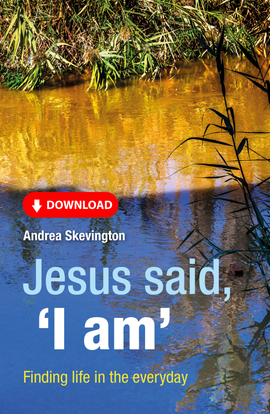
{"id":14698915463548,"title":"Jesus said, 'I am': Finding life in the everyday","handle":"jesus-said-i-am-finding-life-in-the-everyday-1","description":"\u003cp\u003e\u003cspan\u003e\u003cspan style=\"color: rgb(255, 42, 0);\"\u003e\u003cstrong\u003eDigital eBook Only - \u003c\/strong\u003e\u003c\/span\u003e\u003c\/span\u003eDrawing on the imagery of the Hebrew scriptures, Jesus identifies himself as the 'I am' of Israel's narrative. Through sensitive retelling, thoughtful discussion and creative exercises, Andrea Skevington shows the transforming power of Jesus' words. Each chapter focuses on a different 'I am' saying and offers ideas for reflection and response, including suggestions for further study, prayer and meditation, creative response, 'life and service' practical outreach, music suggestions and further reading.\u003c\/p\u003e\n\u003cp\u003eJesus said, 'I am' integrates faith and imagination, story and study, helping reader towards a well-grounded and more profound faith.\u003c\/p\u003e\n\u003ch5\u003eAuthor info\u003c\/h5\u003e\n\u003cp\u003eAndrea Skevington lives in Suffolk with her family. She writes for both adults and children, winning the Christian Book of the Year award (Speaking Volumes) for her retelling, The Lion Classic Bible (Lion Hudson, 2011). She also preaches and leads Bible studies and children's groups, creative writing workshops and retreats.\u003c\/p\u003e\n\u003cp\u003eTo read Andrea's lockdown blog and read some of her lockdown poems click \u003ca href=\"https:\/\/www.brfonline.org.uk\/blogs\/collections\/writer-poet-and-blogger-andrea-skevington-reflects-on-jesus-i-am-sayings-in-light-of-lockdown\"\u003ehere\u003c\/a\u003e.\u003c\/p\u003e\n\u003cp\u003e \u003c\/p\u003e\n\u003cp\u003e \u003c\/p\u003e\n\u003ch5\u003e\u003cbr\u003e\u003c\/h5\u003e\n\u003ch5\u003eReviews\u003c\/h5\u003e\n\u003cp\u003e\u003cstrong\u003eTransforming Ministry digital edition 2. Review by Rosemary Walters\u003c\/strong\u003e\u003cbr\u003e\u003c\/p\u003e\n\u003cp\u003eSubtitled ‘Finding Life in the Everyday’\u003cstrong\u003e\u003cem\u003e, \u003c\/em\u003e\u003c\/strong\u003enearly all the chapters in this book are built on specific ‘I Am’ sayings of Jesus. Its great strength is the combination in each chapter of contextual and theological analysis, reflections for study and contemplation and a variety of creative ideas. This makes it valuable in a variety of settings: retreats, study days, weekly courses based on each chapter, as well as Fresh Expressions and Messy Church. The theological background in each chapter is concise yet informative and the study questions are challenging. The emphasis in the creative response sections invites reflection and action based on personal experience and the prayer resources could equally well be used in formal and informal liturgical settings. The scope of reference is wide, poets, philosophers and a variety of theological material, helpful for those preaching as well as group and individual contexts. Andrea Skevington says in her introduction that writing this book has changed the way she sees following Jesus. Her vision for the book, that it will take the reader deeper into the adventure of discovering who Jesus is, and who they are as individuals comes alive from the very start when she begins exploring the implications of the phrase ‘I am’. The connections between Old Testament history and concepts of God and the teachings of Jesus moves naturally in each chapter to links with contemporary experience and opportunity for action. This book is a valuable resource for ministry and personal reflection. It lives up to its subtitle of ‘Finding Life in the Everyday’\u003c\/p\u003e\n\u003cp\u003e\u003cem\u003eReview by Rosemary Walters \u003c\/em\u003e\u003c\/p\u003e\n\u003cp\u003e \u003c\/p\u003e\n\u003cp\u003e\u003cstrong\u003eWoman Alive: WA Book Club April 2019. Review by Amy Boucher-Pye\u003c\/strong\u003e\u003c\/p\u003e\n\u003cp\u003eThis month I'm reading ...\u003c\/p\u003e\n\u003cp\u003eI love having a book that I really want to share with you. Some months I flail around, starting a novel and discarding it before moving on to a life story or an exploration of Christian discipleship. But sometimes a wonderful book comes along that I can highlight unreservedly, such as Andrea Skevington's\u003cspan\u003e \u003c\/span\u003e\u003cem\u003eJesus said, 'I am'.\u003c\/em\u003e\u003c\/p\u003e\n\u003cp\u003eIn it she delves into the 'I am' sayings of Jesus according to John's Gospel. In the Greek Jesus says\u003cspan\u003e \u003c\/span\u003e\u003cem\u003eego eimi\u003cspan\u003e \u003c\/span\u003e\u003c\/em\u003e24 times, seven of which have become the 'I am' sayings. Andrea explores these (from 'I am the bread of life' to 'I am the good shepherd' to 'I am the true vine') and also the interesting story of the woman at the well.\u003c\/p\u003e\n\u003cp\u003eI love how she splits her chapters into halves. First she digs into the particular story, unpacking the context of what Jesus experienced. The second half moves to reflection and response, including searching questions for individual pondering or group discussion. She also suggests various creative responses, such as writing, photography,\u003cspan\u003e \u003c\/span\u003e\u003cem\u003electio divina,\u003cspan\u003e \u003c\/span\u003e\u003c\/em\u003eand other exercises.\u003c\/p\u003e\n\u003cp\u003eTo give you a flavour, let's look at the story of the woman at the well (John 4). Andrea sets the story in its context - that of conflict, not only between the Jews and the Samaritans, but also between Jesus and the Pharisees. Jesus stops at the well that Jacob gave to Joseph, which reminds the reader of the long history of God's people. Here Jesus acts as a peacemaker in the midst of conflict. He speaks to one ostracised by society - a woman who has had many husbands. We might judge this woman, but as Andrea observes, in that day, men easily acquired divorces and early death was common.\u003c\/p\u003e\n\u003cp\u003eJesus humbly asks the woman for a drink. He recognises her as made in the image of God as he cuts through her layers of shame and hiding. Seeing her for who she is, he sets her free. She in turn leaves behind the water jug and goes forth joyfully to share the good news with those who were shaming her. Perhaps that jug, Andrea observes, symbolises the old life left behind.\u003c\/p\u003e\n\u003cp\u003eAfter exploring the story (with more depth than I've conveyed here), Andrea leads us into some questions, including, 'Are there people you would be reluctant to talk to and drink with? If so, why?' I particularly like her creative response of choosing a striking phrase from the Bible story; hers is 'the well is deep'. We sit with that phrase, playing with it through poetry or prose, writing a story or jotting down some thoughts about it.\u003c\/p\u003e\n\u003cp\u003eIf you're looking for a book to deepen your faith and love for Jesus, give this one a try. You'll be enriched and encouraged.\u003c\/p\u003e\n\u003cp\u003e\u003cem\u003eReview by Amy Boucher-Pye, Editor WA Book Club\u003c\/em\u003e\u003c\/p\u003e\n\u003cp\u003e\u003cem\u003e_______________________________________________\u003c\/em\u003e\u003c\/p\u003e\n\u003cp\u003e\u003cstrong\u003eReform, April 2019. Review by Catherine Ball\u003c\/strong\u003e\u003c\/p\u003e\n\u003cp\u003eThe Hebrew scriptures record God’s revelation of the name of the Godhead to Moses as: ‘I am who I am.’ Jesus was the long-awaited Jewish Messiah, but not the type of Messiah expected by his contemporaries. He was not a rich and powerful prince or a trained priest in the temple of Jerusalem. His ministry was not to lead an army to attack and overthrow Rome, but to lay down his life for the world. Yet, he could only accomplish this if the legal and religious authorities did not realise who he was and what he had come to do.\u003c\/p\u003e\n\u003cp\u003eTo those who had ears to hear and eyes to see, Andrea Skevington argues, Jesus reveals himself as the Son of Man and Son of God in a most original and startling way in his famous ‘I am’ sayings: ‘I am the bread of life.’ ‘I am the light of the world.’ ‘I am the good shepherd.’ ‘I am the gate for the sheep.’ ‘I am the resurrection and the life.’ ‘I am the way, the truth and the life.’ ‘I am the true vine.’ As Skevington says, ‘I am’ is such a common construction in every language; it is how we define ourselves, but it is also a very deep mystery.\u003c\/p\u003e\n\u003cp\u003eEach chapter of this book explores one of the stories in which Jesus says, ‘I am…’ It looks at its context and characters and shows the transforming power of Jesus’ words for his listeners. Skevington goes beyond the classic seven ‘I am’ statements, also including Jesus’ words to the woman at the well and what he said when he was confronted by soldiers in the garden of Gethsemane: ‘I am he for whom you are looking.’ Each time, Skevington includes a prayer and meditation and gives suggestions for further study and some creative responses in service and practical outreach.\u003c\/p\u003e\n\u003cp\u003eThis book could be used by individuals for their own personal faith development or used as a study guide for group discussions. It would make an excellent Lent course!\u003c\/p\u003e\n\u003cp\u003e\u003cem\u003eCatherine Ball is Minister of the Free Church, St Ives and Fenstanton United Reformed Church\u003c\/em\u003e\u003c\/p\u003e\n\u003cp\u003e\u003cem\u003e ______________________________________________\u003c\/em\u003e\u003c\/p\u003e\n\u003cp\u003e\u003cstrong\u003eReview on https:\/\/monasteriesoftheheart.org\u003c\/strong\u003e\u003cem\u003e\u003cbr\u003e\u003c\/em\u003e\u003c\/p\u003e\n\u003cp\u003eThis is a unique look at the things Jesus says about himself. It has a few pages of retelling and discussion of each passage, followed by a huge quantity of suggestions for responses -questions to invite thinking, prayer and meditation and creative ideas, with drawing, writing and making, getting out and about in creation and suggestions for activism, service and worship. It is such a rich resource that in one small book there is enough to return to again and again. A real delight of practical theology. Andrea has a blog where you can explore sections from her work as a gift. \u003c\/p\u003e\n\u003cp\u003e \u003c\/p\u003e\n\u003cp\u003e\u003cstrong\u003eBaptist Times Round up May 2019. Review by Pieter J Lalleman\u003c\/strong\u003e\u003c\/p\u003e\n\u003cp\u003eAuthor and amateur-theologian Skevington presents nine chapters of material on the ‘I am’ sayings of Jesus in John’s Gospel. She deals with Jesus as the bread of life (chapter 3), the light of the world (4), the good shepherd and the gate (together in 5), the resurrection and the life (6), the way, the truth and the life (7), and the true vine (8). The short ninth and final chapter is about Jesus’ saying ‘I am he’ in John 18:5.\u003c\/p\u003e\n\u003cp\u003eChapter 1 discusses the revelation of God’s name ‘I Am’ (Yahweh) to Moses in Exodus 3 and chapter 2 is about Jesus and the women at the well, to whom he says that he is the Messiah, using the same words ‘I am’.\u003c\/p\u003e\n\u003cp\u003eThe first part of each chapter contains the full text of the Scripture passage and a study of it, the second part offers numerous suggestions for ‘reflection and response’: questions, references to similar passages with questions about them, prayers, suggestions for activities, suggestions for further reading, and much more. For example, after ‘I am the bread of life’ we are invited to bake bread, to reflect on avoiding waste and to consider fasting.\u003c\/p\u003e\n\u003cp\u003eSkevington’s explanations of Scripture are attractive and generally to the point, although occasionally driven by association rather than by strict interpretation. She fills some Greek words with more meaning than they have in themselves. The suggested responses are naturally more diverse and the ideas for further study touch on the entire Christian life. This means that in the end this positive book reaches far and wide. It will surely help attentive readers in their life of faith.\u003c\/p\u003e\n\u003cp\u003eMore about the author and her books can be found on her website. \u003c\/p\u003e\n\u003cp\u003e\u003ca href=\"https:\/\/andreaskevington.com\/\"\u003ehttps:\/\/andreaskevington.com\u003c\/a\u003e\u003c\/p\u003e\n\u003cp\u003e\u003cem\u003eThe Revd Dr Pieter J. Lalleman teaches Bible at Spurgeon's College\u003c\/em\u003e\u003c\/p\u003e","published_at":"2024-10-28T15:30:48+00:00","created_at":"2024-10-28T15:29:42+00:00","vendor":"Andrea Skevington","type":"eBook","tags":["Biblical engagement","Devotional","For individuals","Glassboxx","Jan-19","Spirituality"],"price":899,"price_min":899,"price_max":899,"available":true,"price_varies":false,"compare_at_price":null,"compare_at_price_min":0,"compare_at_price_max":0,"compare_at_price_varies":false,"variants":[{"id":53602941698428,"title":"eBook","option1":"eBook","option2":null,"option3":null,"sku":"9780857465689","requires_shipping":false,"taxable":false,"featured_image":null,"available":true,"name":"Jesus said, 'I am': Finding life in the everyday - eBook","public_title":"eBook","options":["eBook"],"price":899,"weight":180,"compare_at_price":null,"inventory_management":"shopify","barcode":"9780857465689","requires_selling_plan":false,"selling_plan_allocations":[]}],"images":["\/\/www.brfonline.org.uk\/cdn\/shop\/files\/186.png?v=1730134970","\/\/www.brfonline.org.uk\/cdn\/shop\/files\/187.png?v=1730134957"],"featured_image":"\/\/www.brfonline.org.uk\/cdn\/shop\/files\/186.png?v=1730134970","options":["Format"],"media":[{"alt":null,"id":62923503698300,"position":1,"preview_image":{"aspect_ratio":0.652,"height":2000,"width":1303,"src":"\/\/www.brfonline.org.uk\/cdn\/shop\/files\/186.png?v=1730134970"},"aspect_ratio":0.652,"height":2000,"media_type":"image","src":"\/\/www.brfonline.org.uk\/cdn\/shop\/files\/186.png?v=1730134970","width":1303},{"alt":null,"id":62923502158204,"position":2,"preview_image":{"aspect_ratio":0.652,"height":2000,"width":1303,"src":"\/\/www.brfonline.org.uk\/cdn\/shop\/files\/187.png?v=1730134957"},"aspect_ratio":0.652,"height":2000,"media_type":"image","src":"\/\/www.brfonline.org.uk\/cdn\/shop\/files\/187.png?v=1730134957","width":1303}],"requires_selling_plan":false,"selling_plan_groups":[],"content":"\u003cp\u003e\u003cspan\u003e\u003cspan style=\"color: rgb(255, 42, 0);\"\u003e\u003cstrong\u003eDigital eBook Only - \u003c\/strong\u003e\u003c\/span\u003e\u003c\/span\u003eDrawing on the imagery of the Hebrew scriptures, Jesus identifies himself as the 'I am' of Israel's narrative. Through sensitive retelling, thoughtful discussion and creative exercises, Andrea Skevington shows the transforming power of Jesus' words. Each chapter focuses on a different 'I am' saying and offers ideas for reflection and response, including suggestions for further study, prayer and meditation, creative response, 'life and service' practical outreach, music suggestions and further reading.\u003c\/p\u003e\n\u003cp\u003eJesus said, 'I am' integrates faith and imagination, story and study, helping reader towards a well-grounded and more profound faith.\u003c\/p\u003e\n\u003ch5\u003eAuthor info\u003c\/h5\u003e\n\u003cp\u003eAndrea Skevington lives in Suffolk with her family. She writes for both adults and children, winning the Christian Book of the Year award (Speaking Volumes) for her retelling, The Lion Classic Bible (Lion Hudson, 2011). She also preaches and leads Bible studies and children's groups, creative writing workshops and retreats.\u003c\/p\u003e\n\u003cp\u003eTo read Andrea's lockdown blog and read some of her lockdown poems click \u003ca href=\"https:\/\/www.brfonline.org.uk\/blogs\/collections\/writer-poet-and-blogger-andrea-skevington-reflects-on-jesus-i-am-sayings-in-light-of-lockdown\"\u003ehere\u003c\/a\u003e.\u003c\/p\u003e\n\u003cp\u003e \u003c\/p\u003e\n\u003cp\u003e \u003c\/p\u003e\n\u003ch5\u003e\u003cbr\u003e\u003c\/h5\u003e\n\u003ch5\u003eReviews\u003c\/h5\u003e\n\u003cp\u003e\u003cstrong\u003eTransforming Ministry digital edition 2. Review by Rosemary Walters\u003c\/strong\u003e\u003cbr\u003e\u003c\/p\u003e\n\u003cp\u003eSubtitled ‘Finding Life in the Everyday’\u003cstrong\u003e\u003cem\u003e, \u003c\/em\u003e\u003c\/strong\u003enearly all the chapters in this book are built on specific ‘I Am’ sayings of Jesus. Its great strength is the combination in each chapter of contextual and theological analysis, reflections for study and contemplation and a variety of creative ideas. This makes it valuable in a variety of settings: retreats, study days, weekly courses based on each chapter, as well as Fresh Expressions and Messy Church. The theological background in each chapter is concise yet informative and the study questions are challenging. The emphasis in the creative response sections invites reflection and action based on personal experience and the prayer resources could equally well be used in formal and informal liturgical settings. The scope of reference is wide, poets, philosophers and a variety of theological material, helpful for those preaching as well as group and individual contexts. Andrea Skevington says in her introduction that writing this book has changed the way she sees following Jesus. Her vision for the book, that it will take the reader deeper into the adventure of discovering who Jesus is, and who they are as individuals comes alive from the very start when she begins exploring the implications of the phrase ‘I am’. The connections between Old Testament history and concepts of God and the teachings of Jesus moves naturally in each chapter to links with contemporary experience and opportunity for action. This book is a valuable resource for ministry and personal reflection. It lives up to its subtitle of ‘Finding Life in the Everyday’\u003c\/p\u003e\n\u003cp\u003e\u003cem\u003eReview by Rosemary Walters \u003c\/em\u003e\u003c\/p\u003e\n\u003cp\u003e \u003c\/p\u003e\n\u003cp\u003e\u003cstrong\u003eWoman Alive: WA Book Club April 2019. Review by Amy Boucher-Pye\u003c\/strong\u003e\u003c\/p\u003e\n\u003cp\u003eThis month I'm reading ...\u003c\/p\u003e\n\u003cp\u003eI love having a book that I really want to share with you. Some months I flail around, starting a novel and discarding it before moving on to a life story or an exploration of Christian discipleship. But sometimes a wonderful book comes along that I can highlight unreservedly, such as Andrea Skevington's\u003cspan\u003e \u003c\/span\u003e\u003cem\u003eJesus said, 'I am'.\u003c\/em\u003e\u003c\/p\u003e\n\u003cp\u003eIn it she delves into the 'I am' sayings of Jesus according to John's Gospel. In the Greek Jesus says\u003cspan\u003e \u003c\/span\u003e\u003cem\u003eego eimi\u003cspan\u003e \u003c\/span\u003e\u003c\/em\u003e24 times, seven of which have become the 'I am' sayings. Andrea explores these (from 'I am the bread of life' to 'I am the good shepherd' to 'I am the true vine') and also the interesting story of the woman at the well.\u003c\/p\u003e\n\u003cp\u003eI love how she splits her chapters into halves. First she digs into the particular story, unpacking the context of what Jesus experienced. The second half moves to reflection and response, including searching questions for individual pondering or group discussion. She also suggests various creative responses, such as writing, photography,\u003cspan\u003e \u003c\/span\u003e\u003cem\u003electio divina,\u003cspan\u003e \u003c\/span\u003e\u003c\/em\u003eand other exercises.\u003c\/p\u003e\n\u003cp\u003eTo give you a flavour, let's look at the story of the woman at the well (John 4). Andrea sets the story in its context - that of conflict, not only between the Jews and the Samaritans, but also between Jesus and the Pharisees. Jesus stops at the well that Jacob gave to Joseph, which reminds the reader of the long history of God's people. Here Jesus acts as a peacemaker in the midst of conflict. He speaks to one ostracised by society - a woman who has had many husbands. We might judge this woman, but as Andrea observes, in that day, men easily acquired divorces and early death was common.\u003c\/p\u003e\n\u003cp\u003eJesus humbly asks the woman for a drink. He recognises her as made in the image of God as he cuts through her layers of shame and hiding. Seeing her for who she is, he sets her free. She in turn leaves behind the water jug and goes forth joyfully to share the good news with those who were shaming her. Perhaps that jug, Andrea observes, symbolises the old life left behind.\u003c\/p\u003e\n\u003cp\u003eAfter exploring the story (with more depth than I've conveyed here), Andrea leads us into some questions, including, 'Are there people you would be reluctant to talk to and drink with? If so, why?' I particularly like her creative response of choosing a striking phrase from the Bible story; hers is 'the well is deep'. We sit with that phrase, playing with it through poetry or prose, writing a story or jotting down some thoughts about it.\u003c\/p\u003e\n\u003cp\u003eIf you're looking for a book to deepen your faith and love for Jesus, give this one a try. You'll be enriched and encouraged.\u003c\/p\u003e\n\u003cp\u003e\u003cem\u003eReview by Amy Boucher-Pye, Editor WA Book Club\u003c\/em\u003e\u003c\/p\u003e\n\u003cp\u003e\u003cem\u003e_______________________________________________\u003c\/em\u003e\u003c\/p\u003e\n\u003cp\u003e\u003cstrong\u003eReform, April 2019. Review by Catherine Ball\u003c\/strong\u003e\u003c\/p\u003e\n\u003cp\u003eThe Hebrew scriptures record God’s revelation of the name of the Godhead to Moses as: ‘I am who I am.’ Jesus was the long-awaited Jewish Messiah, but not the type of Messiah expected by his contemporaries. He was not a rich and powerful prince or a trained priest in the temple of Jerusalem. His ministry was not to lead an army to attack and overthrow Rome, but to lay down his life for the world. Yet, he could only accomplish this if the legal and religious authorities did not realise who he was and what he had come to do.\u003c\/p\u003e\n\u003cp\u003eTo those who had ears to hear and eyes to see, Andrea Skevington argues, Jesus reveals himself as the Son of Man and Son of God in a most original and startling way in his famous ‘I am’ sayings: ‘I am the bread of life.’ ‘I am the light of the world.’ ‘I am the good shepherd.’ ‘I am the gate for the sheep.’ ‘I am the resurrection and the life.’ ‘I am the way, the truth and the life.’ ‘I am the true vine.’ As Skevington says, ‘I am’ is such a common construction in every language; it is how we define ourselves, but it is also a very deep mystery.\u003c\/p\u003e\n\u003cp\u003eEach chapter of this book explores one of the stories in which Jesus says, ‘I am…’ It looks at its context and characters and shows the transforming power of Jesus’ words for his listeners. Skevington goes beyond the classic seven ‘I am’ statements, also including Jesus’ words to the woman at the well and what he said when he was confronted by soldiers in the garden of Gethsemane: ‘I am he for whom you are looking.’ Each time, Skevington includes a prayer and meditation and gives suggestions for further study and some creative responses in service and practical outreach.\u003c\/p\u003e\n\u003cp\u003eThis book could be used by individuals for their own personal faith development or used as a study guide for group discussions. It would make an excellent Lent course!\u003c\/p\u003e\n\u003cp\u003e\u003cem\u003eCatherine Ball is Minister of the Free Church, St Ives and Fenstanton United Reformed Church\u003c\/em\u003e\u003c\/p\u003e\n\u003cp\u003e\u003cem\u003e ______________________________________________\u003c\/em\u003e\u003c\/p\u003e\n\u003cp\u003e\u003cstrong\u003eReview on https:\/\/monasteriesoftheheart.org\u003c\/strong\u003e\u003cem\u003e\u003cbr\u003e\u003c\/em\u003e\u003c\/p\u003e\n\u003cp\u003eThis is a unique look at the things Jesus says about himself. It has a few pages of retelling and discussion of each passage, followed by a huge quantity of suggestions for responses -questions to invite thinking, prayer and meditation and creative ideas, with drawing, writing and making, getting out and about in creation and suggestions for activism, service and worship. It is such a rich resource that in one small book there is enough to return to again and again. A real delight of practical theology. Andrea has a blog where you can explore sections from her work as a gift. \u003c\/p\u003e\n\u003cp\u003e \u003c\/p\u003e\n\u003cp\u003e\u003cstrong\u003eBaptist Times Round up May 2019. Review by Pieter J Lalleman\u003c\/strong\u003e\u003c\/p\u003e\n\u003cp\u003eAuthor and amateur-theologian Skevington presents nine chapters of material on the ‘I am’ sayings of Jesus in John’s Gospel. She deals with Jesus as the bread of life (chapter 3), the light of the world (4), the good shepherd and the gate (together in 5), the resurrection and the life (6), the way, the truth and the life (7), and the true vine (8). The short ninth and final chapter is about Jesus’ saying ‘I am he’ in John 18:5.\u003c\/p\u003e\n\u003cp\u003eChapter 1 discusses the revelation of God’s name ‘I Am’ (Yahweh) to Moses in Exodus 3 and chapter 2 is about Jesus and the women at the well, to whom he says that he is the Messiah, using the same words ‘I am’.\u003c\/p\u003e\n\u003cp\u003eThe first part of each chapter contains the full text of the Scripture passage and a study of it, the second part offers numerous suggestions for ‘reflection and response’: questions, references to similar passages with questions about them, prayers, suggestions for activities, suggestions for further reading, and much more. For example, after ‘I am the bread of life’ we are invited to bake bread, to reflect on avoiding waste and to consider fasting.\u003c\/p\u003e\n\u003cp\u003eSkevington’s explanations of Scripture are attractive and generally to the point, although occasionally driven by association rather than by strict interpretation. She fills some Greek words with more meaning than they have in themselves. The suggested responses are naturally more diverse and the ideas for further study touch on the entire Christian life. This means that in the end this positive book reaches far and wide. It will surely help attentive readers in their life of faith.\u003c\/p\u003e\n\u003cp\u003eMore about the author and her books can be found on her website. \u003c\/p\u003e\n\u003cp\u003e\u003ca href=\"https:\/\/andreaskevington.com\/\"\u003ehttps:\/\/andreaskevington.com\u003c\/a\u003e\u003c\/p\u003e\n\u003cp\u003e\u003cem\u003eThe Revd Dr Pieter J. Lalleman teaches Bible at Spurgeon's College\u003c\/em\u003e\u003c\/p\u003e"}
You may also like:
Jesus said, 'I am': Finding life in the everyday
£8.99
Digital eBook Only - Drawing on the imagery of the Hebrew scriptures, Jesus identifies himself as the 'I am' of...
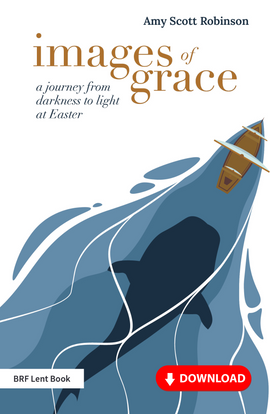
{"id":14673663492476,"title":"Images of Grace: A journey from darkness to light at Easter","handle":"images-of-grace-a-journey-from-darkness-to-light-at-easter","description":"\u003cp\u003e\u003cspan\u003e\u003cspan style=\"color: rgb(255, 42, 0);\"\u003e\u003cstrong\u003eDigital eBook Only - \u003c\/strong\u003e\u003c\/span\u003e\u003c\/span\u003e‘At the heart of the Christian message is a collection of abstract nouns: love; sin; forgiveness; grace. It is quite difficult to explain what the gospel message is without using some or all of those words. But the problem with abstract nouns is that when we use them, we assume that the person we are talking to understands them, and not only that, we assume that they have the same understanding of the word that we do…’\u003c\/p\u003e\n\u003cp\u003eLent is traditionally a time of repentance, fasting and prayer as we prepare to celebrate our salvation at Easter. Through daily readings and reflections from Ash Wednesday to Easter Day, Amy Scott Robinson explores different biblical images of repentance, sin, forgiveness and grace, bringing them together in Holy Week as a lens through which to view Christ’s work of reconciliation on the cross.\u003c\/p\u003e\n\u003cp\u003e \u003ciframe title=\"YouTube video player\" src=\"https:\/\/www.youtube.com\/embed\/kqn_CTRCtzY\" height=\"315\" width=\"560\" allowfullscreen=\"\" allow=\"accelerometer; autoplay; clipboard-write; encrypted-media; gyroscope; picture-in-picture; web-share\" frameborder=\"0\"\u003e\u003c\/iframe\u003e\u003c\/p\u003e\n\u003cp\u003e\u003ciframe title=\"YouTube video player\" src=\"https:\/\/www.youtube.com\/embed\/yGNTnqU6LHs\" height=\"315\" width=\"560\" allowfullscreen=\"\" allow=\"accelerometer; autoplay; clipboard-write; encrypted-media; gyroscope; picture-in-picture; web-share\" frameborder=\"0\"\u003e\u003c\/iframe\u003e\u003c\/p\u003e\n\u003cp\u003e\u003ciframe width=\"560\" height=\"315\" src=\"https:\/\/www.youtube.com\/embed\/IQ0wKSf1ZEM\" title=\"YouTube video player\" frameborder=\"0\" allow=\"accelerometer; autoplay; clipboard-write; encrypted-media; gyroscope; picture-in-picture; web-share\" allowfullscreen=\"\"\u003e\u003c\/iframe\u003e\u003c\/p\u003e\n\u003ch5\u003e\u003cstrong\u003eEndorsements\u003c\/strong\u003e\u003c\/h5\u003e\n\u003cp\u003eThis book is rich in accessible biblical scholarship and insight. It brings the reader's attention to a variety of passages and it is refreshing to read a Lent Book that encourages the reader to look at a variety of passages from across the whole of Christian scripture. The combination of a well-considered reflection, a question and, a suitable prayer for each day make this book the perfect companion for Lent.'\u003c\/p\u003e\n\u003cp\u003eThe Rev'd Canon Michael Robinson (no relation!)\u003cbr\u003eBishops’ Chaplain \u0026amp; Canon Theologian of St Edmundsbury Cathedral\u003cbr\u003e\u003c\/p\u003e\n\u003cp\u003e\u003cbr\u003e‘Amy is an expert storyteller, a well of emotion and reflection, and a follower of Jesus with a deep, genuine hunger for the reality of God.’\u003c\/p\u003e\n\u003cp\u003eAdrian Plass, author and speaker\u003c\/p\u003e\n\u003cp\u003e \u003c\/p\u003e\n\u003ch5\u003e\u003cstrong\u003eReviews\u003c\/strong\u003e\u003c\/h5\u003e\n\u003cp\u003e\u003cstrong\u003eTransforming Ministry online February 2023. Review by Margaret Tinsley\u003c\/strong\u003e\u003c\/p\u003e\n\u003cp\u003eThe BRF Lent Book for 2023, sub-titled ‘A Journey from Darkness to Light at Easter’ takes the reader day by day on exactly that journey. Amy Scott Robinson was inspired to write this book because she felt that abstract nouns, such as sin and grace, although in frequent use, might be misunderstood – or given a different meaning - by many people. The book is based on the idea that the use of images helps this understanding. These images vary from a few words, to extended metaphors, to whole stories – but all help us to understand Christian concepts.\u003c\/p\u003e\n\u003cp\u003eThe book is divided into weekly sections, covering sin and repentance, forgiveness, atonement, restoration, reconciliation and ends with Holy Week. Each day has a Bible reading, commentary, a question and a prayer and, at the end of each week, there is a set of questions, which makes the book suitable for group activity. The commentary which Amy Scott Robinson gives each day is invariably pertinent and engaging and involves personal and literary examples, as well as providing a thoughtful interpretation of the passage. The question demands the reader applies the material to his\/her own life. As a Lent book I recommend this for personal or for group use.\u003c\/p\u003e\n\u003cp\u003e\u003cem\u003eReviewed by Margaret Tinsley\u003c\/em\u003e\u003c\/p\u003e\n\u003cp\u003e\u003cbr\u003e\u003c\/p\u003e\n\u003cp\u003e\u003cstrong\u003eReviewed by Richard Frost, author of \u003ca href=\"https:\/\/www.brfonline.org.uk\/products\/life-with-st-benedict-the-rule-re-imagined-for-everyday-living\"\u003e\u003cem\u003eLife with St Benedict\u003c\/em\u003e\u003c\/a\u003e\u003c\/strong\u003e\u003c\/p\u003e\n\u003cp\u003eHaving previously reviewed \u003ca href=\"https:\/\/www.brfonline.org.uk\/products\/image-of-the-invisible-daily-bible-readings-from-advent-to-epiphany?_pos=1\u0026amp;_sid=d107cbc7e\u0026amp;_ss=r\"\u003e\u003cem\u003eImage of the Invisible\u003c\/em\u003e\u003c\/a\u003e, Amy Scott-Robinson’s book for Advent through to Epiphany, I was looking forward to this offering for Lent, Holy Week and Easter. And I was not disappointed.\u003c\/p\u003e\n\u003cp\u003eAs with that previous book, she uses metaphors, stories and biblical examples to open up a wide range of themes. Initially, these images explore the traditional themes of Lent: sin, repentance and forgiveness. Dipping briefly and helpfully in the theological arguments about atonement, the author then continues with images of restoration and reconciliation. A final section for Holy Week finds us encountering a donkey, turning over tables and washing feet before standing by the tomb.\u003c\/p\u003e\n\u003cp\u003eWithin the book, we meet characters as diverse as David and Jonah, Jesus Barabbas and Joseph of Arimathea. Each aspect, each chapter, is explored and explained, using helpful contemporary stories and images alongside the biblical ones.\u003c\/p\u003e\n\u003cp\u003eFor this reviewer, reading a book of daily reflections in a shorter timescale inevitably dilutes the full benefit of it (not least also that I read it during Advent!). Thus, for me, the focus on sin during the first half has a particular effect and it is from Week 4 onwards that readers are given a flood of hope as all the images combine to provide ones of grace. Grace which is sufficient for each day and for each one of us, in all times and seasons.\u003c\/p\u003e\n\u003cp\u003eRichard Frost is the author of \u003ca href=\"https:\/\/www.brfonline.org.uk\/products\/life-with-st-benedict-the-rule-re-imagined-for-everyday-living\"\u003e\u003cem\u003eLife with St Benedict\u003c\/em\u003e\u003c\/a\u003e and writes a blog at \u003ca href=\"http:\/\/workrestpray.com\/\"\u003eworkrestpray.com\u003c\/a\u003e. He is also the author of \u003ca href=\"http:\/\/richardfrostauthor.com\/\"\u003etwo other books\u003c\/a\u003e.\u003c\/p\u003e\n\u003ch5\u003e\u003cstrong\u003eAuthor\u003c\/strong\u003e\u003c\/h5\u003e\n\u003cp\u003e\u003cstrong\u003eAmy Scott Robinson\u003c\/strong\u003e is an author and performance storyteller. After studying English at Christ's College, Cambridge, she trained as a teacher and began writing for charities and providers of liturgical resources, before publishing her own works on puppetry and story. She is married to the rector of four rural parishes in Suffolk, where she is also the benefice children’s worker. She lives in the Rectory and has two children, two guinea pigs, and at any given moment, a half-finished cup of cold tea.\u003c\/p\u003e\n\u003ch5\u003e\u003cbr\u003e\u003c\/h5\u003e","published_at":"2024-10-16T15:21:41+01:00","created_at":"2024-10-16T15:17:39+01:00","vendor":"Amy Scott Robinson","type":"eBook","tags":["Centenary Collection","Discipleship","Easter","Glassboxx","Lent"],"price":999,"price_min":999,"price_max":999,"available":true,"price_varies":false,"compare_at_price":null,"compare_at_price_min":0,"compare_at_price_max":0,"compare_at_price_varies":false,"variants":[{"id":53595067187580,"title":"eBook","option1":"eBook","option2":null,"option3":null,"sku":"9781800391185","requires_shipping":false,"taxable":false,"featured_image":null,"available":true,"name":"Images of Grace: A journey from darkness to light at Easter - eBook","public_title":"eBook","options":["eBook"],"price":999,"weight":200,"compare_at_price":null,"inventory_management":"shopify","barcode":"9781800391185","requires_selling_plan":false,"selling_plan_allocations":[]}],"images":["\/\/www.brfonline.org.uk\/cdn\/shop\/files\/17_2dc6ef51-0275-4284-9920-892739ef26fc.png?v=1729770406","\/\/www.brfonline.org.uk\/cdn\/shop\/files\/18_bfe2e8c6-dfa3-407b-bebc-33a65c7e277c.png?v=1729770424"],"featured_image":"\/\/www.brfonline.org.uk\/cdn\/shop\/files\/17_2dc6ef51-0275-4284-9920-892739ef26fc.png?v=1729770406","options":["Format"],"media":[{"alt":null,"id":62716419735932,"position":1,"preview_image":{"aspect_ratio":0.652,"height":2000,"width":1303,"src":"\/\/www.brfonline.org.uk\/cdn\/shop\/files\/17_2dc6ef51-0275-4284-9920-892739ef26fc.png?v=1729770406"},"aspect_ratio":0.652,"height":2000,"media_type":"image","src":"\/\/www.brfonline.org.uk\/cdn\/shop\/files\/17_2dc6ef51-0275-4284-9920-892739ef26fc.png?v=1729770406","width":1303},{"alt":null,"id":62716420391292,"position":2,"preview_image":{"aspect_ratio":0.652,"height":2000,"width":1303,"src":"\/\/www.brfonline.org.uk\/cdn\/shop\/files\/18_bfe2e8c6-dfa3-407b-bebc-33a65c7e277c.png?v=1729770424"},"aspect_ratio":0.652,"height":2000,"media_type":"image","src":"\/\/www.brfonline.org.uk\/cdn\/shop\/files\/18_bfe2e8c6-dfa3-407b-bebc-33a65c7e277c.png?v=1729770424","width":1303}],"requires_selling_plan":false,"selling_plan_groups":[],"content":"\u003cp\u003e\u003cspan\u003e\u003cspan style=\"color: rgb(255, 42, 0);\"\u003e\u003cstrong\u003eDigital eBook Only - \u003c\/strong\u003e\u003c\/span\u003e\u003c\/span\u003e‘At the heart of the Christian message is a collection of abstract nouns: love; sin; forgiveness; grace. It is quite difficult to explain what the gospel message is without using some or all of those words. But the problem with abstract nouns is that when we use them, we assume that the person we are talking to understands them, and not only that, we assume that they have the same understanding of the word that we do…’\u003c\/p\u003e\n\u003cp\u003eLent is traditionally a time of repentance, fasting and prayer as we prepare to celebrate our salvation at Easter. Through daily readings and reflections from Ash Wednesday to Easter Day, Amy Scott Robinson explores different biblical images of repentance, sin, forgiveness and grace, bringing them together in Holy Week as a lens through which to view Christ’s work of reconciliation on the cross.\u003c\/p\u003e\n\u003cp\u003e \u003ciframe title=\"YouTube video player\" src=\"https:\/\/www.youtube.com\/embed\/kqn_CTRCtzY\" height=\"315\" width=\"560\" allowfullscreen=\"\" allow=\"accelerometer; autoplay; clipboard-write; encrypted-media; gyroscope; picture-in-picture; web-share\" frameborder=\"0\"\u003e\u003c\/iframe\u003e\u003c\/p\u003e\n\u003cp\u003e\u003ciframe title=\"YouTube video player\" src=\"https:\/\/www.youtube.com\/embed\/yGNTnqU6LHs\" height=\"315\" width=\"560\" allowfullscreen=\"\" allow=\"accelerometer; autoplay; clipboard-write; encrypted-media; gyroscope; picture-in-picture; web-share\" frameborder=\"0\"\u003e\u003c\/iframe\u003e\u003c\/p\u003e\n\u003cp\u003e\u003ciframe width=\"560\" height=\"315\" src=\"https:\/\/www.youtube.com\/embed\/IQ0wKSf1ZEM\" title=\"YouTube video player\" frameborder=\"0\" allow=\"accelerometer; autoplay; clipboard-write; encrypted-media; gyroscope; picture-in-picture; web-share\" allowfullscreen=\"\"\u003e\u003c\/iframe\u003e\u003c\/p\u003e\n\u003ch5\u003e\u003cstrong\u003eEndorsements\u003c\/strong\u003e\u003c\/h5\u003e\n\u003cp\u003eThis book is rich in accessible biblical scholarship and insight. It brings the reader's attention to a variety of passages and it is refreshing to read a Lent Book that encourages the reader to look at a variety of passages from across the whole of Christian scripture. The combination of a well-considered reflection, a question and, a suitable prayer for each day make this book the perfect companion for Lent.'\u003c\/p\u003e\n\u003cp\u003eThe Rev'd Canon Michael Robinson (no relation!)\u003cbr\u003eBishops’ Chaplain \u0026amp; Canon Theologian of St Edmundsbury Cathedral\u003cbr\u003e\u003c\/p\u003e\n\u003cp\u003e\u003cbr\u003e‘Amy is an expert storyteller, a well of emotion and reflection, and a follower of Jesus with a deep, genuine hunger for the reality of God.’\u003c\/p\u003e\n\u003cp\u003eAdrian Plass, author and speaker\u003c\/p\u003e\n\u003cp\u003e \u003c\/p\u003e\n\u003ch5\u003e\u003cstrong\u003eReviews\u003c\/strong\u003e\u003c\/h5\u003e\n\u003cp\u003e\u003cstrong\u003eTransforming Ministry online February 2023. Review by Margaret Tinsley\u003c\/strong\u003e\u003c\/p\u003e\n\u003cp\u003eThe BRF Lent Book for 2023, sub-titled ‘A Journey from Darkness to Light at Easter’ takes the reader day by day on exactly that journey. Amy Scott Robinson was inspired to write this book because she felt that abstract nouns, such as sin and grace, although in frequent use, might be misunderstood – or given a different meaning - by many people. The book is based on the idea that the use of images helps this understanding. These images vary from a few words, to extended metaphors, to whole stories – but all help us to understand Christian concepts.\u003c\/p\u003e\n\u003cp\u003eThe book is divided into weekly sections, covering sin and repentance, forgiveness, atonement, restoration, reconciliation and ends with Holy Week. Each day has a Bible reading, commentary, a question and a prayer and, at the end of each week, there is a set of questions, which makes the book suitable for group activity. The commentary which Amy Scott Robinson gives each day is invariably pertinent and engaging and involves personal and literary examples, as well as providing a thoughtful interpretation of the passage. The question demands the reader applies the material to his\/her own life. As a Lent book I recommend this for personal or for group use.\u003c\/p\u003e\n\u003cp\u003e\u003cem\u003eReviewed by Margaret Tinsley\u003c\/em\u003e\u003c\/p\u003e\n\u003cp\u003e\u003cbr\u003e\u003c\/p\u003e\n\u003cp\u003e\u003cstrong\u003eReviewed by Richard Frost, author of \u003ca href=\"https:\/\/www.brfonline.org.uk\/products\/life-with-st-benedict-the-rule-re-imagined-for-everyday-living\"\u003e\u003cem\u003eLife with St Benedict\u003c\/em\u003e\u003c\/a\u003e\u003c\/strong\u003e\u003c\/p\u003e\n\u003cp\u003eHaving previously reviewed \u003ca href=\"https:\/\/www.brfonline.org.uk\/products\/image-of-the-invisible-daily-bible-readings-from-advent-to-epiphany?_pos=1\u0026amp;_sid=d107cbc7e\u0026amp;_ss=r\"\u003e\u003cem\u003eImage of the Invisible\u003c\/em\u003e\u003c\/a\u003e, Amy Scott-Robinson’s book for Advent through to Epiphany, I was looking forward to this offering for Lent, Holy Week and Easter. And I was not disappointed.\u003c\/p\u003e\n\u003cp\u003eAs with that previous book, she uses metaphors, stories and biblical examples to open up a wide range of themes. Initially, these images explore the traditional themes of Lent: sin, repentance and forgiveness. Dipping briefly and helpfully in the theological arguments about atonement, the author then continues with images of restoration and reconciliation. A final section for Holy Week finds us encountering a donkey, turning over tables and washing feet before standing by the tomb.\u003c\/p\u003e\n\u003cp\u003eWithin the book, we meet characters as diverse as David and Jonah, Jesus Barabbas and Joseph of Arimathea. Each aspect, each chapter, is explored and explained, using helpful contemporary stories and images alongside the biblical ones.\u003c\/p\u003e\n\u003cp\u003eFor this reviewer, reading a book of daily reflections in a shorter timescale inevitably dilutes the full benefit of it (not least also that I read it during Advent!). Thus, for me, the focus on sin during the first half has a particular effect and it is from Week 4 onwards that readers are given a flood of hope as all the images combine to provide ones of grace. Grace which is sufficient for each day and for each one of us, in all times and seasons.\u003c\/p\u003e\n\u003cp\u003eRichard Frost is the author of \u003ca href=\"https:\/\/www.brfonline.org.uk\/products\/life-with-st-benedict-the-rule-re-imagined-for-everyday-living\"\u003e\u003cem\u003eLife with St Benedict\u003c\/em\u003e\u003c\/a\u003e and writes a blog at \u003ca href=\"http:\/\/workrestpray.com\/\"\u003eworkrestpray.com\u003c\/a\u003e. He is also the author of \u003ca href=\"http:\/\/richardfrostauthor.com\/\"\u003etwo other books\u003c\/a\u003e.\u003c\/p\u003e\n\u003ch5\u003e\u003cstrong\u003eAuthor\u003c\/strong\u003e\u003c\/h5\u003e\n\u003cp\u003e\u003cstrong\u003eAmy Scott Robinson\u003c\/strong\u003e is an author and performance storyteller. After studying English at Christ's College, Cambridge, she trained as a teacher and began writing for charities and providers of liturgical resources, before publishing her own works on puppetry and story. She is married to the rector of four rural parishes in Suffolk, where she is also the benefice children’s worker. She lives in the Rectory and has two children, two guinea pigs, and at any given moment, a half-finished cup of cold tea.\u003c\/p\u003e\n\u003ch5\u003e\u003cbr\u003e\u003c\/h5\u003e"}
You may also like:
Images of Grace: A journey from darkness to light at Easter
£9.99
Digital eBook Only - ‘At the heart of the Christian message is a collection of abstract nouns: love; sin; forgiveness;...
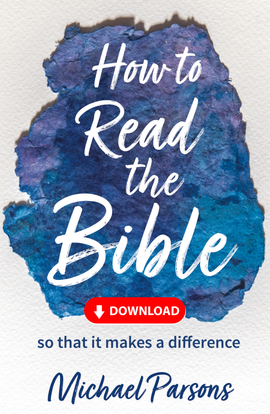
{"id":14779549122940,"title":"How to Read the Bible... so that it makes a difference","handle":"how-to-read-the-bible-so-that-it-makes-a-difference-1","description":"\u003cp\u003e\u003cspan\u003e\u003cspan style=\"color: rgb(255, 42, 0);\"\u003e\u003cstrong\u003eDigital eBook Only - \u003c\/strong\u003e\u003c\/span\u003e\u003c\/span\u003eTo read and engage with the Bible, we first need to understand the story, the styles of writing and the approaches we find in the text. Michael Parsons encourages readers to look at the whole biblical storyline before demonstrating ways of approaching individual texts. Topics along the way include understanding different genres, the importance of narrative, imaginative reading, praying the Bible, difficult passages and what to do with them, and how to apply scripture to our own lives.\u003c\/p\u003e\n\u003ch5\u003eAuthor Information\u003c\/h5\u003e\n\u003cp\u003e\u003cspan\u003eMichael Parsons is Minister for Discipleship at Lechlade Baptist Church and has previously been a theology lecturer in the UK and Australia, and commissioning editor for Paternoster and The Bible Reading Fellowship. He is the author of books on the Reformation and an Associate Research Fellow at Spurgeon’s College, London.\u003c\/span\u003e\u003c\/p\u003e\n\u003ch5\u003e\u003cspan\u003eEndorsements\u003c\/span\u003e\u003c\/h5\u003e\n\u003cp\u003e\u003cspan\u003e‘Michael Parsons is passionate about the Bible – and it shows! He is also passionate about helping people engage with the Bible in ways that draw them into personal and transformative encounters with the God revealed in its pages. This book is bursting with resources to help us understand what the Bible is, how to read and study it for ourselves, and how to know God better as we do so; it is a richly rewarded read!’\u003cbr\u003eMags Duggan, author and speaker\u003c\/span\u003e\u003c\/p\u003e\n\u003cp\u003e \u003c\/p\u003e\n\u003ch5\u003e\n\u003cspan\u003eReviews\u003c\/span\u003e\u003cstrong\u003e \u003c\/strong\u003e\n\u003c\/h5\u003e\n\u003cp\u003e\u003cstrong\u003eTransforming Ministry, September 2020. Review by Veronica Bright\u003c\/strong\u003e\u003c\/p\u003e\n\u003cp\u003e‘We read scripture to hear God speak to us, to relate to us in and through Christ.’ The author emphasises engaging with the text, rather than merely reading it, and he sets out to explain and demonstrate how his readers may do this, in a number of different ways. He offers exercises at chapter ends, so that individuals or groups may further their experience of the topic presented. As a writer I found the chapter on poetic language interesting. We are so used to imagery in the novels we read now, but when the psalmist uses imagery, for example, it would probably have been the first time a phrase or word was used creatively. Parsons is an experienced minister and theology lecturer, and he writes clearly and encouragingly. Sometimes I feel he leads readers towards his own viewpoint, rather than guiding them to form their own. The concluding chapter in the book considers the reasons we want to be biblically literate. By the end I was conscious that behind each book in the Bible there is a writer, and beside each writer there is God.\u003c\/p\u003e\n\u003cp\u003e\u003cem\u003eReview by Veronica Bright\u003c\/em\u003e\u003c\/p\u003e\n\u003cp\u003e \u003c\/p\u003e\n\u003cp\u003e\u003cstrong\u003eTouchstone, the monthly newspaper of the Methodist Church of New Zealand, July 2020. Review by John Meredith\u003c\/strong\u003e\u003c\/p\u003e\n\u003cp\u003eThe intention of the book is to help readers who want to read the Bible with comprehension and application to life today. In this, it achieves its aim. Readers are invited to be prepared to think things through as they read and to try out the strategies the author suggests.\u003c\/p\u003e\n\u003cp\u003eThe book is presented in four parts: \u003c\/p\u003e\n\u003cp\u003eFirst, the foundation for reading the Bible today. Rather than every word being dictated by God, the Bible has come to us through human authors and editors all of whom were seeking to convey their experience of God as a presence in the midst of life. Through their words we may hear God speaking as one who addresses us in the life of our day. As we listen we discover that the Bible has a voice directed to us. God speaks to those who read the Bible in this way.\u003c\/p\u003e\n\u003cp\u003eSecond, macro strategies: how to read the narratives. It may be argued that the major coordinates shaping the whole Bible are creation, the fall, redemption and the new creation. We are pulled into these narratives as we read and listen. The Bible does not give us definitive answers on issues such as divorce, nuclear war, use of the internet, gay rights or animal testing. As we engage with God’s word, however, we learn to respond in ways that are consistent with God’s character. \u003c\/p\u003e\n\u003cp\u003eThird, micro strategies: how to read the text. This section includes a number of helpful exercises for reading imaginatively and reflectively. While we will find in the Bible expressions of God’s judgement the author stresses how we should always be looking for hints of God’s grace even if this means questioning a text as we read. Each of the ten chapters in part three ends with an exercise where readers are invited to put into practice the steps for reading specific texts.\u003c\/p\u003e\n\u003cp\u003eFour, things to take into account that will inform thoughtful engagement with the text. The chapters in this section also include practical exercises. The author directs attention to the words in the text, the writer’s emotions, the literary devices used by writers, how to regard long and tedious lists of names and details and the way the gospels present Jesus and invite us to respond to him within the context of our own lives.\u003c\/p\u003e\n\u003cp\u003eThe book ends by asking why read the Bible? In summary, reading the Bible is an essential aspect of worship, from the Bible we learn about the grace and mercy of God, especially of God’s love in Jesus Christ, it offers strength and hope for the most trying circumstances and inspires us to act with Spirit-filled justice and compassion.\u003c\/p\u003e\n\u003cp\u003e\u003cem\u003eHow to Read the Bible \u003c\/em\u003epresents a scholarly approach in a non-threatening way. The practical exercises suggested are an invaluable resource for those who wish to improve their biblical literacy. It is especially recommended for group study.\u003c\/p\u003e\n\u003cp\u003e\u003cem\u003eReviewed by John Meredith, editor of Word \u0026amp; Worship the quarterly publication of the New Zealand Lay Preachers Association\u003c\/em\u003e\u003c\/p\u003e\n\u003cp\u003e \u003c\/p\u003e\n\u003cp\u003e\u003cstrong\u003eReviewed by Richard Frost\u003c\/strong\u003e\u003c\/p\u003e\n\u003cp\u003eBeing a Minister for Discipleship at Lechlade Baptist Church, former theology lecturer both here and in Australia and former Commissioning Editor at BRF, Michael Parsons knows what he’s talking about. From rigorous analysis to comparing life as a Christian with shooting ‘the rapids’ at Centre Parcs, in this book he explores a heady mixture of practical, Biblical insights and academic theology in a readable, usable and at times challenging way.\u003c\/p\u003e\n\u003cp\u003eInitially considering what he calls ‘macro’ strategies of how to read and understand the Bible, he offers practical ways of exploring these for ourselves either alone or in groups. The book then moves from the academic to the practical by considering a variety of ‘micro’ strategies such as Ignatian imagination-based meditation and variations of \u003cem\u003electio divina\u003c\/em\u003e (spiritual reading) through to engaging with the narrative by focusing on specific sentences or verses and how that enriches our understanding - and how the Bible itself encourages us to ‘turn being in to doing’. Final sections consider the poetic language of the Bible, its use of rhetoric and repetition, and the more difficult and, to be frank, boring bits that these scriptures contain.\u003c\/p\u003e\n\u003cp\u003e‘The Bible, then, is a post-fall witness to God’s revelation of himself, of his presence, intentions and historical activity,’ Michael Parsons writes. ‘The Bible is a continuing, written witness to how the Lord has revealed himself to the world.\u003c\/p\u003e\n\u003cp\u003e‘If the authors of the biblical books find it terribly difficult – nearly impossible – to describe the God who speaks to them, then on reading scripture we shouldn’t be dismayed that we sometimes can’t picture what they are saying to us. If they struggled with the original revelation, how much more will we with the imperfect representation of it?’\u003c\/p\u003e\n\u003cp\u003eThe plethora of approaches to reading the Bible that are explored in this book is helpful and, lest it becomes overwhelming, each reader will need to determine for themselves which method may or may not work for them. Helpful to that is the way each chapter finishes with some suggestions about how to put the ‘strategy’ as Michael Parsons calls them, in to practice for oneself.\u003c\/p\u003e\n\u003cp\u003eThis is a book to take one’s time over and the learning will be all the richer for that.\u003c\/p\u003e\n\u003cp\u003eRichard Frost is the author of \u003ca href=\"https:\/\/www.brfonline.org.uk\/products\/life-with-st-benedict-the-rule-re-imagined-for-everyday-living\"\u003e\u003cem\u003eLife with St Benedict\u003c\/em\u003e\u003c\/a\u003e and writes a blog at \u003ca href=\"http:\/\/workrestpray.com\/\"\u003eworkrestpray.com\u003c\/a\u003e\u003c\/p\u003e","published_at":"2024-10-30T09:44:04+00:00","created_at":"2024-10-30T09:43:04+00:00","vendor":"Michael Parsons","type":"eBook","tags":["Biblical engagement","Glassboxx","Group reading","Jan-20"],"price":899,"price_min":899,"price_max":899,"available":true,"price_varies":false,"compare_at_price":null,"compare_at_price_min":0,"compare_at_price_max":0,"compare_at_price_varies":false,"variants":[{"id":53604769169788,"title":"eBook","option1":"eBook","option2":null,"option3":null,"sku":"9780857468109","requires_shipping":false,"taxable":false,"featured_image":null,"available":true,"name":"How to Read the Bible... so that it makes a difference - eBook","public_title":"eBook","options":["eBook"],"price":899,"weight":600,"compare_at_price":null,"inventory_management":"shopify","barcode":"9780857468109","requires_selling_plan":false,"selling_plan_allocations":[]}],"images":["\/\/www.brfonline.org.uk\/cdn\/shop\/files\/283.png?v=1730980384","\/\/www.brfonline.org.uk\/cdn\/shop\/files\/284.png?v=1730980324"],"featured_image":"\/\/www.brfonline.org.uk\/cdn\/shop\/files\/283.png?v=1730980384","options":["Format"],"media":[{"alt":null,"id":63001501401468,"position":1,"preview_image":{"aspect_ratio":0.652,"height":2000,"width":1303,"src":"\/\/www.brfonline.org.uk\/cdn\/shop\/files\/283.png?v=1730980384"},"aspect_ratio":0.652,"height":2000,"media_type":"image","src":"\/\/www.brfonline.org.uk\/cdn\/shop\/files\/283.png?v=1730980384","width":1303},{"alt":null,"id":63001486459260,"position":2,"preview_image":{"aspect_ratio":0.652,"height":2000,"width":1303,"src":"\/\/www.brfonline.org.uk\/cdn\/shop\/files\/284.png?v=1730980324"},"aspect_ratio":0.652,"height":2000,"media_type":"image","src":"\/\/www.brfonline.org.uk\/cdn\/shop\/files\/284.png?v=1730980324","width":1303}],"requires_selling_plan":false,"selling_plan_groups":[],"content":"\u003cp\u003e\u003cspan\u003e\u003cspan style=\"color: rgb(255, 42, 0);\"\u003e\u003cstrong\u003eDigital eBook Only - \u003c\/strong\u003e\u003c\/span\u003e\u003c\/span\u003eTo read and engage with the Bible, we first need to understand the story, the styles of writing and the approaches we find in the text. Michael Parsons encourages readers to look at the whole biblical storyline before demonstrating ways of approaching individual texts. Topics along the way include understanding different genres, the importance of narrative, imaginative reading, praying the Bible, difficult passages and what to do with them, and how to apply scripture to our own lives.\u003c\/p\u003e\n\u003ch5\u003eAuthor Information\u003c\/h5\u003e\n\u003cp\u003e\u003cspan\u003eMichael Parsons is Minister for Discipleship at Lechlade Baptist Church and has previously been a theology lecturer in the UK and Australia, and commissioning editor for Paternoster and The Bible Reading Fellowship. He is the author of books on the Reformation and an Associate Research Fellow at Spurgeon’s College, London.\u003c\/span\u003e\u003c\/p\u003e\n\u003ch5\u003e\u003cspan\u003eEndorsements\u003c\/span\u003e\u003c\/h5\u003e\n\u003cp\u003e\u003cspan\u003e‘Michael Parsons is passionate about the Bible – and it shows! He is also passionate about helping people engage with the Bible in ways that draw them into personal and transformative encounters with the God revealed in its pages. This book is bursting with resources to help us understand what the Bible is, how to read and study it for ourselves, and how to know God better as we do so; it is a richly rewarded read!’\u003cbr\u003eMags Duggan, author and speaker\u003c\/span\u003e\u003c\/p\u003e\n\u003cp\u003e \u003c\/p\u003e\n\u003ch5\u003e\n\u003cspan\u003eReviews\u003c\/span\u003e\u003cstrong\u003e \u003c\/strong\u003e\n\u003c\/h5\u003e\n\u003cp\u003e\u003cstrong\u003eTransforming Ministry, September 2020. Review by Veronica Bright\u003c\/strong\u003e\u003c\/p\u003e\n\u003cp\u003e‘We read scripture to hear God speak to us, to relate to us in and through Christ.’ The author emphasises engaging with the text, rather than merely reading it, and he sets out to explain and demonstrate how his readers may do this, in a number of different ways. He offers exercises at chapter ends, so that individuals or groups may further their experience of the topic presented. As a writer I found the chapter on poetic language interesting. We are so used to imagery in the novels we read now, but when the psalmist uses imagery, for example, it would probably have been the first time a phrase or word was used creatively. Parsons is an experienced minister and theology lecturer, and he writes clearly and encouragingly. Sometimes I feel he leads readers towards his own viewpoint, rather than guiding them to form their own. The concluding chapter in the book considers the reasons we want to be biblically literate. By the end I was conscious that behind each book in the Bible there is a writer, and beside each writer there is God.\u003c\/p\u003e\n\u003cp\u003e\u003cem\u003eReview by Veronica Bright\u003c\/em\u003e\u003c\/p\u003e\n\u003cp\u003e \u003c\/p\u003e\n\u003cp\u003e\u003cstrong\u003eTouchstone, the monthly newspaper of the Methodist Church of New Zealand, July 2020. Review by John Meredith\u003c\/strong\u003e\u003c\/p\u003e\n\u003cp\u003eThe intention of the book is to help readers who want to read the Bible with comprehension and application to life today. In this, it achieves its aim. Readers are invited to be prepared to think things through as they read and to try out the strategies the author suggests.\u003c\/p\u003e\n\u003cp\u003eThe book is presented in four parts: \u003c\/p\u003e\n\u003cp\u003eFirst, the foundation for reading the Bible today. Rather than every word being dictated by God, the Bible has come to us through human authors and editors all of whom were seeking to convey their experience of God as a presence in the midst of life. Through their words we may hear God speaking as one who addresses us in the life of our day. As we listen we discover that the Bible has a voice directed to us. God speaks to those who read the Bible in this way.\u003c\/p\u003e\n\u003cp\u003eSecond, macro strategies: how to read the narratives. It may be argued that the major coordinates shaping the whole Bible are creation, the fall, redemption and the new creation. We are pulled into these narratives as we read and listen. The Bible does not give us definitive answers on issues such as divorce, nuclear war, use of the internet, gay rights or animal testing. As we engage with God’s word, however, we learn to respond in ways that are consistent with God’s character. \u003c\/p\u003e\n\u003cp\u003eThird, micro strategies: how to read the text. This section includes a number of helpful exercises for reading imaginatively and reflectively. While we will find in the Bible expressions of God’s judgement the author stresses how we should always be looking for hints of God’s grace even if this means questioning a text as we read. Each of the ten chapters in part three ends with an exercise where readers are invited to put into practice the steps for reading specific texts.\u003c\/p\u003e\n\u003cp\u003eFour, things to take into account that will inform thoughtful engagement with the text. The chapters in this section also include practical exercises. The author directs attention to the words in the text, the writer’s emotions, the literary devices used by writers, how to regard long and tedious lists of names and details and the way the gospels present Jesus and invite us to respond to him within the context of our own lives.\u003c\/p\u003e\n\u003cp\u003eThe book ends by asking why read the Bible? In summary, reading the Bible is an essential aspect of worship, from the Bible we learn about the grace and mercy of God, especially of God’s love in Jesus Christ, it offers strength and hope for the most trying circumstances and inspires us to act with Spirit-filled justice and compassion.\u003c\/p\u003e\n\u003cp\u003e\u003cem\u003eHow to Read the Bible \u003c\/em\u003epresents a scholarly approach in a non-threatening way. The practical exercises suggested are an invaluable resource for those who wish to improve their biblical literacy. It is especially recommended for group study.\u003c\/p\u003e\n\u003cp\u003e\u003cem\u003eReviewed by John Meredith, editor of Word \u0026amp; Worship the quarterly publication of the New Zealand Lay Preachers Association\u003c\/em\u003e\u003c\/p\u003e\n\u003cp\u003e \u003c\/p\u003e\n\u003cp\u003e\u003cstrong\u003eReviewed by Richard Frost\u003c\/strong\u003e\u003c\/p\u003e\n\u003cp\u003eBeing a Minister for Discipleship at Lechlade Baptist Church, former theology lecturer both here and in Australia and former Commissioning Editor at BRF, Michael Parsons knows what he’s talking about. From rigorous analysis to comparing life as a Christian with shooting ‘the rapids’ at Centre Parcs, in this book he explores a heady mixture of practical, Biblical insights and academic theology in a readable, usable and at times challenging way.\u003c\/p\u003e\n\u003cp\u003eInitially considering what he calls ‘macro’ strategies of how to read and understand the Bible, he offers practical ways of exploring these for ourselves either alone or in groups. The book then moves from the academic to the practical by considering a variety of ‘micro’ strategies such as Ignatian imagination-based meditation and variations of \u003cem\u003electio divina\u003c\/em\u003e (spiritual reading) through to engaging with the narrative by focusing on specific sentences or verses and how that enriches our understanding - and how the Bible itself encourages us to ‘turn being in to doing’. Final sections consider the poetic language of the Bible, its use of rhetoric and repetition, and the more difficult and, to be frank, boring bits that these scriptures contain.\u003c\/p\u003e\n\u003cp\u003e‘The Bible, then, is a post-fall witness to God’s revelation of himself, of his presence, intentions and historical activity,’ Michael Parsons writes. ‘The Bible is a continuing, written witness to how the Lord has revealed himself to the world.\u003c\/p\u003e\n\u003cp\u003e‘If the authors of the biblical books find it terribly difficult – nearly impossible – to describe the God who speaks to them, then on reading scripture we shouldn’t be dismayed that we sometimes can’t picture what they are saying to us. If they struggled with the original revelation, how much more will we with the imperfect representation of it?’\u003c\/p\u003e\n\u003cp\u003eThe plethora of approaches to reading the Bible that are explored in this book is helpful and, lest it becomes overwhelming, each reader will need to determine for themselves which method may or may not work for them. Helpful to that is the way each chapter finishes with some suggestions about how to put the ‘strategy’ as Michael Parsons calls them, in to practice for oneself.\u003c\/p\u003e\n\u003cp\u003eThis is a book to take one’s time over and the learning will be all the richer for that.\u003c\/p\u003e\n\u003cp\u003eRichard Frost is the author of \u003ca href=\"https:\/\/www.brfonline.org.uk\/products\/life-with-st-benedict-the-rule-re-imagined-for-everyday-living\"\u003e\u003cem\u003eLife with St Benedict\u003c\/em\u003e\u003c\/a\u003e and writes a blog at \u003ca href=\"http:\/\/workrestpray.com\/\"\u003eworkrestpray.com\u003c\/a\u003e\u003c\/p\u003e"}
You may also like:
How to Read the Bible... so that it makes a difference
£8.99
Digital eBook Only - To read and engage with the Bible, we first need to understand the story, the styles...
{"id":14675938345340,"title":"God of Violence Yesterday, God of Love Today? Wrestling honestly with the Old Testament","handle":"god-of-violence-yesterday-god-of-love-today-wrestling-honestly-with-the-old-testament-1","description":"\u003cp\u003e\u003cspan\u003e\u003cspan style=\"color: rgb(255, 42, 0);\"\u003e\u003cstrong\u003eDigital eBook Only - \u003c\/strong\u003e\u003c\/span\u003e\u003c\/span\u003eDo you find the violence in the Old Testament a problem? Does it get in the way of reading the Bible – and of faith itself? While acknowledging that there are no easy answers, in \u003cem\u003eGod of Violence Yesterday, God of Love Today\u003c\/em\u003e?, Helen Paynter faces the tough questions head-on and offers a fresh, accessible approach to a significant issue. For all those seeking to engage with the Bible and gain confidence in the God it portrays, she provides tools for reading and interpreting biblical texts, and points to ways of dealing with the overall trajectories of violence.\u003c\/p\u003e\n\u003ch5\u003eAuthor Info\u003c\/h5\u003e\n\u003cdiv style=\"text-align: left;\"\u003e\u003cimg style=\"margin-right: 10px; float: left;\" alt=\"\" src=\"https:\/\/cdn.shopify.com\/s\/files\/1\/0148\/6107\/4532\/files\/HelenPaynterseriousface_480x480.jpg?v=1676497452\" width=\"284\" height=\"189\"\u003e\u003c\/div\u003e\n\u003cp\u003eFollowing a first career in medicine, Helen Paynter is now a Baptist minister, Director of the Centre for the Study of Bible and Violence at Bristol Baptist College, and Editor of BRF’s Guidelines Bible reading notes. Helen is passionate about helping people to get to grips with the Bible because she has seen its power to transform lives. She loves to study it, preach it, teach it, and encourage others to study and understand it.\u003c\/p\u003e\n\u003ch5\u003eEndorsements\u003c\/h5\u003e\n\u003cp\u003e\u003cstrong\u003ePaul Copan, Professor of Philosophy and Ethics at the Palm Beach Atlantic University, the author of 'Is God a Moral Monster?', and the co-author of 'Did God Really Command Genocide?'\u003c\/strong\u003e\u003c\/p\u003e\n\u003cp\u003eHelen Paynter’s exploration of Old Testament ethical challenges is insightful, balanced and honest. I appreciate the fact that she does not deny divine severity while putting in perspective God's goodness. She admits that she is still wrestling and learning, as indeed I am. She humbly but boldly approaches an array of key topics and she writes with deep pastoral concern. Her treatment of the imprecatory psalms is particularly effective and illuminating. While I have a few quibbles here and there, I want to emphasize the spirit, the breadth, and the balance of this book. It sheds light on a complex and controversial subject, encouraging further conversation and deeper understanding.\u003c\/p\u003e\n\u003cp\u003e \u003c\/p\u003e\n\u003cp\u003e\u003cstrong\u003eThe Rev'd Dr. Lissa M. Wray Beal, Professor of Old Testament, Chair, Seminary Bible and Theology Department, Providence University College and Theological Seminary\u003c\/strong\u003e\u003c\/p\u003e\n\u003cp\u003eIn \u003cem\u003eGod of Violence Yesterday, God of Love Today? Honestly wrestling with the Old Testament\u003c\/em\u003e, Helen Paynter tackles problematic texts of violence in the Old Testament. The questions Paynter asks are pressing ones today, and she sketches out the complex issues clearly but without undue oversimplification. Outlining valuable principles of interpretation and applying them in worked examples, the author’s candor and pastoral attentiveness invite readers into the conversation. The volume models Christian engagement with the biblical text and shows the value of \u003cem\u003ehonest wrestling\u003c\/em\u003e within the text’s own vision of \u003cem\u003eshalom\u003c\/em\u003e. Providing tools to think not only about specific texts of violence, but the biblical text more broadly, it is a welcome and compact initial resource for Christian laypeople troubled by biblical texts of violence.\u003c\/p\u003e\n\u003cp\u003e \u003c\/p\u003e\n\u003cp\u003e\u003cstrong\u003eJohn Meredith Editor of Word \u0026amp; Worship, the publication of the NZ Lay Preachers Association\u003c\/strong\u003e\u003c\/p\u003e\n\u003cp\u003eIn lucid prose Helen Paynter argues that violence featured in the biblical canon should not be ignored or denied but acknowledged and faced honestly. While history is played out in a broken and often violent world the author shows how the movement of scripture is toward God’s creative intention for healing and wholeness. Without providing final answers Paynter offers ways of interpreting even the most violent passages so that we may hear God’s word for today.\u003c\/p\u003e\n\u003cp\u003e \u003c\/p\u003e\n\u003ch5\u003eReviews\u003c\/h5\u003e\n\u003cp\u003e\u003cstrong\u003eReviewed by Natalie Collins, gender justice specialist: see \u003ca href=\"http:\/\/www.nataliecollins.info\/\"\u003ewww.nataliecollins.info\u003c\/a\u003e \u003c\/strong\u003eTweets as GodLovesWomen and wrote \u003cem\u003eOut of Control: Couples, Conflict and the Capacity for Change\u003c\/em\u003e\u003c\/p\u003e\n\u003cp\u003eThis relatively small book faces some massive theological questions about the nature of violence in the Old Testament. Exploring different types of violence in the Bible, including that against animals, and perhaps the most troubling, when it appears that God commands genocide, Helen Paynter expertly guides us through complex theological terrain and explains this complexity in down to earth and easily accessible ways. This book is ideal for someone with no\u003cbr\u003etheological training to begin exploring challenging elements of the Bible, with those with formal theological training also able to learn from her. Those in church leadership should read this book so they are able to recommend it to their congregations. While challenging, the book seems to be pitched to a conservative 'Bible believing' audience, which may jar with those who have a more liberal approach to Scripture, but overall it’s a great, engaging, manageably short book. As Helen says, she can’t wholly resolve the tensions of the most problematic texts, but she does give much food for thought and some\u003cbr\u003etools for Christians who want to more ably identify where God is in the text and what God is saying to us through it.\u003cstrong\u003e\u003cbr\u003e\u003c\/strong\u003e\u003cem\u003eReviewed by Natalie Collins\u003c\/em\u003e\u003c\/p\u003e\n\u003cp\u003e \u003c\/p\u003e\n\u003cp\u003e\u003cstrong\u003eTheology 2019, Vol 122(6). Review by Robin Gill\u003c\/strong\u003e\u003c\/p\u003e\n\u003cp\u003eHelen Paynter is a Baptist minister and director of the new Centre for the Study of Bible and Violence at Bristol. This accessible and refreshingly honest paperback, published by The Bible Reading Fellowship is very welcome indeed. It examines carefully some of the most troublesome texts in the Old Testament and it does so in stages, as she explains:\u003c\/p\u003e\n\u003cp\u003e'First, we will consider instances where violence is \u003cem\u003ede\u003c\/em\u003escribed, not \u003cem\u003epre\u003c\/em\u003escribed\u003cem\u003e. \u003c\/em\u003eNext we will look at places – mainly the psalms – where violence is implored: where the psalmist prays for vengeance. Third, we will consider the issue of violence against animals, particularly the flood story and the system of animal sacrifice. Fourth, we will look at the use of violence as divine judgement. And fifth, we will look at the knottiest problem of all: the texts where God appears to command people to be violent to one another. At the end of most of the chapters in this section I offer some more practical suggestions. How should we handle these texts in our churches – in our pulpits, our home groups, our Sunday schools? And then, in the final chapter, we will ‘zoom back out’ and take a look at the big picture of the bible.'\u003c\/p\u003e\n\u003cp\u003eThere is nothing particularly novel about any of this, but that is not the point. Her message needs to be heard in a context of widespread fear of religiously inspired violence. This small book and her new Centre make an excellent contribution to greater understanding.\u003c\/p\u003e\n\u003cp\u003e\u003cem\u003eReviewed by Robin Gill\u003c\/em\u003e\u003c\/p\u003e\n\u003cp\u003e \u003c\/p\u003e\n\u003cp\u003e\u003cstrong\u003eAnabaptism Today Autumn 2019. Review by Alexandra Ellish\u003c\/strong\u003e \u003c\/p\u003e\n\u003cp\u003eMany people from both within and outside of church communities are confused and uncomfortable with accounts of violence in the Scriptures, and the all too frequent appeal to biblical sources to justify modern-day warfare, military action and the ownership of weapons. In this helpful and accessible book, Helen Paynter seeks to address some of the questions and issues raised by texts containing violence in the Old Testament and considers how we might interpret and understand them today. \u003c\/p\u003e\n\u003cp\u003eThe book is divided into two sections. Part One sets out some essential foundations – reading the Bible as God’s word; defining and understanding violence within the ancient world; and some possible tools for interpretation. The second part of the book considers five types of violence, ranging with increasing complexity from: texts with descriptive versus prescriptive accounts of violence; texts imploring the use of violence; the sacrificial system and a consideration of the flood; violence as used in accounts of divine judgement; and finally texts in which God seems to be commanding violence.\u003c\/p\u003e\n\u003cp\u003eWhen reading violence contained in the psalms, the author notes the importance of paying attention to the psalmist’s use of language – particularly allegory and metaphor – to argue for a deeper reading of the texts. While there are psalms calling for God to punish enemies, this desire is usually held in tension with an acknowledgement of ultimate trust in God’s wisdom and sovereignty. Paynter suggests that psalms which implore God to use violence to exact vengeance on enemies or oppressors have cathartic value in the context of communal worship – that these psalms remind us that we can bring all of our experiences and humanity to God in worship. Paynter advocates using the imprecatory psalms in worship today by depersonalising the ‘enemies’ of God and people to include issues around ecological catastrophe, serious and debilitating illness, domestic violence and all things which result in death. As the church frequently draws on the psalms of joy and thanksgiving for times of celebration and praise, this encouragement takes seriously the possibility of expressing painful, difficult and angry feelings that we have, in the context of a community of faith which trusts that God is in charge and loves his people.\u003c\/p\u003e\n\u003cp\u003eThe fourth chapter considers violence in divine judgement as a reminder of the nature of God as a just judge who is our friend and ‘brother’ but is also ‘unbearable’ in his holiness. Paynter discusses the positive aspects of the law of \u003cem\u003etalion\u003c\/em\u003e which, she argues, Jesus extends rather than repudiates. The penultimate chapter is devoted to texts where violence is explicitly commanded by God. This chapter covers the most difficult passages, where Paynter untangles the complexity of defining the word \u003cem\u003eḥerem\u003c\/em\u003e. This word is often translated as ‘utterly destroy’ or ‘devote to complete destruction’ but its meaning is somewhat veiled. Paynter suggests that \u003cem\u003eḥerem\u003c\/em\u003e ‘does not always involve killing or destroying’ but that ‘\u003cem\u003eḥerem\u003c\/em\u003e sometimes involves killing’ (p. 128). She states that she cannot offer a definitive answer to the questions surrounding conquest and apparent mass killing, but that the word \u003cem\u003eḥerem \u003c\/em\u003eis used for rhetorical and hyperbolic purposes to portray events in a particular way in the ancient world. Paynter’s honesty and humility in the recognition that her offering might be only partially satisfactory and her desire to continue to ‘nibble’ (p. 153) at the issue alongside others is immensely refreshing and rare! \u003c\/p\u003e\n\u003cp\u003eIn the final chapter, Paynter considers the arc of the biblical narrative and argues that the vision of God demonstrated throughout the Scriptures is for \u003cem\u003eshalom\u003c\/em\u003e for all of creation. While I was pleased to see the concept of \u003cem\u003eshalom\u003c\/em\u003e included in the book, I thought that more could have been made of this subject and how we might understand \u003cem\u003eshalom\u003c\/em\u003e in relation to violence in the Old Testament. Similarly, in an early chapter the centrality of the life and person of Jesus as a lens for interpretation is briefly mentioned but not elaborated. Since I come to the topic of violence with Anabaptist convictions, perhaps it is no surprise that I would have enjoyed a fuller consideration of these subjects earlier in the book, instead of waiting until the final chapter for a somewhat limited exploration of the concept of \u003cem\u003eshalom\u003c\/em\u003e.\u003c\/p\u003e\n\u003cp\u003ePaynter assumes that the value of the image of the eating of the forbidden fruit in the garden of Eden and the subsequent ‘fall’ is to explain the entry of death, competition and violence into the world. This understanding all too easily reduces Jesus to nothing more than a rescuer come to reverse the fall. I am not sure how helpful this is. \u003cem\u003eShalom\u003c\/em\u003e is the narrative arc of our Scriptures; Jesus who is the Christ is\/was, in my view, always going to be the incarnation of God on earth as a pattern for humanity. This impacts how we understand the crucifixion of Jesus, and I would have been interested to read more from Paynter on this issue. Particularly for our western Protestant tradition, which has largely abandoned other atonement theories to focus on the (arguably violent) theory of penal substitution, are there more appropriate ways of exploring and articulating the crucifixion and resurrection of Christ which fulfil rather than undermine a \u003cem\u003eshalom \u003c\/em\u003enarrative?\u003c\/p\u003e\n\u003cp\u003ePaynter is categorical in her rejection of the appropriation of violence from the Old Testament texts for today, and also touches very briefly on the inappropriate conflation of the historic nation of Israel and the modern state. More on this issue would have been instructive, particularly as many pro-Israel churches support the government and its policies of occupation in Palestine based on their understanding of texts from the Old Testament.\u003c\/p\u003e\n\u003cp\u003eI found Paynter’s writing style clear and engaging. She uses interesting and relevant examples to illustrate the issues she is dealing with, often drawing on contemporary stories. It is clear that Paynter is passionate about the importance of the Old Testament for personal and corporate faith today, and she argues persuasively for and offers numerous practical suggestions for wrestling with the Scriptures communally and individually. Paynter also suggests a wide range of other books for the reader to delve more deeply into the issues she has raised. I look forward to further publications from Paynter as she continues to wrestle with the Bible, in search of fresh insight and understanding to inform our discipleship.\u003c\/p\u003e\n\u003cp\u003e\u003cem\u003eReviewed by Alexandra Ellish, London\u003c\/em\u003e\u003c\/p\u003e\n\u003cp\u003e \u003c\/p\u003e\n\u003cp\u003e\u003cstrong\u003eBaptist Ministers Journal. Review by Pieter J Lalleman\u003c\/strong\u003e\u003c\/p\u003e\n\u003cp\u003eThis book is timely, courageous and good. I therefore strongly recommend it to you and your church members. Revd Dr Helen Paynter of Bristol Baptist College has tackled one of the hot issues of the moment, the violence in the Old Testament (OT). It’s unlikely that you have not been asked about this by someone within or outside your congregation; if not, you’ll get the question soon: ‘How can a loving God condone and even order so much violence?’ Paynter helps you to give a Bible-based answer. She does not follow the common escape routes of either denying that this is what the OT really says or ascribing the violence to human authors who had not quite understood God. Instead she listens attentively to what the OT really says.\u003c\/p\u003e\n\u003cp\u003eThe book is in two parts, the first of which is a general introduction to the Bible and how to read it well. Paynter explains that her approach will be biblical and Christocentric, and she defends the position of the OT within the Christian scriptures. As a potted hermeneutic this part of the book has a more general value. For example, readers learn about the various genres in the Bible and about the distinction between description and endorsement. Here we also find a useful chapter on what violence is.\u003c\/p\u003e\n\u003cp\u003eIn the second part Paynter tackles the OT in concentric circles, beginning with the relatively simple texts in which violence is merely described. This is followed by texts in which violence is deplored, psalms which call upon God to use violence, texts about violence against animals and texts in which the use of violence is part of a divine judgement. Throughout her discussions are careful and helpful. Paynter’s response to the usual argument that the Canaanites deserved to be punished for their wickedness was a surprise to me; if you want to know what it is, buy and read the book! The final chapter, intended as a positive counterpart to the preceding misery, deals with God’s plan of \u003cem\u003eshalom\u003c\/em\u003e for his good creation.\u003c\/p\u003e\n\u003cp\u003eThroughout Paynter’s tone is humble. She is honest about her own struggles and about points where she is uncertain. She refers to the book of Joshua as something that ‘feels alien and disturbing’.\u003c\/p\u003e\n\u003cp\u003eFor the most part, the book is easy to read; at times it is almost basic, which means that it is largely right for many church members. At the end of the chapters there are summaries and the notes are tucked away as end-notes. Some may find it uncomfortable that Paynter describes the flood as a myth (94-95), but that should not distract anybody.\u003c\/p\u003e\n\u003cp\u003eSo it is a perfect book? No, because it contains some typos and there is no index of texts. Some elements of the discussion might still be complicated for ‘lay people’. I would also have liked to read a bit more about the character of God. But these minor quibbles are just that: minor quibbles. \u003c\/p\u003e\n\u003cp\u003e\u003cem\u003eReview by Pieter J Lalleman\u003c\/em\u003e\u003c\/p\u003e\n\u003cp\u003e \u003c\/p\u003e\n\u003cp\u003e\u003cstrong\u003ePreach, issue 20, Autumn 2019. Review by Tom Wharin\u003c\/strong\u003e\u003c\/p\u003e\n\u003cp\u003eThis is the third book I’ve read on the subject of violence in the Bible in the last couple of years and it is also the most helpful. \u003cem\u003eGod of Violence yesterday, God of Love Today? \u003c\/em\u003eHas a clear and helpful structure even if the title is a bit of a mouthful. Helen Paynter starts by laying out her unapologetically Christocentric hermeneutic (to which I also subscribe). She then works through the biblical texts containing violence, from the ones she regards as least troubling (violence implored by the writer) to the ones she considers most troubling (violence commanded by God).\u003c\/p\u003e\n\u003cp\u003eThe book does contain plenty of literary and historical-critical arguments which won’t appeal to a wide popular audience but Helen Paynter is very readable. Theological concepts are well explained with reference to everyday events, familiar news and historical stories. In addition to her marshalling her own thoughts well, Helen Paynter draws on and explains some of the best arguments in John H. Walton \u0026amp; J. Harvey Walton’s and Greg Boyd’s books (among others) in a way that makes them more accessible to readers like me than the originals.\u003c\/p\u003e\n\u003cp\u003eAs an apologia for violence in the Bible to twenty-first century western culture, the book as a whole feels like a pretty solid bridge two-thirds of the way across a cultural canyon. The reader is left with more construction to do on either cliff or both, and the author honestly acknowledges this as our work and hers in the introduction and conclusion.\u003c\/p\u003e\n\u003cp\u003eI will definitely be recommending this book to anyone from sixth form up who is serious about engaging with God’s word on this subject. The structure will make it easy to dip back into for sermon references and it will serve very well as an introduction to this area of apologetics.\u003c\/p\u003e\n\u003cp\u003e\u003cem\u003eReviewed by Tom Wharin\u003c\/em\u003e\u003c\/p\u003e\n\u003cp\u003e \u003c\/p\u003e\n\u003cp\u003e \u003c\/p\u003e\n\u003cp\u003e \u003c\/p\u003e\n\u003cp\u003e\u003cstrong\u003eMethodist Recorder 16 August, 2019. Summer paperback roundup by Cavan Wood\u003c\/strong\u003e\u003c\/p\u003e\n\u003cp\u003eIn \u003cem\u003eGod of Violence Yesterday, God of Love Today?\u003c\/em\u003e the author Helen Paynter has tried to tackle one of the most difficult questions of biblical theology. Why is it that the God of the Old Testament seems to sanction war and what we might today call ethnic cleansing, while the God of the New Testament seems to be all about love? This simple stereotyping of the argument is well dealt with, giving us many ideas to reflect on. She does not come to easy answers, but you will feel considerably better informed. This is a book to read a couple of times and perhaps to share with a reading group to think through the many issues that it raises.\u003c\/p\u003e\n\u003cp\u003e\u003cem\u003eCavan Wood\u003c\/em\u003e\u003c\/p\u003e\n\u003cp\u003e \u003c\/p\u003e\n\u003cp\u003e\u003cstrong\u003eReview by David Ball, GOLD Project, July 2019\u003c\/strong\u003e\u003c\/p\u003e\n\u003cp\u003eThis short book deals with one of the thorniest subjects for Christians who believe that God is love and at the same time believe that the Christian Scriptures in their totality are God’s word to us. Helen Paynter does not shy away from any of the challenges that passages of violence in the Scriptures, particularly the Old Testament, bring to a theology of God’s love.\u003c\/p\u003e\n\u003cp\u003ePart one introduces us to some key skills for interpreting the Old Testament. God’s goodness and the ultimate revelation of this in Jesus Christ sets the theological foundation by which we are to interpret the Scriptures. From this starting point, we are ably guided through what we do and what we don’t mean when we speak of the Bible as God’s Word to us. Here the indispensable place of the Old Testament for our Christian faith is emphasised. If we need a clear theological foundation to interpret the Bible responsibly, we also need a clear understanding of the issue we are dealing with. For this we are led through a careful discussion of the complexity of violence and how it manifests itself in society. This prepares us to look at the nature of the Old Testament and especially the challenge to understand the worldview of its writers and audience which is so often far removed from our own. Reading each passage of the Old Testament in the context of the big story of Scripture, understanding the type of literature that we are reading and wrestling with the meaning of the text are all key skills to hearing the message better. Another important reminder is to let different and apparently contradictory narratives or themes contribute to the big picture of how Scripture conveys a multi-layered voice on key issues such as human kingship. All of these skills prepare us to address the particular issue of violence and the Bible in more depth.\u003c\/p\u003e\n\u003cp\u003ePart two does precisely this. Here we engage with the texts of violence under five (increasingly problematic) headings: Violence described, Violence implored, Violence against animals, Violence as divine judgement, Violence commanded. In each of these chapters, a clear attempt is made to compare and contrast the biblical context with our own and to draw out the significance of texts for our own day. We are carefully guided through the different types of violence each of which demand a different response. For example, describing violence in both the Old Testament and our own day does not necessarily endorse it. On the contrary, it often gives a voice to victims who would otherwise be denied justice and a hearing. Imploring violence is better than actual violence and is not necessarily endorsed by the text either. As we are led into the more problematic aspects of violence in the Old Testament, we are necessarily introduced to more technical aspects of biblical interpretation. Nevertheless, these are explained clearly. While not everyone will agree with some of the readings of the Old Testament, what becomes clear is that it is possible to grapple with even the most difficult Old Testament texts and not lose our integrity as those who believe in a just and loving God revealed in the totality of our Scriptures.\u003c\/p\u003e\n\u003cp\u003eThe final chapter seeks to bring a resolution and explain that the trajectory of the biblical narrative is towards the biblical idea of shalom. Normally translated ‘peace’ the ‘core meaning relates to completeness or intactness and the range of meanings includes prosperity, welfare, good relationships, deliverance and health’ (p.157) It is a vision of this shalom that drives the narrative of the Bible forward from its beginning in Genesis to its conclusion in the New Testament book of Revelation.\u003c\/p\u003e\n\u003cp\u003eThe skill of interpreting the Bible responsibly in today’s world is one that anyone can learn. It is not easy and involves a struggle, but, above all, this is the significance of this book. For, while it addresses the particularly thorny issue of violence, it does far more than this. It gives us a practical model of how to wrestle with difficult issues in the Bible and society, seeking to listen to each text within the big framework of Scripture and to understand how this relates to our own context. Through this process, we can learn the skills of hearing God’s voice for today even in the difficult parts of the Bible.\u003c\/p\u003e\n\u003cp\u003e\u003cem\u003eReviewed by David Ball, GOLD Project\u003c\/em\u003e\u003c\/p\u003e\n\u003cp\u003e \u003c\/p\u003e\n\u003cp\u003e\u003cstrong\u003eReform July\/August 2019. Review by Catherine Ball\u003c\/strong\u003e\u003c\/p\u003e\n\u003cp\u003eThis is a particularly apposite book for our current political situation. John Lennon wrote the song ‘Imagine’, longing for a peaceful world, assuming that religion is one of the main causes of conflict. It would be lovely to be able to say that Christian scriptures do not advocate violence, or that only the Old Testament shows God as angry and violent. The temptation is to avoid difficult and violent Bible passages. Yet, the Old Testament is an essential part of the Christian scriptures. Helen Paynter shows that it is too simplistic to separate the Old Testament from the New.\u003c\/p\u003e\n\u003cp\u003ePaynter acknowledges that violence is apparently directed and endorsed by God in Old Testament texts. In an intellectually rigorous and accessible way, Paynter wrestles with each text to show that in many cases, the violence may become more understandable, and in some cases may be fully explained. She shows that each story needs to be carefully read in the context of ancient Hebrew language and culture.\u003c\/p\u003e\n\u003cp\u003eFor example, Paynter compares the battle of David and Goliath (1 Samuel 17 – in which David beheads Goliath – with Adam and Eve’s temptation by the serpent (Genesis 3). In both stories, there is a battle that will determine who has dominion and an evil force mocks God’s favoured. In the latter story, God curses the serpent and says that he will bruise the serpent’s head. God will have victory in the end. Though David – God’s chosen king, descended of Eve – is mocked by the giant who defies God, he is victorious. The pattern points to a greater king to come.\u003c\/p\u003e\n\u003cp\u003ePaynter warns of the need to be careful how these passages are taught to children, and how they are used in preaching. This is an exceedingly helpful book for anyone who wants to honestly teach and preach the scriptures for contemporary society, affirming God’s plan for peace in the world.\u003c\/p\u003e\n\u003cp\u003e\u003cem\u003eReviewed by Catherine Ball, Minister of the Free Church, St Ives, and Fenstanton URC, Cambridgeshire.\u003c\/em\u003e\u003c\/p\u003e\n\u003cp\u003e \u003c\/p\u003e\n\u003cp\u003e\u003cstrong\u003eProgressive Voices Issue 30,September 2019. Review by Ray Vincent\u003c\/strong\u003e\u003c\/p\u003e\n\u003cp\u003eHelen is Director of the Centre for the Study of Bible and Violence at Bristol Baptist College and the new Editor of BRF’s \u003cem\u003eGuidelines \u003c\/em\u003eBible reading notes. She is well placed to write this very accessible book. She deals with the problem in a very straightforward, systematic way, beginning with the less difficult and moving on to the most difficult ones.\u003c\/p\u003e\n\u003cp\u003eFirst she considers the places in the Bible where violence is simply described as part of the story. Then she moves on to where suffering people pray for vengeance on their oppressors – a natural human reaction. Next, violence against animals, pointing out the huge cultural difference between the Bible’s world and ours. Then she tackles violence as divine judgement, and finally the most difficult problem, the places where God seems actually to command acts of violence against innocent people.\u003c\/p\u003e\n\u003cp\u003ePaynter approaches the problem humbly, freely acknowledging that she does not have the answers but is still wrestling with the questions. However, it seems to me that her perception of the violence as a ‘problem’ comes from her relatively conservative view of the Bible as the Word of God. While acknowledging the humanity of the Bible and reading it in the light of critical scholarship, she seems nevertheless to be trying to justify everything it says, and hesitates to say that parts of it may be simply mistaken.\u003c\/p\u003e\n\u003cp\u003eI suspect that the way in which most of us perceive the Bible means that we do not see the violence in it as a ‘problem’ in this kind of way. At the same time, this book is clear, honest and admirably arranged. It is well worth using as a basis for discussion in churches. Some Progressive Christian Network groups too might find it useful. It is informative, reminding us of parts of the Bible we sometimes neglect, and it is thought-provoking and sometimes challenging.\u003c\/p\u003e\n\u003cp\u003e\u003cem\u003eReviewed by Ray Vincent\u003c\/em\u003e\u003c\/p\u003e\n\u003cp\u003e\u003cem\u003e \u003c\/em\u003e\u003c\/p\u003e\n\u003cp\u003e\u003cstrong\u003eReview by David Mitchell, Pastor, Woodlands Church, Bristol. May 2019\u003c\/strong\u003e\u003c\/p\u003e\n\u003cp\u003eHelen has written a book on one of the most difficult questions Christians face. In it she has managed to be both accessible, compassionate and scholarly as she navigates the tension between a high view of scripture and yet its depiction of God’s apparent actions and decrees in ways which offend our most basic instincts of what is good and loving.\u003c\/p\u003e\n\u003cp\u003eShe begins with a really helpful guide to reading the bible well whatever (and wherever) the biblical text is addressing, which I would commend to any serious reader of the bible, especially those coming to it fresh. She goes on to deal specifically with the issues of violence, not just to people; animals are included. She gives really helpful cultural context to hard passages without ducking some of the difficulties and ambiguities that remain even for her.\u003c\/p\u003e\n\u003cp\u003eShe invites us foundationally to see Jesus as God’s last word on the issue of violence and to read the Old Testament not just as a foundation for the revelation of Jesus but as sacred texts which He provides the ultimate guide to understanding.\u003c\/p\u003e\n\u003cp\u003e \u003c\/p\u003e\n\u003cp\u003e\u003cstrong\u003eReview by Andy Goodliff, May 2019\u003c\/strong\u003e\u003c\/p\u003e\n\u003cp\u003eHelen Paynter is a Baptist minister and Old Testament scholar based at Bristol Baptist College. This is her second book. Her first, a version of her PhD, was Reduced Laughter, looking at how to read the books of 1 \u0026amp; 2 Kings. This second book, written for a broad audience, engages with the thorn of subjects violence in the Old Testament. It arrives at the same time as the work of the\u003cspan\u003e \u003c\/span\u003e\u003ca href=\"https:\/\/www.bristol-baptist.ac.uk\/study-centres\/csbv\/\"\u003eCentre for the Study of the Bible and Violence\u003c\/a\u003e\u003cspan\u003e \u003c\/span\u003e(CSBV) begins, of which Paynter is the Director. The book comes in two parts. The first establishes some 'foundations' — reading the Bible as God's word, how to read the Bible well and what is meant or encompassed by the word 'violence.' The chapter in reading the Bible well is especially helpful in offering some important lessons. The second half of the book seeks through 5 chapters to engage with the most serious of questions around the Old Testament and violence. \u003c\/p\u003e\n\u003cp\u003eThese 5 chapters make a series of important points. When violence is described, it is not always (often?) being endorsed. An example is given in the story of Samson. Paynter provides a different way of reading the book of Judges that pays attention to how the book is narrated. When violence is implored, as is the case of a good number of Psalms, there is a cry for justice and handing over of that desire for vengeance to God. Violence against animals is not as wanton as might be supposed. Paynter offers some helpful readings of the story of the flood in Genesis 6-9 and the place of sacrifices within Israel's worship. The fourth and fifth chapters explore violence as divine judgement and violence as commanded (e.g. the\u003cspan\u003e \u003c\/span\u003e\u003cem\u003eherem\u003c\/em\u003e\u003cspan\u003e \u003c\/span\u003epassages in Joshua). These questions are more difficult to address, and Paynter acknowledges, that this is not her last word on them, but almost a first foray into these questions, in conversation with wider scholarship. She takes us carefully through the importance of justice, the meaning of the law of talion (eye for an eye), a reading of the death of Uzzah (2 Sam 6) and in the latter chapter the meaning of the word\u003cspan\u003e \u003c\/span\u003e\u003cem\u003eherem\u003c\/em\u003e. \u003c\/p\u003e\n\u003cp\u003eA final chapter suggests that God's great plan in the Old Testament is shalom (peace) and we read it with trajectory in mind. \u003c\/p\u003e\n\u003cp\u003eThis is an excellent book, which wears its scholarship lightly. Paynter has a great way of explaining and the book is an easy read, although exploring difficult questions. The book seeks as its subtitle suggests to 'wrestle honestly' with the violence found in the Old Testament. It doesn't have, and doesn't promise, a magic solution, but does show that a surface level reading will miss or overlook at more subtle ways the Bible describes and responds to violence. I look forward to future explorations that I'm sure will be forthcoming from Paynter and the CSBV that will continue to reach a broad audience.\u003c\/p\u003e\n\u003cp\u003e\u003cem\u003eReview by Andy Goodliff. \u003ca href=\"https:\/\/andygoodliff.typepad.com\/my_weblog\/2019\/05\/helen-paynter-god-of-violence-yesterday-god-of-love-today-brf-2019.html\" title=\"Andy Goodliff on God of Violence Yesterday, God of Love Today?\"\u003eClick \u003c\/a\u003ehere for blog.\u003c\/em\u003e\u003c\/p\u003e\n\u003cp\u003e \u003c\/p\u003e\n\u003cp\u003e\u003cstrong\u003eReview by Peter King, Diocese of Chichester\u003c\/strong\u003e\u003c\/p\u003e\n\u003cp\u003eOver the past few years I have become increasingly troubled by the violence in the Bible. Although this is a subject we don’t often talk about in our churches, I know from a number of informal conversations that many churchgoers (and others) have questions they would like to explore on these issues.\u003c\/p\u003e\n\u003cp\u003ePublished to coincide with June’s inaugural events of Bristol College’s Centre for the Study of Bible \u0026amp; Violence, Helen Paynter’s new book offers a rigorous yet accessible exploration of Old Testament violence ideal for individuals or groups wishing to engage with these troubling texts and the issues they raise.\u003c\/p\u003e\n\u003cp\u003eThe book is divided into two parts. The first part offers valuable groundwork on the nature of the Bible and the nature of violence, and concludes with some very helpful suggestions on 'Reading the Bible well'. It is good to be reminded that the reason that texts of violence disturb us is because of our core belief that God is good. It is important, too, to be made aware that just because the Bible describes violence this does not necessarily mean that it commends it. \u003c\/p\u003e\n\u003cp\u003eThe second part identifies a range of types of violent text, and discusses these in ascending order of importance from what is termed 'Violence described' through 'Violence implored' and 'Violence against animals' (sacrifice) to 'Violence as divine judgement and what is the standout case for most people Violence commanded. I found this a very helpful way of classifying the different examples of violence in the OT. Each chapter concludes with some thoughts on how the type of texts under discussion might be read and used in churches today. Here I was particularly struck by what the author sees as the pastoral implications of ignoring the texts of 'Violence described'. By ignoring these stories of interpersonal and sexual violence we risk silencing those for whom they are a reality in their lives today. Yes, indeed.\u003c\/p\u003e\n\u003cp\u003eThe book concludes with a chapter entitled 'Shalom: God’s great plan', which puts the violent texts in the context of what is arguably an even more significant OT theme.\u003c\/p\u003e\n\u003cp\u003eThe author herself acknowledges at the end of the chapter on 'Violence commanded' that 'there might be more to say' on these most troubling of all the texts of violence. Not everyone will agree with the suggested interpretation, but I hope that all will agree on the important suggestions for reading them 'with ethical integrity' both in our churches and beyond. \u003c\/p\u003e\n\u003cp\u003eI would wholeheartedly recommend this book to anyone interested in the questions it explores. If you are new to the subject, it offers a comprehensive introduction and the reassurance that you are being guided by a capable and safe pair of hands as you begin to engage with challenging and important issues. If, like me, you are familiar with some of the literature on the subject, reading it will surely bring new insights and ideas. \u003c\/p\u003e\n\u003cp\u003e\u003cem\u003ePeter King trained at Bristol Baptist College and now works for the Anglican Diocese of Chichester in adult theological education.\u003c\/em\u003e\u003c\/p\u003e\n\u003cp\u003e \u003c\/p\u003e\n\u003cp\u003e\u003cstrong\u003eWord \u0026amp; Worship, journal of the New Zealand Lay Preachers Association, Winter 2019 (June). Review by John Meredith\u003c\/strong\u003e\u003c\/p\u003e\n\u003cp\u003eHelen Paynter addresses the question of biblical violence honestly and without proposing any final answer. She is clear that what is in the scriptures should be neither hidden nor denied and that the Old Testament God of judgement should not be contrasted with the New Testament God of grace.\u003c\/p\u003e\n\u003cp\u003ePaynter recognises that while violence may be deliberately aggressive it may also find expression through oppressive social structures. Colonisation and cultural devaluation are examples of this. Violence may also be associated with polarising rhetoric. We need think only of the ‘war on terror’ against nations defined as evil. We should not think that violence may be consigned to savage antiquity from which we have moved on. It is still possible to think that with bombs, rather than swords, we are doing God’s will.\u003c\/p\u003e\n\u003cp\u003eAs we consider episodes of violence in the Bible, Paynter invites readers to reflect on the narrators’ purposes. For example, in Judges 19 we find the gang rape and murder of a concubine. This is deeply shocking, but also draws attention to the appalling consequences for a defenceless woman in a society without law or leadership. Although part of the biblical text, such stories are not usually read in public worship, yet the airing of such stories may allow women who have experienced sexual violence to feel heard and present opportunities for pastoral care.\u003c\/p\u003e\n\u003cp\u003eBiblical writers recognise the reality of emotions such as anger and desire for revenge arising within the human heart. But rather than being encouraged to give reign to free expression of such emotions we are invited to leave vengeance to God who is just and merciful. The concept of ‘an eye for an eye’ should, Paynter believes, be understood as defining the limitation of personal vengeance, a limitation which Jesus extends.\u003c\/p\u003e\n\u003cp\u003eModern sensitivities may cause us to shudder at the conquest of Canaan recorded in the book of Joshua where slaughter seems to be commanded by God. Rather than a literal record of history Paynter suggests the story may be understood as a type of biblical literature dealing with God bringing order out of chaos and affirming the identity of Israel as God’s covenant people. This does not mean, however, that it can be used to support modern Israel’s actions towards Palestine.\u003c\/p\u003e\n\u003cp\u003eIn the Hebrew mind God was awesome in holiness with power to create and to destroy. The stories of creation are placed at the beginning of the Old Testament as affirmation of God’s perfect design and intention for universal shalom\/ wholeness. History is played out in a broken and often violent world, but the law and the prophets point to God’s creative intention for healing and wholeness and this is fulfilled in Jesus Christ. \u003c\/p\u003e\n\u003cp\u003eIt is not for us to edit from the Bible what offends us. We must learn to read with understanding. Helen Paynter writes clearly and makes a major contribution to informed reading so that we may hear and interpret God’s word for today.\u003c\/p\u003e\n\u003cp\u003e\u003cem\u003eJohn Meredith was ordained in the Methodist Church of New Zealand and has completed post-graduate study at Spurgeon’s College, London. John has served in pastoral roles in New Zealand and Western Australia. He is currently editor of Word \u0026amp; Worship, the publication of the NZ Lay Preachers Association and reviews books on theological and biblical themes.\u003c\/em\u003e\u003c\/p\u003e","published_at":"2024-10-17T15:21:05+01:00","created_at":"2024-10-17T15:16:11+01:00","vendor":"Helen Paynter","type":"eBook","tags":["Biblical engagement","Glassboxx","May-19"],"price":999,"price_min":999,"price_max":999,"available":true,"price_varies":false,"compare_at_price":null,"compare_at_price_min":0,"compare_at_price_max":0,"compare_at_price_varies":false,"variants":[{"id":53595924136316,"title":"eBook","option1":"eBook","option2":null,"option3":null,"sku":"9780857466402","requires_shipping":false,"taxable":false,"featured_image":null,"available":true,"name":"God of Violence Yesterday, God of Love Today? Wrestling honestly with the Old Testament - eBook","public_title":"eBook","options":["eBook"],"price":999,"weight":186,"compare_at_price":null,"inventory_management":"shopify","barcode":"9780857466402","requires_selling_plan":false,"selling_plan_allocations":[]}],"images":["\/\/www.brfonline.org.uk\/cdn\/shop\/files\/27_70d628ac-7964-4035-ab42-159914e93b3f.png?v=1729770432","\/\/www.brfonline.org.uk\/cdn\/shop\/files\/e_book_covers.png?v=1729770770"],"featured_image":"\/\/www.brfonline.org.uk\/cdn\/shop\/files\/27_70d628ac-7964-4035-ab42-159914e93b3f.png?v=1729770432","options":["Format"],"media":[{"alt":null,"id":62716421046652,"position":1,"preview_image":{"aspect_ratio":0.652,"height":2000,"width":1303,"src":"\/\/www.brfonline.org.uk\/cdn\/shop\/files\/27_70d628ac-7964-4035-ab42-159914e93b3f.png?v=1729770432"},"aspect_ratio":0.652,"height":2000,"media_type":"image","src":"\/\/www.brfonline.org.uk\/cdn\/shop\/files\/27_70d628ac-7964-4035-ab42-159914e93b3f.png?v=1729770432","width":1303},{"alt":null,"id":62716428648828,"position":2,"preview_image":{"aspect_ratio":0.652,"height":2000,"width":1303,"src":"\/\/www.brfonline.org.uk\/cdn\/shop\/files\/e_book_covers.png?v=1729770770"},"aspect_ratio":0.652,"height":2000,"media_type":"image","src":"\/\/www.brfonline.org.uk\/cdn\/shop\/files\/e_book_covers.png?v=1729770770","width":1303}],"requires_selling_plan":false,"selling_plan_groups":[],"content":"\u003cp\u003e\u003cspan\u003e\u003cspan style=\"color: rgb(255, 42, 0);\"\u003e\u003cstrong\u003eDigital eBook Only - \u003c\/strong\u003e\u003c\/span\u003e\u003c\/span\u003eDo you find the violence in the Old Testament a problem? Does it get in the way of reading the Bible – and of faith itself? While acknowledging that there are no easy answers, in \u003cem\u003eGod of Violence Yesterday, God of Love Today\u003c\/em\u003e?, Helen Paynter faces the tough questions head-on and offers a fresh, accessible approach to a significant issue. For all those seeking to engage with the Bible and gain confidence in the God it portrays, she provides tools for reading and interpreting biblical texts, and points to ways of dealing with the overall trajectories of violence.\u003c\/p\u003e\n\u003ch5\u003eAuthor Info\u003c\/h5\u003e\n\u003cdiv style=\"text-align: left;\"\u003e\u003cimg style=\"margin-right: 10px; float: left;\" alt=\"\" src=\"https:\/\/cdn.shopify.com\/s\/files\/1\/0148\/6107\/4532\/files\/HelenPaynterseriousface_480x480.jpg?v=1676497452\" width=\"284\" height=\"189\"\u003e\u003c\/div\u003e\n\u003cp\u003eFollowing a first career in medicine, Helen Paynter is now a Baptist minister, Director of the Centre for the Study of Bible and Violence at Bristol Baptist College, and Editor of BRF’s Guidelines Bible reading notes. Helen is passionate about helping people to get to grips with the Bible because she has seen its power to transform lives. She loves to study it, preach it, teach it, and encourage others to study and understand it.\u003c\/p\u003e\n\u003ch5\u003eEndorsements\u003c\/h5\u003e\n\u003cp\u003e\u003cstrong\u003ePaul Copan, Professor of Philosophy and Ethics at the Palm Beach Atlantic University, the author of 'Is God a Moral Monster?', and the co-author of 'Did God Really Command Genocide?'\u003c\/strong\u003e\u003c\/p\u003e\n\u003cp\u003eHelen Paynter’s exploration of Old Testament ethical challenges is insightful, balanced and honest. I appreciate the fact that she does not deny divine severity while putting in perspective God's goodness. She admits that she is still wrestling and learning, as indeed I am. She humbly but boldly approaches an array of key topics and she writes with deep pastoral concern. Her treatment of the imprecatory psalms is particularly effective and illuminating. While I have a few quibbles here and there, I want to emphasize the spirit, the breadth, and the balance of this book. It sheds light on a complex and controversial subject, encouraging further conversation and deeper understanding.\u003c\/p\u003e\n\u003cp\u003e \u003c\/p\u003e\n\u003cp\u003e\u003cstrong\u003eThe Rev'd Dr. Lissa M. Wray Beal, Professor of Old Testament, Chair, Seminary Bible and Theology Department, Providence University College and Theological Seminary\u003c\/strong\u003e\u003c\/p\u003e\n\u003cp\u003eIn \u003cem\u003eGod of Violence Yesterday, God of Love Today? Honestly wrestling with the Old Testament\u003c\/em\u003e, Helen Paynter tackles problematic texts of violence in the Old Testament. The questions Paynter asks are pressing ones today, and she sketches out the complex issues clearly but without undue oversimplification. Outlining valuable principles of interpretation and applying them in worked examples, the author’s candor and pastoral attentiveness invite readers into the conversation. The volume models Christian engagement with the biblical text and shows the value of \u003cem\u003ehonest wrestling\u003c\/em\u003e within the text’s own vision of \u003cem\u003eshalom\u003c\/em\u003e. Providing tools to think not only about specific texts of violence, but the biblical text more broadly, it is a welcome and compact initial resource for Christian laypeople troubled by biblical texts of violence.\u003c\/p\u003e\n\u003cp\u003e \u003c\/p\u003e\n\u003cp\u003e\u003cstrong\u003eJohn Meredith Editor of Word \u0026amp; Worship, the publication of the NZ Lay Preachers Association\u003c\/strong\u003e\u003c\/p\u003e\n\u003cp\u003eIn lucid prose Helen Paynter argues that violence featured in the biblical canon should not be ignored or denied but acknowledged and faced honestly. While history is played out in a broken and often violent world the author shows how the movement of scripture is toward God’s creative intention for healing and wholeness. Without providing final answers Paynter offers ways of interpreting even the most violent passages so that we may hear God’s word for today.\u003c\/p\u003e\n\u003cp\u003e \u003c\/p\u003e\n\u003ch5\u003eReviews\u003c\/h5\u003e\n\u003cp\u003e\u003cstrong\u003eReviewed by Natalie Collins, gender justice specialist: see \u003ca href=\"http:\/\/www.nataliecollins.info\/\"\u003ewww.nataliecollins.info\u003c\/a\u003e \u003c\/strong\u003eTweets as GodLovesWomen and wrote \u003cem\u003eOut of Control: Couples, Conflict and the Capacity for Change\u003c\/em\u003e\u003c\/p\u003e\n\u003cp\u003eThis relatively small book faces some massive theological questions about the nature of violence in the Old Testament. Exploring different types of violence in the Bible, including that against animals, and perhaps the most troubling, when it appears that God commands genocide, Helen Paynter expertly guides us through complex theological terrain and explains this complexity in down to earth and easily accessible ways. This book is ideal for someone with no\u003cbr\u003etheological training to begin exploring challenging elements of the Bible, with those with formal theological training also able to learn from her. Those in church leadership should read this book so they are able to recommend it to their congregations. While challenging, the book seems to be pitched to a conservative 'Bible believing' audience, which may jar with those who have a more liberal approach to Scripture, but overall it’s a great, engaging, manageably short book. As Helen says, she can’t wholly resolve the tensions of the most problematic texts, but she does give much food for thought and some\u003cbr\u003etools for Christians who want to more ably identify where God is in the text and what God is saying to us through it.\u003cstrong\u003e\u003cbr\u003e\u003c\/strong\u003e\u003cem\u003eReviewed by Natalie Collins\u003c\/em\u003e\u003c\/p\u003e\n\u003cp\u003e \u003c\/p\u003e\n\u003cp\u003e\u003cstrong\u003eTheology 2019, Vol 122(6). Review by Robin Gill\u003c\/strong\u003e\u003c\/p\u003e\n\u003cp\u003eHelen Paynter is a Baptist minister and director of the new Centre for the Study of Bible and Violence at Bristol. This accessible and refreshingly honest paperback, published by The Bible Reading Fellowship is very welcome indeed. It examines carefully some of the most troublesome texts in the Old Testament and it does so in stages, as she explains:\u003c\/p\u003e\n\u003cp\u003e'First, we will consider instances where violence is \u003cem\u003ede\u003c\/em\u003escribed, not \u003cem\u003epre\u003c\/em\u003escribed\u003cem\u003e. \u003c\/em\u003eNext we will look at places – mainly the psalms – where violence is implored: where the psalmist prays for vengeance. Third, we will consider the issue of violence against animals, particularly the flood story and the system of animal sacrifice. Fourth, we will look at the use of violence as divine judgement. And fifth, we will look at the knottiest problem of all: the texts where God appears to command people to be violent to one another. At the end of most of the chapters in this section I offer some more practical suggestions. How should we handle these texts in our churches – in our pulpits, our home groups, our Sunday schools? And then, in the final chapter, we will ‘zoom back out’ and take a look at the big picture of the bible.'\u003c\/p\u003e\n\u003cp\u003eThere is nothing particularly novel about any of this, but that is not the point. Her message needs to be heard in a context of widespread fear of religiously inspired violence. This small book and her new Centre make an excellent contribution to greater understanding.\u003c\/p\u003e\n\u003cp\u003e\u003cem\u003eReviewed by Robin Gill\u003c\/em\u003e\u003c\/p\u003e\n\u003cp\u003e \u003c\/p\u003e\n\u003cp\u003e\u003cstrong\u003eAnabaptism Today Autumn 2019. Review by Alexandra Ellish\u003c\/strong\u003e \u003c\/p\u003e\n\u003cp\u003eMany people from both within and outside of church communities are confused and uncomfortable with accounts of violence in the Scriptures, and the all too frequent appeal to biblical sources to justify modern-day warfare, military action and the ownership of weapons. In this helpful and accessible book, Helen Paynter seeks to address some of the questions and issues raised by texts containing violence in the Old Testament and considers how we might interpret and understand them today. \u003c\/p\u003e\n\u003cp\u003eThe book is divided into two sections. Part One sets out some essential foundations – reading the Bible as God’s word; defining and understanding violence within the ancient world; and some possible tools for interpretation. The second part of the book considers five types of violence, ranging with increasing complexity from: texts with descriptive versus prescriptive accounts of violence; texts imploring the use of violence; the sacrificial system and a consideration of the flood; violence as used in accounts of divine judgement; and finally texts in which God seems to be commanding violence.\u003c\/p\u003e\n\u003cp\u003eWhen reading violence contained in the psalms, the author notes the importance of paying attention to the psalmist’s use of language – particularly allegory and metaphor – to argue for a deeper reading of the texts. While there are psalms calling for God to punish enemies, this desire is usually held in tension with an acknowledgement of ultimate trust in God’s wisdom and sovereignty. Paynter suggests that psalms which implore God to use violence to exact vengeance on enemies or oppressors have cathartic value in the context of communal worship – that these psalms remind us that we can bring all of our experiences and humanity to God in worship. Paynter advocates using the imprecatory psalms in worship today by depersonalising the ‘enemies’ of God and people to include issues around ecological catastrophe, serious and debilitating illness, domestic violence and all things which result in death. As the church frequently draws on the psalms of joy and thanksgiving for times of celebration and praise, this encouragement takes seriously the possibility of expressing painful, difficult and angry feelings that we have, in the context of a community of faith which trusts that God is in charge and loves his people.\u003c\/p\u003e\n\u003cp\u003eThe fourth chapter considers violence in divine judgement as a reminder of the nature of God as a just judge who is our friend and ‘brother’ but is also ‘unbearable’ in his holiness. Paynter discusses the positive aspects of the law of \u003cem\u003etalion\u003c\/em\u003e which, she argues, Jesus extends rather than repudiates. The penultimate chapter is devoted to texts where violence is explicitly commanded by God. This chapter covers the most difficult passages, where Paynter untangles the complexity of defining the word \u003cem\u003eḥerem\u003c\/em\u003e. This word is often translated as ‘utterly destroy’ or ‘devote to complete destruction’ but its meaning is somewhat veiled. Paynter suggests that \u003cem\u003eḥerem\u003c\/em\u003e ‘does not always involve killing or destroying’ but that ‘\u003cem\u003eḥerem\u003c\/em\u003e sometimes involves killing’ (p. 128). She states that she cannot offer a definitive answer to the questions surrounding conquest and apparent mass killing, but that the word \u003cem\u003eḥerem \u003c\/em\u003eis used for rhetorical and hyperbolic purposes to portray events in a particular way in the ancient world. Paynter’s honesty and humility in the recognition that her offering might be only partially satisfactory and her desire to continue to ‘nibble’ (p. 153) at the issue alongside others is immensely refreshing and rare! \u003c\/p\u003e\n\u003cp\u003eIn the final chapter, Paynter considers the arc of the biblical narrative and argues that the vision of God demonstrated throughout the Scriptures is for \u003cem\u003eshalom\u003c\/em\u003e for all of creation. While I was pleased to see the concept of \u003cem\u003eshalom\u003c\/em\u003e included in the book, I thought that more could have been made of this subject and how we might understand \u003cem\u003eshalom\u003c\/em\u003e in relation to violence in the Old Testament. Similarly, in an early chapter the centrality of the life and person of Jesus as a lens for interpretation is briefly mentioned but not elaborated. Since I come to the topic of violence with Anabaptist convictions, perhaps it is no surprise that I would have enjoyed a fuller consideration of these subjects earlier in the book, instead of waiting until the final chapter for a somewhat limited exploration of the concept of \u003cem\u003eshalom\u003c\/em\u003e.\u003c\/p\u003e\n\u003cp\u003ePaynter assumes that the value of the image of the eating of the forbidden fruit in the garden of Eden and the subsequent ‘fall’ is to explain the entry of death, competition and violence into the world. This understanding all too easily reduces Jesus to nothing more than a rescuer come to reverse the fall. I am not sure how helpful this is. \u003cem\u003eShalom\u003c\/em\u003e is the narrative arc of our Scriptures; Jesus who is the Christ is\/was, in my view, always going to be the incarnation of God on earth as a pattern for humanity. This impacts how we understand the crucifixion of Jesus, and I would have been interested to read more from Paynter on this issue. Particularly for our western Protestant tradition, which has largely abandoned other atonement theories to focus on the (arguably violent) theory of penal substitution, are there more appropriate ways of exploring and articulating the crucifixion and resurrection of Christ which fulfil rather than undermine a \u003cem\u003eshalom \u003c\/em\u003enarrative?\u003c\/p\u003e\n\u003cp\u003ePaynter is categorical in her rejection of the appropriation of violence from the Old Testament texts for today, and also touches very briefly on the inappropriate conflation of the historic nation of Israel and the modern state. More on this issue would have been instructive, particularly as many pro-Israel churches support the government and its policies of occupation in Palestine based on their understanding of texts from the Old Testament.\u003c\/p\u003e\n\u003cp\u003eI found Paynter’s writing style clear and engaging. She uses interesting and relevant examples to illustrate the issues she is dealing with, often drawing on contemporary stories. It is clear that Paynter is passionate about the importance of the Old Testament for personal and corporate faith today, and she argues persuasively for and offers numerous practical suggestions for wrestling with the Scriptures communally and individually. Paynter also suggests a wide range of other books for the reader to delve more deeply into the issues she has raised. I look forward to further publications from Paynter as she continues to wrestle with the Bible, in search of fresh insight and understanding to inform our discipleship.\u003c\/p\u003e\n\u003cp\u003e\u003cem\u003eReviewed by Alexandra Ellish, London\u003c\/em\u003e\u003c\/p\u003e\n\u003cp\u003e \u003c\/p\u003e\n\u003cp\u003e\u003cstrong\u003eBaptist Ministers Journal. Review by Pieter J Lalleman\u003c\/strong\u003e\u003c\/p\u003e\n\u003cp\u003eThis book is timely, courageous and good. I therefore strongly recommend it to you and your church members. Revd Dr Helen Paynter of Bristol Baptist College has tackled one of the hot issues of the moment, the violence in the Old Testament (OT). It’s unlikely that you have not been asked about this by someone within or outside your congregation; if not, you’ll get the question soon: ‘How can a loving God condone and even order so much violence?’ Paynter helps you to give a Bible-based answer. She does not follow the common escape routes of either denying that this is what the OT really says or ascribing the violence to human authors who had not quite understood God. Instead she listens attentively to what the OT really says.\u003c\/p\u003e\n\u003cp\u003eThe book is in two parts, the first of which is a general introduction to the Bible and how to read it well. Paynter explains that her approach will be biblical and Christocentric, and she defends the position of the OT within the Christian scriptures. As a potted hermeneutic this part of the book has a more general value. For example, readers learn about the various genres in the Bible and about the distinction between description and endorsement. Here we also find a useful chapter on what violence is.\u003c\/p\u003e\n\u003cp\u003eIn the second part Paynter tackles the OT in concentric circles, beginning with the relatively simple texts in which violence is merely described. This is followed by texts in which violence is deplored, psalms which call upon God to use violence, texts about violence against animals and texts in which the use of violence is part of a divine judgement. Throughout her discussions are careful and helpful. Paynter’s response to the usual argument that the Canaanites deserved to be punished for their wickedness was a surprise to me; if you want to know what it is, buy and read the book! The final chapter, intended as a positive counterpart to the preceding misery, deals with God’s plan of \u003cem\u003eshalom\u003c\/em\u003e for his good creation.\u003c\/p\u003e\n\u003cp\u003eThroughout Paynter’s tone is humble. She is honest about her own struggles and about points where she is uncertain. She refers to the book of Joshua as something that ‘feels alien and disturbing’.\u003c\/p\u003e\n\u003cp\u003eFor the most part, the book is easy to read; at times it is almost basic, which means that it is largely right for many church members. At the end of the chapters there are summaries and the notes are tucked away as end-notes. Some may find it uncomfortable that Paynter describes the flood as a myth (94-95), but that should not distract anybody.\u003c\/p\u003e\n\u003cp\u003eSo it is a perfect book? No, because it contains some typos and there is no index of texts. Some elements of the discussion might still be complicated for ‘lay people’. I would also have liked to read a bit more about the character of God. But these minor quibbles are just that: minor quibbles. \u003c\/p\u003e\n\u003cp\u003e\u003cem\u003eReview by Pieter J Lalleman\u003c\/em\u003e\u003c\/p\u003e\n\u003cp\u003e \u003c\/p\u003e\n\u003cp\u003e\u003cstrong\u003ePreach, issue 20, Autumn 2019. Review by Tom Wharin\u003c\/strong\u003e\u003c\/p\u003e\n\u003cp\u003eThis is the third book I’ve read on the subject of violence in the Bible in the last couple of years and it is also the most helpful. \u003cem\u003eGod of Violence yesterday, God of Love Today? \u003c\/em\u003eHas a clear and helpful structure even if the title is a bit of a mouthful. Helen Paynter starts by laying out her unapologetically Christocentric hermeneutic (to which I also subscribe). She then works through the biblical texts containing violence, from the ones she regards as least troubling (violence implored by the writer) to the ones she considers most troubling (violence commanded by God).\u003c\/p\u003e\n\u003cp\u003eThe book does contain plenty of literary and historical-critical arguments which won’t appeal to a wide popular audience but Helen Paynter is very readable. Theological concepts are well explained with reference to everyday events, familiar news and historical stories. In addition to her marshalling her own thoughts well, Helen Paynter draws on and explains some of the best arguments in John H. Walton \u0026amp; J. Harvey Walton’s and Greg Boyd’s books (among others) in a way that makes them more accessible to readers like me than the originals.\u003c\/p\u003e\n\u003cp\u003eAs an apologia for violence in the Bible to twenty-first century western culture, the book as a whole feels like a pretty solid bridge two-thirds of the way across a cultural canyon. The reader is left with more construction to do on either cliff or both, and the author honestly acknowledges this as our work and hers in the introduction and conclusion.\u003c\/p\u003e\n\u003cp\u003eI will definitely be recommending this book to anyone from sixth form up who is serious about engaging with God’s word on this subject. The structure will make it easy to dip back into for sermon references and it will serve very well as an introduction to this area of apologetics.\u003c\/p\u003e\n\u003cp\u003e\u003cem\u003eReviewed by Tom Wharin\u003c\/em\u003e\u003c\/p\u003e\n\u003cp\u003e \u003c\/p\u003e\n\u003cp\u003e \u003c\/p\u003e\n\u003cp\u003e \u003c\/p\u003e\n\u003cp\u003e\u003cstrong\u003eMethodist Recorder 16 August, 2019. Summer paperback roundup by Cavan Wood\u003c\/strong\u003e\u003c\/p\u003e\n\u003cp\u003eIn \u003cem\u003eGod of Violence Yesterday, God of Love Today?\u003c\/em\u003e the author Helen Paynter has tried to tackle one of the most difficult questions of biblical theology. Why is it that the God of the Old Testament seems to sanction war and what we might today call ethnic cleansing, while the God of the New Testament seems to be all about love? This simple stereotyping of the argument is well dealt with, giving us many ideas to reflect on. She does not come to easy answers, but you will feel considerably better informed. This is a book to read a couple of times and perhaps to share with a reading group to think through the many issues that it raises.\u003c\/p\u003e\n\u003cp\u003e\u003cem\u003eCavan Wood\u003c\/em\u003e\u003c\/p\u003e\n\u003cp\u003e \u003c\/p\u003e\n\u003cp\u003e\u003cstrong\u003eReview by David Ball, GOLD Project, July 2019\u003c\/strong\u003e\u003c\/p\u003e\n\u003cp\u003eThis short book deals with one of the thorniest subjects for Christians who believe that God is love and at the same time believe that the Christian Scriptures in their totality are God’s word to us. Helen Paynter does not shy away from any of the challenges that passages of violence in the Scriptures, particularly the Old Testament, bring to a theology of God’s love.\u003c\/p\u003e\n\u003cp\u003ePart one introduces us to some key skills for interpreting the Old Testament. God’s goodness and the ultimate revelation of this in Jesus Christ sets the theological foundation by which we are to interpret the Scriptures. From this starting point, we are ably guided through what we do and what we don’t mean when we speak of the Bible as God’s Word to us. Here the indispensable place of the Old Testament for our Christian faith is emphasised. If we need a clear theological foundation to interpret the Bible responsibly, we also need a clear understanding of the issue we are dealing with. For this we are led through a careful discussion of the complexity of violence and how it manifests itself in society. This prepares us to look at the nature of the Old Testament and especially the challenge to understand the worldview of its writers and audience which is so often far removed from our own. Reading each passage of the Old Testament in the context of the big story of Scripture, understanding the type of literature that we are reading and wrestling with the meaning of the text are all key skills to hearing the message better. Another important reminder is to let different and apparently contradictory narratives or themes contribute to the big picture of how Scripture conveys a multi-layered voice on key issues such as human kingship. All of these skills prepare us to address the particular issue of violence and the Bible in more depth.\u003c\/p\u003e\n\u003cp\u003ePart two does precisely this. Here we engage with the texts of violence under five (increasingly problematic) headings: Violence described, Violence implored, Violence against animals, Violence as divine judgement, Violence commanded. In each of these chapters, a clear attempt is made to compare and contrast the biblical context with our own and to draw out the significance of texts for our own day. We are carefully guided through the different types of violence each of which demand a different response. For example, describing violence in both the Old Testament and our own day does not necessarily endorse it. On the contrary, it often gives a voice to victims who would otherwise be denied justice and a hearing. Imploring violence is better than actual violence and is not necessarily endorsed by the text either. As we are led into the more problematic aspects of violence in the Old Testament, we are necessarily introduced to more technical aspects of biblical interpretation. Nevertheless, these are explained clearly. While not everyone will agree with some of the readings of the Old Testament, what becomes clear is that it is possible to grapple with even the most difficult Old Testament texts and not lose our integrity as those who believe in a just and loving God revealed in the totality of our Scriptures.\u003c\/p\u003e\n\u003cp\u003eThe final chapter seeks to bring a resolution and explain that the trajectory of the biblical narrative is towards the biblical idea of shalom. Normally translated ‘peace’ the ‘core meaning relates to completeness or intactness and the range of meanings includes prosperity, welfare, good relationships, deliverance and health’ (p.157) It is a vision of this shalom that drives the narrative of the Bible forward from its beginning in Genesis to its conclusion in the New Testament book of Revelation.\u003c\/p\u003e\n\u003cp\u003eThe skill of interpreting the Bible responsibly in today’s world is one that anyone can learn. It is not easy and involves a struggle, but, above all, this is the significance of this book. For, while it addresses the particularly thorny issue of violence, it does far more than this. It gives us a practical model of how to wrestle with difficult issues in the Bible and society, seeking to listen to each text within the big framework of Scripture and to understand how this relates to our own context. Through this process, we can learn the skills of hearing God’s voice for today even in the difficult parts of the Bible.\u003c\/p\u003e\n\u003cp\u003e\u003cem\u003eReviewed by David Ball, GOLD Project\u003c\/em\u003e\u003c\/p\u003e\n\u003cp\u003e \u003c\/p\u003e\n\u003cp\u003e\u003cstrong\u003eReform July\/August 2019. Review by Catherine Ball\u003c\/strong\u003e\u003c\/p\u003e\n\u003cp\u003eThis is a particularly apposite book for our current political situation. John Lennon wrote the song ‘Imagine’, longing for a peaceful world, assuming that religion is one of the main causes of conflict. It would be lovely to be able to say that Christian scriptures do not advocate violence, or that only the Old Testament shows God as angry and violent. The temptation is to avoid difficult and violent Bible passages. Yet, the Old Testament is an essential part of the Christian scriptures. Helen Paynter shows that it is too simplistic to separate the Old Testament from the New.\u003c\/p\u003e\n\u003cp\u003ePaynter acknowledges that violence is apparently directed and endorsed by God in Old Testament texts. In an intellectually rigorous and accessible way, Paynter wrestles with each text to show that in many cases, the violence may become more understandable, and in some cases may be fully explained. She shows that each story needs to be carefully read in the context of ancient Hebrew language and culture.\u003c\/p\u003e\n\u003cp\u003eFor example, Paynter compares the battle of David and Goliath (1 Samuel 17 – in which David beheads Goliath – with Adam and Eve’s temptation by the serpent (Genesis 3). In both stories, there is a battle that will determine who has dominion and an evil force mocks God’s favoured. In the latter story, God curses the serpent and says that he will bruise the serpent’s head. God will have victory in the end. Though David – God’s chosen king, descended of Eve – is mocked by the giant who defies God, he is victorious. The pattern points to a greater king to come.\u003c\/p\u003e\n\u003cp\u003ePaynter warns of the need to be careful how these passages are taught to children, and how they are used in preaching. This is an exceedingly helpful book for anyone who wants to honestly teach and preach the scriptures for contemporary society, affirming God’s plan for peace in the world.\u003c\/p\u003e\n\u003cp\u003e\u003cem\u003eReviewed by Catherine Ball, Minister of the Free Church, St Ives, and Fenstanton URC, Cambridgeshire.\u003c\/em\u003e\u003c\/p\u003e\n\u003cp\u003e \u003c\/p\u003e\n\u003cp\u003e\u003cstrong\u003eProgressive Voices Issue 30,September 2019. Review by Ray Vincent\u003c\/strong\u003e\u003c\/p\u003e\n\u003cp\u003eHelen is Director of the Centre for the Study of Bible and Violence at Bristol Baptist College and the new Editor of BRF’s \u003cem\u003eGuidelines \u003c\/em\u003eBible reading notes. She is well placed to write this very accessible book. She deals with the problem in a very straightforward, systematic way, beginning with the less difficult and moving on to the most difficult ones.\u003c\/p\u003e\n\u003cp\u003eFirst she considers the places in the Bible where violence is simply described as part of the story. Then she moves on to where suffering people pray for vengeance on their oppressors – a natural human reaction. Next, violence against animals, pointing out the huge cultural difference between the Bible’s world and ours. Then she tackles violence as divine judgement, and finally the most difficult problem, the places where God seems actually to command acts of violence against innocent people.\u003c\/p\u003e\n\u003cp\u003ePaynter approaches the problem humbly, freely acknowledging that she does not have the answers but is still wrestling with the questions. However, it seems to me that her perception of the violence as a ‘problem’ comes from her relatively conservative view of the Bible as the Word of God. While acknowledging the humanity of the Bible and reading it in the light of critical scholarship, she seems nevertheless to be trying to justify everything it says, and hesitates to say that parts of it may be simply mistaken.\u003c\/p\u003e\n\u003cp\u003eI suspect that the way in which most of us perceive the Bible means that we do not see the violence in it as a ‘problem’ in this kind of way. At the same time, this book is clear, honest and admirably arranged. It is well worth using as a basis for discussion in churches. Some Progressive Christian Network groups too might find it useful. It is informative, reminding us of parts of the Bible we sometimes neglect, and it is thought-provoking and sometimes challenging.\u003c\/p\u003e\n\u003cp\u003e\u003cem\u003eReviewed by Ray Vincent\u003c\/em\u003e\u003c\/p\u003e\n\u003cp\u003e\u003cem\u003e \u003c\/em\u003e\u003c\/p\u003e\n\u003cp\u003e\u003cstrong\u003eReview by David Mitchell, Pastor, Woodlands Church, Bristol. May 2019\u003c\/strong\u003e\u003c\/p\u003e\n\u003cp\u003eHelen has written a book on one of the most difficult questions Christians face. In it she has managed to be both accessible, compassionate and scholarly as she navigates the tension between a high view of scripture and yet its depiction of God’s apparent actions and decrees in ways which offend our most basic instincts of what is good and loving.\u003c\/p\u003e\n\u003cp\u003eShe begins with a really helpful guide to reading the bible well whatever (and wherever) the biblical text is addressing, which I would commend to any serious reader of the bible, especially those coming to it fresh. She goes on to deal specifically with the issues of violence, not just to people; animals are included. She gives really helpful cultural context to hard passages without ducking some of the difficulties and ambiguities that remain even for her.\u003c\/p\u003e\n\u003cp\u003eShe invites us foundationally to see Jesus as God’s last word on the issue of violence and to read the Old Testament not just as a foundation for the revelation of Jesus but as sacred texts which He provides the ultimate guide to understanding.\u003c\/p\u003e\n\u003cp\u003e \u003c\/p\u003e\n\u003cp\u003e\u003cstrong\u003eReview by Andy Goodliff, May 2019\u003c\/strong\u003e\u003c\/p\u003e\n\u003cp\u003eHelen Paynter is a Baptist minister and Old Testament scholar based at Bristol Baptist College. This is her second book. Her first, a version of her PhD, was Reduced Laughter, looking at how to read the books of 1 \u0026amp; 2 Kings. This second book, written for a broad audience, engages with the thorn of subjects violence in the Old Testament. It arrives at the same time as the work of the\u003cspan\u003e \u003c\/span\u003e\u003ca href=\"https:\/\/www.bristol-baptist.ac.uk\/study-centres\/csbv\/\"\u003eCentre for the Study of the Bible and Violence\u003c\/a\u003e\u003cspan\u003e \u003c\/span\u003e(CSBV) begins, of which Paynter is the Director. The book comes in two parts. The first establishes some 'foundations' — reading the Bible as God's word, how to read the Bible well and what is meant or encompassed by the word 'violence.' The chapter in reading the Bible well is especially helpful in offering some important lessons. The second half of the book seeks through 5 chapters to engage with the most serious of questions around the Old Testament and violence. \u003c\/p\u003e\n\u003cp\u003eThese 5 chapters make a series of important points. When violence is described, it is not always (often?) being endorsed. An example is given in the story of Samson. Paynter provides a different way of reading the book of Judges that pays attention to how the book is narrated. When violence is implored, as is the case of a good number of Psalms, there is a cry for justice and handing over of that desire for vengeance to God. Violence against animals is not as wanton as might be supposed. Paynter offers some helpful readings of the story of the flood in Genesis 6-9 and the place of sacrifices within Israel's worship. The fourth and fifth chapters explore violence as divine judgement and violence as commanded (e.g. the\u003cspan\u003e \u003c\/span\u003e\u003cem\u003eherem\u003c\/em\u003e\u003cspan\u003e \u003c\/span\u003epassages in Joshua). These questions are more difficult to address, and Paynter acknowledges, that this is not her last word on them, but almost a first foray into these questions, in conversation with wider scholarship. She takes us carefully through the importance of justice, the meaning of the law of talion (eye for an eye), a reading of the death of Uzzah (2 Sam 6) and in the latter chapter the meaning of the word\u003cspan\u003e \u003c\/span\u003e\u003cem\u003eherem\u003c\/em\u003e. \u003c\/p\u003e\n\u003cp\u003eA final chapter suggests that God's great plan in the Old Testament is shalom (peace) and we read it with trajectory in mind. \u003c\/p\u003e\n\u003cp\u003eThis is an excellent book, which wears its scholarship lightly. Paynter has a great way of explaining and the book is an easy read, although exploring difficult questions. The book seeks as its subtitle suggests to 'wrestle honestly' with the violence found in the Old Testament. It doesn't have, and doesn't promise, a magic solution, but does show that a surface level reading will miss or overlook at more subtle ways the Bible describes and responds to violence. I look forward to future explorations that I'm sure will be forthcoming from Paynter and the CSBV that will continue to reach a broad audience.\u003c\/p\u003e\n\u003cp\u003e\u003cem\u003eReview by Andy Goodliff. \u003ca href=\"https:\/\/andygoodliff.typepad.com\/my_weblog\/2019\/05\/helen-paynter-god-of-violence-yesterday-god-of-love-today-brf-2019.html\" title=\"Andy Goodliff on God of Violence Yesterday, God of Love Today?\"\u003eClick \u003c\/a\u003ehere for blog.\u003c\/em\u003e\u003c\/p\u003e\n\u003cp\u003e \u003c\/p\u003e\n\u003cp\u003e\u003cstrong\u003eReview by Peter King, Diocese of Chichester\u003c\/strong\u003e\u003c\/p\u003e\n\u003cp\u003eOver the past few years I have become increasingly troubled by the violence in the Bible. Although this is a subject we don’t often talk about in our churches, I know from a number of informal conversations that many churchgoers (and others) have questions they would like to explore on these issues.\u003c\/p\u003e\n\u003cp\u003ePublished to coincide with June’s inaugural events of Bristol College’s Centre for the Study of Bible \u0026amp; Violence, Helen Paynter’s new book offers a rigorous yet accessible exploration of Old Testament violence ideal for individuals or groups wishing to engage with these troubling texts and the issues they raise.\u003c\/p\u003e\n\u003cp\u003eThe book is divided into two parts. The first part offers valuable groundwork on the nature of the Bible and the nature of violence, and concludes with some very helpful suggestions on 'Reading the Bible well'. It is good to be reminded that the reason that texts of violence disturb us is because of our core belief that God is good. It is important, too, to be made aware that just because the Bible describes violence this does not necessarily mean that it commends it. \u003c\/p\u003e\n\u003cp\u003eThe second part identifies a range of types of violent text, and discusses these in ascending order of importance from what is termed 'Violence described' through 'Violence implored' and 'Violence against animals' (sacrifice) to 'Violence as divine judgement and what is the standout case for most people Violence commanded. I found this a very helpful way of classifying the different examples of violence in the OT. Each chapter concludes with some thoughts on how the type of texts under discussion might be read and used in churches today. Here I was particularly struck by what the author sees as the pastoral implications of ignoring the texts of 'Violence described'. By ignoring these stories of interpersonal and sexual violence we risk silencing those for whom they are a reality in their lives today. Yes, indeed.\u003c\/p\u003e\n\u003cp\u003eThe book concludes with a chapter entitled 'Shalom: God’s great plan', which puts the violent texts in the context of what is arguably an even more significant OT theme.\u003c\/p\u003e\n\u003cp\u003eThe author herself acknowledges at the end of the chapter on 'Violence commanded' that 'there might be more to say' on these most troubling of all the texts of violence. Not everyone will agree with the suggested interpretation, but I hope that all will agree on the important suggestions for reading them 'with ethical integrity' both in our churches and beyond. \u003c\/p\u003e\n\u003cp\u003eI would wholeheartedly recommend this book to anyone interested in the questions it explores. If you are new to the subject, it offers a comprehensive introduction and the reassurance that you are being guided by a capable and safe pair of hands as you begin to engage with challenging and important issues. If, like me, you are familiar with some of the literature on the subject, reading it will surely bring new insights and ideas. \u003c\/p\u003e\n\u003cp\u003e\u003cem\u003ePeter King trained at Bristol Baptist College and now works for the Anglican Diocese of Chichester in adult theological education.\u003c\/em\u003e\u003c\/p\u003e\n\u003cp\u003e \u003c\/p\u003e\n\u003cp\u003e\u003cstrong\u003eWord \u0026amp; Worship, journal of the New Zealand Lay Preachers Association, Winter 2019 (June). Review by John Meredith\u003c\/strong\u003e\u003c\/p\u003e\n\u003cp\u003eHelen Paynter addresses the question of biblical violence honestly and without proposing any final answer. She is clear that what is in the scriptures should be neither hidden nor denied and that the Old Testament God of judgement should not be contrasted with the New Testament God of grace.\u003c\/p\u003e\n\u003cp\u003ePaynter recognises that while violence may be deliberately aggressive it may also find expression through oppressive social structures. Colonisation and cultural devaluation are examples of this. Violence may also be associated with polarising rhetoric. We need think only of the ‘war on terror’ against nations defined as evil. We should not think that violence may be consigned to savage antiquity from which we have moved on. It is still possible to think that with bombs, rather than swords, we are doing God’s will.\u003c\/p\u003e\n\u003cp\u003eAs we consider episodes of violence in the Bible, Paynter invites readers to reflect on the narrators’ purposes. For example, in Judges 19 we find the gang rape and murder of a concubine. This is deeply shocking, but also draws attention to the appalling consequences for a defenceless woman in a society without law or leadership. Although part of the biblical text, such stories are not usually read in public worship, yet the airing of such stories may allow women who have experienced sexual violence to feel heard and present opportunities for pastoral care.\u003c\/p\u003e\n\u003cp\u003eBiblical writers recognise the reality of emotions such as anger and desire for revenge arising within the human heart. But rather than being encouraged to give reign to free expression of such emotions we are invited to leave vengeance to God who is just and merciful. The concept of ‘an eye for an eye’ should, Paynter believes, be understood as defining the limitation of personal vengeance, a limitation which Jesus extends.\u003c\/p\u003e\n\u003cp\u003eModern sensitivities may cause us to shudder at the conquest of Canaan recorded in the book of Joshua where slaughter seems to be commanded by God. Rather than a literal record of history Paynter suggests the story may be understood as a type of biblical literature dealing with God bringing order out of chaos and affirming the identity of Israel as God’s covenant people. This does not mean, however, that it can be used to support modern Israel’s actions towards Palestine.\u003c\/p\u003e\n\u003cp\u003eIn the Hebrew mind God was awesome in holiness with power to create and to destroy. The stories of creation are placed at the beginning of the Old Testament as affirmation of God’s perfect design and intention for universal shalom\/ wholeness. History is played out in a broken and often violent world, but the law and the prophets point to God’s creative intention for healing and wholeness and this is fulfilled in Jesus Christ. \u003c\/p\u003e\n\u003cp\u003eIt is not for us to edit from the Bible what offends us. We must learn to read with understanding. Helen Paynter writes clearly and makes a major contribution to informed reading so that we may hear and interpret God’s word for today.\u003c\/p\u003e\n\u003cp\u003e\u003cem\u003eJohn Meredith was ordained in the Methodist Church of New Zealand and has completed post-graduate study at Spurgeon’s College, London. John has served in pastoral roles in New Zealand and Western Australia. He is currently editor of Word \u0026amp; Worship, the publication of the NZ Lay Preachers Association and reviews books on theological and biblical themes.\u003c\/em\u003e\u003c\/p\u003e"}
You may also like:
God of Violence Yesterday, God of Love Today? Wrestling honestly with the Old Testament
£9.99
Digital eBook Only - Do you find the violence in the Old Testament a problem? Does it get in the way...
{"id":14683972567420,"title":"God among the Ruins: Trust and transformation in difficult times","handle":"god-among-the-ruins-trust-and-transformation-in-difficult-times-1","description":"\u003cp\u003e\u003cstrong\u003e\u003cspan\u003e\u003cspan style=\"color: rgb(255, 42, 0);\"\u003eDigital eBook Only - \u003c\/span\u003e\u003c\/span\u003eWhere do we turn when our world is falling apart?\u003cbr\u003e\u003c\/strong\u003eIt takes courage to hope; to stand in our confusion and grief and still to believe that 'God is not helpless among the ruins'. Guided by Habakkuk and his prophetic landmarks, we are drawn on a reflective journey through the tangled landscape of bewildered faith, through places of wrestling and waiting, and on into the growth space of deepened trust and transformation. As you read, discover for yourself the value and practice of honest prayer, of surrender, of silence and listening, and of irrepressible hoping.\u003c\/p\u003e\n\u003ch5\u003eContents\u003c\/h5\u003e\n\u003cul\u003e\n\u003cli\u003eIntroduction\u003c\/li\u003e\n\u003cli\u003eIt's a long and winding road\u003c\/li\u003e\n\u003cli\u003eWounded ragings\u003c\/li\u003e\n\u003cli\u003eIt wasn't meant to be like this\u003c\/li\u003e\n\u003cli\u003eDon't just do something, sit there!\u003c\/li\u003e\n\u003cli\u003eOf plastic bottles, empty tin cans and trust\u003c\/li\u003e\n\u003cli\u003eFrom the back door to the barn door - and beyond\u003c\/li\u003e\n\u003cli\u003eWhat's in a name?\u003c\/li\u003e\n\u003cli\u003eWalking with the wounded\u003c\/li\u003e\n\u003c\/ul\u003e\n\u003ch5\u003eEndorsements\u003c\/h5\u003e\n\u003cp\u003eThe wonder of this book is its searing honesty. Through the lens of her own life-changing loss and learning from Habbakuk's journey through profound pain, Mags helps us see how we might come to trust the goodness of God amidst heart-rending devastation and chaos. This is gentle, biblically-rooted, and carefully crafted wisdom that faces difficult questions and emotions of suffering head on yet persists in seeking God amongst it all. This is wisdom that has been lived. I trust that many might discover this book.\u003cbr\u003e\u003cstrong\u003e Tracy Cotterell, London Institute for Contemporary Christianity \u003c\/strong\u003e\u003c\/p\u003e\n\u003cp\u003eOn 9\/11 when I saw the Twin Towers in New York, one after the other, pancake to the ground in a deafening explosion of devastation and heart-wrenching tragedy, it was hard to imagine God among those ruins. When I walked beside a couple whose only child had died at 10 months on Thanksgiving Day, they found it hard to imagine a God among their ruins. When my own hopes and dreams collapsed after trying everything imaginable to keep them alive, I too struggled with finding God in the ruins. In this beautifully written book and with a careful study of Habakkuk, Duggan unfolds the story of her own journey through haunting loss to the transforming comfort of God. So if you have struggled with believing in a loving God when your own world collapses, this book will serve you well. It certainly guided and helped me. Dr.\u003cbr\u003e\u003cstrong\u003e MaryKate Morse, professor, author and spiritual director \u003c\/strong\u003e\u003c\/p\u003e\n\u003cp\u003eIf only I had had this book when I looked for help with my own experience of deep and all-pervading disappointment with God in 1983 and could find nothing written on the subject! An interaction with the words of the Old Testament prophet Habakkuk based on Mags's own devastation, it is totally authentic in declaring the pain each of them went through and the ways in which they related to God in and through it. It is totally practical as well in offering guidance through activities that help one to recognise one's own difficulties and bring them before God. And, through it all, no matter how horrible the circumstances and the experience, Emmanuel, the God who is with us. It is wonderful to have such a resource available to those who are going through pain and anger with God.\u003cbr\u003e\u003cstrong\u003e Dr Colin Bulley, Pioneers UK, Member Care Consultant, Spiritual Director \u003c\/strong\u003e\u003c\/p\u003e\n\u003cp\u003eI was eagerly anticipating the release of 'God Among The Ruins', having sat under Mags Duggan's teaching on a number of occasions, and I was not disappointed. Although the book was birthed in the author's own journey of suffering, that does not become the main focus. Each chapter gently and compassionately brings the reader to God Himself through the faith journey of Habakkuk. Mags has not avoided the problems that suffering brings, nor has she offered trite answers where there are none. Rather she helps us learn to walk with the questions as we move towards God. The practical reflections suggested at the end of each chapter are so helpful for readers wanting to apply the truths they are encountering. So helpful. So good.\u003cbr\u003e\u003cstrong\u003e Valerie Murphy, Coordinator of Women's Bible Teaching Ministry, Crescent Church Belfast, Retreat Leader, Bible Teacher \u003c\/strong\u003e\u003c\/p\u003e\n\u003cp\u003eIncisively yet simply written, there are lessons for us all, not just those who have suffered grief or earthquake.\u003cbr\u003e\u003cstrong\u003e Revd Canon Dr Steve Davie, Principal of the Bradford Hub of the Leeds School of Ministry \u003c\/strong\u003e\u003c\/p\u003e\n\u003ch5\u003eAuthor info\u003c\/h5\u003e\n\u003cdiv style=\"text-align: left;\"\u003e\u003cimg height=\"384\" width=\"288\" src=\"https:\/\/cdn.shopify.com\/s\/files\/1\/0148\/6107\/4532\/files\/MagsinFergusFalls_480x480.jpg?v=1676493905\" alt=\"\" style=\"margin-right: 10px; float: left;\"\u003e\u003c\/div\u003e\n\u003cp\u003eMags Duggan has worked with the Navigators for 35 years, many of these as a cross-cultural missionary in East Asia, Hong Kong and Taiwan. More recently, she was on the faculty of Redcliffe College, Gloucester, where she lectured in two areas she is passionate about: Spiritual Formation and Soul Care. Currently, she is engaged in providing spiritual nurture and pastoral care to a diverse group of cross-cultural missionaries and ministry leaders, both here in the UK and around the world.\u003c\/p\u003e\n\u003ch5\u003eMedia reviews\u003c\/h5\u003e\n\u003cp\u003e\u003cstrong\u003eThe Reader, Winter 2018. Review by Howard Rowe\u003c\/strong\u003e\u003c\/p\u003e\n\u003cp\u003eThis is an honest and moving book, with a message for everyone who has struggled or suffered. It is based on the book of Habakkuk, whose short prophecy tells of the prophet's despair, questioning and wrestling with God, and emergence as a wiser, more peaceful person. Duggan tells her own story of despair, questioning, wrestling and her emergence as a wiser, more peaceful person. God Among the Ruins is honest and gently emotive. It is not intended to be a happy story, but it is a tremendously encouraging one. Duggan's chapter on 'Walking with the wounded' is particularly moving. The writing is warm and compelling. It could suit a home group as well as an individual. Each chapter contains simple but practical suggestions to help the reader put the message into practice. It is a book of hope, which nearly everyone would benefit from. I recommend it.\u003c\/p\u003e\n\u003cp\u003e\u003cem\u003eReview by Howard Rowe\u003c\/em\u003e\u003c\/p\u003e\n\u003cp\u003e_____________________________________________________________________\u003c\/p\u003e\n\u003cp\u003e\u003cstrong\u003eThe Baptist Times, August 2018. Reviewed by David Stuckey\u003c\/strong\u003e\u003c\/p\u003e\n\u003cp\u003eWhen I was a lot younger my mum gave me her copy of God in The Slums written by Hugh Redwood in the 1930s. It was not an easy read for a young lad but I have revisited it several times in the intervening years and have come to appreciate its sincerity and its poignancy. It told of finding God's presence in unlikely places, in the midst of trial and tribulation, and at times it could be an achingly poignant read.\u003c\/p\u003e\n\u003cp\u003eI have come across few accounts of loss and despair over the years to come close to Redwood's image of abiding faith - until now. Mags Duggan has similarly identified God's goodness and guidance in times of trial and torment. 'Trust and transformation in difficult times,' she suggests, as her opening reflection in God Among the Ruins repeats familiar words from Habakkuk: 'Even though ... even here ... Emmanuel'. At times when God seemed distant, when crops failed, when death and devastation abounded, Habakkuk was able to declare 'Yet I will rejoice'.\u003c\/p\u003e\n\u003cp\u003eMags gives her readers an achingly personal reflection of coming to terms with the death of her young niece from cancer, and those words she found which resonated with her in these circumstances came from another who clung to his faith in God in harrowing circumstances. The words of Eric Liddell, the Olympic runner and missionary who died in a Japanese prisoner of war camp came to her, 'sparking the hope of healing and new life,' she writes. Liddell had declared 'Circumstances may appear to wreck our lives and God's plans, but God is not helpless among the ruins.'\u003c\/p\u003e\n\u003cp\u003eThis is a book to savour, to dip into for comfort and support, to reflect on personal circumstances and to appreciate the rewards of faith and Christian support. And having unwrapped and dissected Habakkuk in many helpful and meaningful ways, the author then reveals that she too was diagnosed with breast cancer on the day she submitted the manuscript for publication.\u003c\/p\u003e\n\u003cp\u003eThis is a book to make you weep and wonder, as it gives the reader fresh insight not only into living with cancer but also submitting one's life into the caring arms of the Almighty.\u003c\/p\u003e\n\u003cp\u003e\u003cem\u003eDavid Stuckey is a journalist and member of Maghull Baptist Church, Merseyside\u003c\/em\u003e\u003c\/p\u003e\n\u003chr\u003e\n\u003cp\u003e\u003cstrong\u003eReview by Mike Treneer, International President Emeritus, The Navigators (8 March 2018)\u003c\/strong\u003e\u003c\/p\u003e\n\u003cp\u003eThere are many reasons to commend Mags Duggan's beautifully written book 'God Among the Ruins'! I will mention just three:\u003c\/p\u003e\n\u003cp\u003eThis meditation on the Old Testament book of Habakkuk in the light of Mags' own experience of grief for her niece, powerfully brings Bible and life together in ways that help us to understand both.\u003c\/p\u003e\n\u003cp\u003eMags combines profound insights into some of life's most challenging questions with simple practical suggestions for growing in our relationship with God through them.\u003c\/p\u003e\n\u003cp\u003eWhile Mags opens up her own process of grief, she helpfully illustrates and guides us in how we too can 'comfort others with the comfort we too have received from God.\u003c\/p\u003e\n\u003cp\u003e\u003cem\u003eReview by Mike Treneer, International President Emeritus, The Navigators.\u003c\/em\u003e\u003c\/p\u003e\n\u003cp\u003e\u003cem\u003e_____________________________________________________________________\u003c\/em\u003e\u003c\/p\u003e\n\u003cp\u003e \u003c\/p\u003e","published_at":"2024-10-21T14:28:40+01:00","created_at":"2024-10-21T14:27:30+01:00","vendor":"Mags Duggan","type":"eBook","tags":["Anna Chaplaincy books","Feb-18","Glassboxx","Pastoral care","Recommended for Anna Chaplaincy","Women"],"price":899,"price_min":899,"price_max":899,"available":true,"price_varies":false,"compare_at_price":null,"compare_at_price_min":0,"compare_at_price_max":0,"compare_at_price_varies":false,"variants":[{"id":53598010868092,"title":"eBook","option1":"eBook","option2":null,"option3":null,"sku":"9780857465764","requires_shipping":false,"taxable":false,"featured_image":null,"available":true,"name":"God among the Ruins: Trust and transformation in difficult times - eBook","public_title":"eBook","options":["eBook"],"price":899,"weight":162,"compare_at_price":null,"inventory_management":"shopify","barcode":"9780857465764","requires_selling_plan":false,"selling_plan_allocations":[]}],"images":["\/\/www.brfonline.org.uk\/cdn\/shop\/files\/53.png?v=1729786396","\/\/www.brfonline.org.uk\/cdn\/shop\/files\/54.png?v=1729786394"],"featured_image":"\/\/www.brfonline.org.uk\/cdn\/shop\/files\/53.png?v=1729786396","options":["Format"],"media":[{"alt":null,"id":62917489295740,"position":1,"preview_image":{"aspect_ratio":0.652,"height":2000,"width":1303,"src":"\/\/www.brfonline.org.uk\/cdn\/shop\/files\/53.png?v=1729786396"},"aspect_ratio":0.652,"height":2000,"media_type":"image","src":"\/\/www.brfonline.org.uk\/cdn\/shop\/files\/53.png?v=1729786396","width":1303},{"alt":null,"id":62917489262972,"position":2,"preview_image":{"aspect_ratio":0.652,"height":2000,"width":1303,"src":"\/\/www.brfonline.org.uk\/cdn\/shop\/files\/54.png?v=1729786394"},"aspect_ratio":0.652,"height":2000,"media_type":"image","src":"\/\/www.brfonline.org.uk\/cdn\/shop\/files\/54.png?v=1729786394","width":1303}],"requires_selling_plan":false,"selling_plan_groups":[],"content":"\u003cp\u003e\u003cstrong\u003e\u003cspan\u003e\u003cspan style=\"color: rgb(255, 42, 0);\"\u003eDigital eBook Only - \u003c\/span\u003e\u003c\/span\u003eWhere do we turn when our world is falling apart?\u003cbr\u003e\u003c\/strong\u003eIt takes courage to hope; to stand in our confusion and grief and still to believe that 'God is not helpless among the ruins'. Guided by Habakkuk and his prophetic landmarks, we are drawn on a reflective journey through the tangled landscape of bewildered faith, through places of wrestling and waiting, and on into the growth space of deepened trust and transformation. As you read, discover for yourself the value and practice of honest prayer, of surrender, of silence and listening, and of irrepressible hoping.\u003c\/p\u003e\n\u003ch5\u003eContents\u003c\/h5\u003e\n\u003cul\u003e\n\u003cli\u003eIntroduction\u003c\/li\u003e\n\u003cli\u003eIt's a long and winding road\u003c\/li\u003e\n\u003cli\u003eWounded ragings\u003c\/li\u003e\n\u003cli\u003eIt wasn't meant to be like this\u003c\/li\u003e\n\u003cli\u003eDon't just do something, sit there!\u003c\/li\u003e\n\u003cli\u003eOf plastic bottles, empty tin cans and trust\u003c\/li\u003e\n\u003cli\u003eFrom the back door to the barn door - and beyond\u003c\/li\u003e\n\u003cli\u003eWhat's in a name?\u003c\/li\u003e\n\u003cli\u003eWalking with the wounded\u003c\/li\u003e\n\u003c\/ul\u003e\n\u003ch5\u003eEndorsements\u003c\/h5\u003e\n\u003cp\u003eThe wonder of this book is its searing honesty. Through the lens of her own life-changing loss and learning from Habbakuk's journey through profound pain, Mags helps us see how we might come to trust the goodness of God amidst heart-rending devastation and chaos. This is gentle, biblically-rooted, and carefully crafted wisdom that faces difficult questions and emotions of suffering head on yet persists in seeking God amongst it all. This is wisdom that has been lived. I trust that many might discover this book.\u003cbr\u003e\u003cstrong\u003e Tracy Cotterell, London Institute for Contemporary Christianity \u003c\/strong\u003e\u003c\/p\u003e\n\u003cp\u003eOn 9\/11 when I saw the Twin Towers in New York, one after the other, pancake to the ground in a deafening explosion of devastation and heart-wrenching tragedy, it was hard to imagine God among those ruins. When I walked beside a couple whose only child had died at 10 months on Thanksgiving Day, they found it hard to imagine a God among their ruins. When my own hopes and dreams collapsed after trying everything imaginable to keep them alive, I too struggled with finding God in the ruins. In this beautifully written book and with a careful study of Habakkuk, Duggan unfolds the story of her own journey through haunting loss to the transforming comfort of God. So if you have struggled with believing in a loving God when your own world collapses, this book will serve you well. It certainly guided and helped me. Dr.\u003cbr\u003e\u003cstrong\u003e MaryKate Morse, professor, author and spiritual director \u003c\/strong\u003e\u003c\/p\u003e\n\u003cp\u003eIf only I had had this book when I looked for help with my own experience of deep and all-pervading disappointment with God in 1983 and could find nothing written on the subject! An interaction with the words of the Old Testament prophet Habakkuk based on Mags's own devastation, it is totally authentic in declaring the pain each of them went through and the ways in which they related to God in and through it. It is totally practical as well in offering guidance through activities that help one to recognise one's own difficulties and bring them before God. And, through it all, no matter how horrible the circumstances and the experience, Emmanuel, the God who is with us. It is wonderful to have such a resource available to those who are going through pain and anger with God.\u003cbr\u003e\u003cstrong\u003e Dr Colin Bulley, Pioneers UK, Member Care Consultant, Spiritual Director \u003c\/strong\u003e\u003c\/p\u003e\n\u003cp\u003eI was eagerly anticipating the release of 'God Among The Ruins', having sat under Mags Duggan's teaching on a number of occasions, and I was not disappointed. Although the book was birthed in the author's own journey of suffering, that does not become the main focus. Each chapter gently and compassionately brings the reader to God Himself through the faith journey of Habakkuk. Mags has not avoided the problems that suffering brings, nor has she offered trite answers where there are none. Rather she helps us learn to walk with the questions as we move towards God. The practical reflections suggested at the end of each chapter are so helpful for readers wanting to apply the truths they are encountering. So helpful. So good.\u003cbr\u003e\u003cstrong\u003e Valerie Murphy, Coordinator of Women's Bible Teaching Ministry, Crescent Church Belfast, Retreat Leader, Bible Teacher \u003c\/strong\u003e\u003c\/p\u003e\n\u003cp\u003eIncisively yet simply written, there are lessons for us all, not just those who have suffered grief or earthquake.\u003cbr\u003e\u003cstrong\u003e Revd Canon Dr Steve Davie, Principal of the Bradford Hub of the Leeds School of Ministry \u003c\/strong\u003e\u003c\/p\u003e\n\u003ch5\u003eAuthor info\u003c\/h5\u003e\n\u003cdiv style=\"text-align: left;\"\u003e\u003cimg height=\"384\" width=\"288\" src=\"https:\/\/cdn.shopify.com\/s\/files\/1\/0148\/6107\/4532\/files\/MagsinFergusFalls_480x480.jpg?v=1676493905\" alt=\"\" style=\"margin-right: 10px; float: left;\"\u003e\u003c\/div\u003e\n\u003cp\u003eMags Duggan has worked with the Navigators for 35 years, many of these as a cross-cultural missionary in East Asia, Hong Kong and Taiwan. More recently, she was on the faculty of Redcliffe College, Gloucester, where she lectured in two areas she is passionate about: Spiritual Formation and Soul Care. Currently, she is engaged in providing spiritual nurture and pastoral care to a diverse group of cross-cultural missionaries and ministry leaders, both here in the UK and around the world.\u003c\/p\u003e\n\u003ch5\u003eMedia reviews\u003c\/h5\u003e\n\u003cp\u003e\u003cstrong\u003eThe Reader, Winter 2018. Review by Howard Rowe\u003c\/strong\u003e\u003c\/p\u003e\n\u003cp\u003eThis is an honest and moving book, with a message for everyone who has struggled or suffered. It is based on the book of Habakkuk, whose short prophecy tells of the prophet's despair, questioning and wrestling with God, and emergence as a wiser, more peaceful person. Duggan tells her own story of despair, questioning, wrestling and her emergence as a wiser, more peaceful person. God Among the Ruins is honest and gently emotive. It is not intended to be a happy story, but it is a tremendously encouraging one. Duggan's chapter on 'Walking with the wounded' is particularly moving. The writing is warm and compelling. It could suit a home group as well as an individual. Each chapter contains simple but practical suggestions to help the reader put the message into practice. It is a book of hope, which nearly everyone would benefit from. I recommend it.\u003c\/p\u003e\n\u003cp\u003e\u003cem\u003eReview by Howard Rowe\u003c\/em\u003e\u003c\/p\u003e\n\u003cp\u003e_____________________________________________________________________\u003c\/p\u003e\n\u003cp\u003e\u003cstrong\u003eThe Baptist Times, August 2018. Reviewed by David Stuckey\u003c\/strong\u003e\u003c\/p\u003e\n\u003cp\u003eWhen I was a lot younger my mum gave me her copy of God in The Slums written by Hugh Redwood in the 1930s. It was not an easy read for a young lad but I have revisited it several times in the intervening years and have come to appreciate its sincerity and its poignancy. It told of finding God's presence in unlikely places, in the midst of trial and tribulation, and at times it could be an achingly poignant read.\u003c\/p\u003e\n\u003cp\u003eI have come across few accounts of loss and despair over the years to come close to Redwood's image of abiding faith - until now. Mags Duggan has similarly identified God's goodness and guidance in times of trial and torment. 'Trust and transformation in difficult times,' she suggests, as her opening reflection in God Among the Ruins repeats familiar words from Habakkuk: 'Even though ... even here ... Emmanuel'. At times when God seemed distant, when crops failed, when death and devastation abounded, Habakkuk was able to declare 'Yet I will rejoice'.\u003c\/p\u003e\n\u003cp\u003eMags gives her readers an achingly personal reflection of coming to terms with the death of her young niece from cancer, and those words she found which resonated with her in these circumstances came from another who clung to his faith in God in harrowing circumstances. The words of Eric Liddell, the Olympic runner and missionary who died in a Japanese prisoner of war camp came to her, 'sparking the hope of healing and new life,' she writes. Liddell had declared 'Circumstances may appear to wreck our lives and God's plans, but God is not helpless among the ruins.'\u003c\/p\u003e\n\u003cp\u003eThis is a book to savour, to dip into for comfort and support, to reflect on personal circumstances and to appreciate the rewards of faith and Christian support. And having unwrapped and dissected Habakkuk in many helpful and meaningful ways, the author then reveals that she too was diagnosed with breast cancer on the day she submitted the manuscript for publication.\u003c\/p\u003e\n\u003cp\u003eThis is a book to make you weep and wonder, as it gives the reader fresh insight not only into living with cancer but also submitting one's life into the caring arms of the Almighty.\u003c\/p\u003e\n\u003cp\u003e\u003cem\u003eDavid Stuckey is a journalist and member of Maghull Baptist Church, Merseyside\u003c\/em\u003e\u003c\/p\u003e\n\u003chr\u003e\n\u003cp\u003e\u003cstrong\u003eReview by Mike Treneer, International President Emeritus, The Navigators (8 March 2018)\u003c\/strong\u003e\u003c\/p\u003e\n\u003cp\u003eThere are many reasons to commend Mags Duggan's beautifully written book 'God Among the Ruins'! I will mention just three:\u003c\/p\u003e\n\u003cp\u003eThis meditation on the Old Testament book of Habakkuk in the light of Mags' own experience of grief for her niece, powerfully brings Bible and life together in ways that help us to understand both.\u003c\/p\u003e\n\u003cp\u003eMags combines profound insights into some of life's most challenging questions with simple practical suggestions for growing in our relationship with God through them.\u003c\/p\u003e\n\u003cp\u003eWhile Mags opens up her own process of grief, she helpfully illustrates and guides us in how we too can 'comfort others with the comfort we too have received from God.\u003c\/p\u003e\n\u003cp\u003e\u003cem\u003eReview by Mike Treneer, International President Emeritus, The Navigators.\u003c\/em\u003e\u003c\/p\u003e\n\u003cp\u003e\u003cem\u003e_____________________________________________________________________\u003c\/em\u003e\u003c\/p\u003e\n\u003cp\u003e \u003c\/p\u003e"}
You may also like:
God among the Ruins: Trust and transformation in difficult times
£8.99
Digital eBook Only - Where do we turn when our world is falling apart?It takes courage to hope; to stand...
{"id":14698189160828,"title":"Deep Calls to Deep: Spiritual formation in the hard places of life","handle":"deep-calls-to-deep-spiritual-formation-in-the-hard-places-of-life-1","description":"\u003cp\u003e\u003cspan\u003e\u003cspan style=\"color: rgb(255, 42, 0);\"\u003e\u003cstrong\u003eDigital eBook Only - \u003c\/strong\u003e\u003c\/span\u003e\u003c\/span\u003eThe Psalms offer honest insights into the reality of life with God, reflecting every human emotion and situation. Through looking at some of the Psalms written 'from the depths' we can understand more fully the way God works to shape our characters and form the life of Christ within us during difficult times in life. This will enable us not only to make sense of our own history with God, but also help us to get to know God here and now, and prepare us for what may lie ahead.\u003cbr data-mce-fragment=\"1\"\u003e\u003c\/p\u003e\n\u003cp\u003eUpdated second edition.\u003c\/p\u003e\n\u003ch5\u003eAuthor info\u003c\/h5\u003e\n\u003cdiv style=\"text-align: left;\"\u003e\u003cimg style=\"margin-right: 10px; float: left;\" alt=\"\" src=\"https:\/\/cdn.shopify.com\/s\/files\/1\/0148\/6107\/4532\/files\/TonyHorsfall_2014_480x480.png?v=1676494125\" width=\"198\" height=\"297\"\u003e\u003c\/div\u003e\n\u003cp\u003eTony Horsfall is a freelance trainer and associate trainer with EQUIP, a missions programme based at Bawtry Hall near Doncaster, England. He is an elder of his local church in West Yorkshire, and , regularly travels abroad leading retreats and Quiet Days. He has written a number of other books for BRF, including \u003cem\u003eServant Ministry\u003c\/em\u003e (2013), \u003cem\u003eRhythms of Grace\u003c\/em\u003e (2012), \u003cem\u003eWorking from a Place of Rest\u003c\/em\u003e (2010) and \u003cem\u003eMentoring for Spiritual Growth\u003c\/em\u003e (2008). He also contributes to \u003cem\u003eNew Daylight\u003c\/em\u003e Bible reading notes.\u003cbr\u003e\u003c\/p\u003e\n\u003ch5\u003eReviews\u003c\/h5\u003e\n\u003cp\u003e\u003cstrong\u003eTransforming Ministry, winter 2022. Review by Howard Rowe\u003c\/strong\u003e\u003c\/p\u003e\n\u003cp\u003eThis exploration of the Psalms feels fresh and current for today’s world. There is a mix of thoughtful information about background, authorship and history, helpful analysis of the different types of psalms in the Bible collection, and stories. As a Christian who has read the Psalms (and books on the Psalms) many times, I was pleased with the fresh insight this book offers. The author considers seven Psalms in some depth, in order to show the different types and spiritual significance. I found the study of Psalms 69 and 88, ‘from the depths’, particularly helpful to understanding how God still loves us when it feels he is absent. The chapters are interspersed with life-stories from real people which illustrate the message and ground the book in reality. Horsfall’s style is concise and intelligent without being academic. I read it as an inspirational book, but it would be a great resource for small group study for Lent over several weeks. Each chapter has well-thought ideas for discussion. I recommend it for individuals and groups.\u003c\/p\u003e\n\u003cp\u003e\u003cem\u003eReviewed by Howard Rowe\u003c\/em\u003e\u003c\/p\u003e\n\u003cp\u003e\u003cbr\u003e\u003c\/p\u003e\n\u003cp\u003e\u003cstrong\u003eBooks for Today July 2021. Review by Paul Beasley-Murray\u003c\/strong\u003e\u003cbr\u003e\u003c\/p\u003e\n\u003cp\u003e\u003cem\u003eDeep Calls to Deep\u003c\/em\u003e by Tony Horsfall, a former OMF missionary who has developed a ministry of mentoring and leading retreats, looks at some of the psalms written ‘from the depths’ and reflects on how 'in the deep experiences of our lives, God invites us into a deeper relationship with himself'. The 1\u003csup\u003est\u003c\/sup\u003e edition drew particularly on the experiences of some of the author’s friends, but in the introduction to this 2\u003csup\u003end\u003c\/sup\u003e edition Tony Horsfall shares his own story of losing his wife of 46 years to breast cancer and of his own ending up in intensive care with coronavirus. He writes: 'These have been difficult days, some of the hardest of my life, and yet I know that God is at work in me, using my suffering to transform me and prepare me for what lies ahead.' It is this experience which makes this book all the more powerful. This thought-provoking study of some of the psalms of lament includes a series of questions for group discussion.\u003c\/p\u003e\n\u003ch5\u003e\u003cbr\u003e\u003c\/h5\u003e","published_at":"2024-10-28T08:41:39+00:00","created_at":"2024-10-28T08:40:40+00:00","vendor":"Tony Horsfall","type":"eBook","tags":["Biblical engagement","Devotional","For individuals","Glassboxx","May-21","Spirituality","Tony Horsfall"],"price":899,"price_min":899,"price_max":899,"available":true,"price_varies":false,"compare_at_price":null,"compare_at_price_min":0,"compare_at_price_max":0,"compare_at_price_varies":false,"variants":[{"id":53602644099452,"title":"eBook","option1":"eBook","option2":null,"option3":null,"sku":"9781800390676","requires_shipping":false,"taxable":false,"featured_image":null,"available":true,"name":"Deep Calls to Deep: Spiritual formation in the hard places of life - eBook","public_title":"eBook","options":["eBook"],"price":899,"weight":141,"compare_at_price":null,"inventory_management":"shopify","barcode":"9781800390676","requires_selling_plan":false,"selling_plan_allocations":[]}],"images":["\/\/www.brfonline.org.uk\/cdn\/shop\/files\/deep_calls_to_deep.png?v=1730194578","\/\/www.brfonline.org.uk\/cdn\/shop\/files\/121.png?v=1730134925"],"featured_image":"\/\/www.brfonline.org.uk\/cdn\/shop\/files\/deep_calls_to_deep.png?v=1730194578","options":["Format"],"media":[{"alt":null,"id":62968657903996,"position":1,"preview_image":{"aspect_ratio":0.652,"height":2000,"width":1303,"src":"\/\/www.brfonline.org.uk\/cdn\/shop\/files\/deep_calls_to_deep.png?v=1730194578"},"aspect_ratio":0.652,"height":2000,"media_type":"image","src":"\/\/www.brfonline.org.uk\/cdn\/shop\/files\/deep_calls_to_deep.png?v=1730194578","width":1303},{"alt":null,"id":62923498422652,"position":2,"preview_image":{"aspect_ratio":0.652,"height":2000,"width":1303,"src":"\/\/www.brfonline.org.uk\/cdn\/shop\/files\/121.png?v=1730134925"},"aspect_ratio":0.652,"height":2000,"media_type":"image","src":"\/\/www.brfonline.org.uk\/cdn\/shop\/files\/121.png?v=1730134925","width":1303}],"requires_selling_plan":false,"selling_plan_groups":[],"content":"\u003cp\u003e\u003cspan\u003e\u003cspan style=\"color: rgb(255, 42, 0);\"\u003e\u003cstrong\u003eDigital eBook Only - \u003c\/strong\u003e\u003c\/span\u003e\u003c\/span\u003eThe Psalms offer honest insights into the reality of life with God, reflecting every human emotion and situation. Through looking at some of the Psalms written 'from the depths' we can understand more fully the way God works to shape our characters and form the life of Christ within us during difficult times in life. This will enable us not only to make sense of our own history with God, but also help us to get to know God here and now, and prepare us for what may lie ahead.\u003cbr data-mce-fragment=\"1\"\u003e\u003c\/p\u003e\n\u003cp\u003eUpdated second edition.\u003c\/p\u003e\n\u003ch5\u003eAuthor info\u003c\/h5\u003e\n\u003cdiv style=\"text-align: left;\"\u003e\u003cimg style=\"margin-right: 10px; float: left;\" alt=\"\" src=\"https:\/\/cdn.shopify.com\/s\/files\/1\/0148\/6107\/4532\/files\/TonyHorsfall_2014_480x480.png?v=1676494125\" width=\"198\" height=\"297\"\u003e\u003c\/div\u003e\n\u003cp\u003eTony Horsfall is a freelance trainer and associate trainer with EQUIP, a missions programme based at Bawtry Hall near Doncaster, England. He is an elder of his local church in West Yorkshire, and , regularly travels abroad leading retreats and Quiet Days. He has written a number of other books for BRF, including \u003cem\u003eServant Ministry\u003c\/em\u003e (2013), \u003cem\u003eRhythms of Grace\u003c\/em\u003e (2012), \u003cem\u003eWorking from a Place of Rest\u003c\/em\u003e (2010) and \u003cem\u003eMentoring for Spiritual Growth\u003c\/em\u003e (2008). He also contributes to \u003cem\u003eNew Daylight\u003c\/em\u003e Bible reading notes.\u003cbr\u003e\u003c\/p\u003e\n\u003ch5\u003eReviews\u003c\/h5\u003e\n\u003cp\u003e\u003cstrong\u003eTransforming Ministry, winter 2022. Review by Howard Rowe\u003c\/strong\u003e\u003c\/p\u003e\n\u003cp\u003eThis exploration of the Psalms feels fresh and current for today’s world. There is a mix of thoughtful information about background, authorship and history, helpful analysis of the different types of psalms in the Bible collection, and stories. As a Christian who has read the Psalms (and books on the Psalms) many times, I was pleased with the fresh insight this book offers. The author considers seven Psalms in some depth, in order to show the different types and spiritual significance. I found the study of Psalms 69 and 88, ‘from the depths’, particularly helpful to understanding how God still loves us when it feels he is absent. The chapters are interspersed with life-stories from real people which illustrate the message and ground the book in reality. Horsfall’s style is concise and intelligent without being academic. I read it as an inspirational book, but it would be a great resource for small group study for Lent over several weeks. Each chapter has well-thought ideas for discussion. I recommend it for individuals and groups.\u003c\/p\u003e\n\u003cp\u003e\u003cem\u003eReviewed by Howard Rowe\u003c\/em\u003e\u003c\/p\u003e\n\u003cp\u003e\u003cbr\u003e\u003c\/p\u003e\n\u003cp\u003e\u003cstrong\u003eBooks for Today July 2021. Review by Paul Beasley-Murray\u003c\/strong\u003e\u003cbr\u003e\u003c\/p\u003e\n\u003cp\u003e\u003cem\u003eDeep Calls to Deep\u003c\/em\u003e by Tony Horsfall, a former OMF missionary who has developed a ministry of mentoring and leading retreats, looks at some of the psalms written ‘from the depths’ and reflects on how 'in the deep experiences of our lives, God invites us into a deeper relationship with himself'. The 1\u003csup\u003est\u003c\/sup\u003e edition drew particularly on the experiences of some of the author’s friends, but in the introduction to this 2\u003csup\u003end\u003c\/sup\u003e edition Tony Horsfall shares his own story of losing his wife of 46 years to breast cancer and of his own ending up in intensive care with coronavirus. He writes: 'These have been difficult days, some of the hardest of my life, and yet I know that God is at work in me, using my suffering to transform me and prepare me for what lies ahead.' It is this experience which makes this book all the more powerful. This thought-provoking study of some of the psalms of lament includes a series of questions for group discussion.\u003c\/p\u003e\n\u003ch5\u003e\u003cbr\u003e\u003c\/h5\u003e"}
You may also like:
Deep Calls to Deep: Spiritual formation in the hard places of life
£8.99
Digital eBook Only - The Psalms offer honest insights into the reality of life with God, reflecting every human emotion...
{"id":14699116560764,"title":"Comfortable Words: a call to restoration: Reflections on Isaiah 40–55","handle":"comfortable-words-a-call-to-restoration-reflections-on-isaiah-40-56","description":"\u003cp\u003e\u003cspan\u003e\u003cspan style=\"color: rgb(255, 42, 0);\"\u003e\u003cstrong\u003eDigital eBook Only - \u003c\/strong\u003e\u003c\/span\u003e\u003c\/span\u003e‘Comfort, O comfort my people, says your God…’ Through nine reflections, Steven Croft examines what these ‘comfortable words’ have to say to us. Each reflection begins from a passage of scripture taken from Isaiah 40—55: the song of an unnamed prophet who sings at the end of the exile to call God’s people home.\u003c\/p\u003e\n\u003cp\u003eThe prophet sings of love and forgiveness, of new hope and strength in God, to rekindle courage in the hearts of God’s people. The prophet sings of a new kind of leadership, based on humility and gentleness. The prophet sings to tell us not to be afraid even in the face of death. These are comfortable words the whole world needs to hear afresh in this season.\u003cbr data-mce-fragment=\"1\"\u003e\u003c\/p\u003e\n\u003ch5\u003eAuthor info\u003c\/h5\u003e\n\u003cp\u003eThe Rt Revd Dr Steven Croft is the Bishop of Oxford. He has a passion for mission and evangelism and for finding creative ways of sharing the gospel, and is the co-author of the Emmaus and Pilgrim courses, both of which seek to help people engage with the Christian faith.\u003cbr\u003e\u003c\/p\u003e\n\u003ch5\u003eReviews\u003c\/h5\u003e\n\u003cp\u003e\u003cstrong\u003eTransforming Ministry Winter 2021. Review by Howard Rowe\u003c\/strong\u003e\u003c\/p\u003e\n\u003cp\u003eWith direct regard for our locked-down world and our emergence from it, this book, based on Isaiah 40-55, is right up-to-date. Croft has written nine compelling reflections on some of Isaiah’s warmest and most yearning prophetic messages. Beginning with ‘Comfort, comfort my people’, Croft follows the prophet through the words written some 2,500 years ago as God’s message to a subdued and exiled people whose identity had been stripped away, but whom God was calling to return and rebuild. The people then needed strength renewed, fears faced, hearts refreshed, and vision expanded. Croft brings light to these prophecies as they applied to the people of the exile, and, because the prophecies point to Jesus, to us – people of the Covid lockdown. The author’s style is inspirational and heart-warming. As I read it, I felt a sense of identity with Isaiah’s original readers, and that I wanted to respond for today. It is a fine read for any disciple, and will be a valuable resource to anyone preaching from these chapters of Isaiah. Recommended.\u003c\/p\u003e\n\u003cp\u003e\u003cem\u003eReviewed by Howard Rowe\u003c\/em\u003e\u003c\/p\u003e\n\u003cp\u003e \u003c\/p\u003e\n\u003cp\u003e\u003cstrong\u003eReview by Donato Tallo\u003c\/strong\u003e\u003c\/p\u003e\n\u003cp\u003eAs a Benedictine Oblate, Lectio Divina plays an important part in my life, and I recently chose to read these Isaiah 40-55 reflections, written by the Bishop of Oxford during the first lockdown of 2020. The original podcasts were published by BRF in the spring of 2021.\u003c\/p\u003e\n\u003cp\u003eThe book of the prophet Isaiah is not one of the easiest to digest but Bishop Steven's short and meaningful reflections on key sections between chapters 40-55 are excellent. He relates these passages directly to the Covid-19 situation as it was during the first lockdown but also writes with a forward-looking perspective for the world, for the church and for individuals.\u003c\/p\u003e\n\u003cp\u003eTaking a few weeks to read this book enabled the text of the prophet himself and the reflections and thoughts offered by the Bishop of Oxford to really sink in. While reading the Holy Bible is important it is even more important to ponder on scripture and listen to what the text is really saying, and the Bishop has helped to bring important sections of the book of Isaiah to life. \u003c\/p\u003e\n\u003cp\u003eLove, forgiveness, comfort and not being fearful are all key themes in Isaiah 40-55; chapter 40 famously opens with the word ‘comfort’. Comfortable words are needed now more than ever and, as the bishop points out, many of the problems faced by the world and indeed the church before the pandemic have been exacerbated. The humility of servant leadership is another theme in Isaiah, and if the church is to be the face of Christ on earth and support a society recovering from the impact of Covid-19, humility, courage and God-focused approaches will all be necessary and are all concepts explored effectively in these reflections.\u003c\/p\u003e\n\u003cp\u003eThe opening words of Isaiah 43 of Isaiah remind us that God is always with us: a comfort that is very much needed in these difficult times. This delightful book gives the reader much to think about and many suggestions for how to turn reflections into actions to help support individuals and communities as they recover from the pandemic. I would thoroughly recommend this book to anyone wanting to deepen their knowledge of the book of Isaiah, but I recommend it particularly to people in leadership positions across all denominations.\u003c\/p\u003e\n\u003cp\u003e \u003c\/p\u003e\n\u003cp\u003e\u003cstrong\u003eReviewed by Richard Frost\u003c\/strong\u003e\u003cbr\u003e\u003c\/p\u003e\n\u003cp\u003eThis is an extremely timely publication. Originally written and delivered as a series of podcasts for the Diocese of Oxford in Autumn 2020, Bishop Steven Croft offers nine reflections on the songs of the unnamed prophet who we know as Isaiah.\u003c\/p\u003e\n\u003cp\u003eWith references as diverse at Emeli Sandé and John Denver, Dad’s Army and Pilgrim’s Progress, Steven Croft explores Isaiah 40-55 and the message of comfort the songs of the prophet bring for each of us and our world at this time of pandemic. ‘These songs are such a good place to begin to recentre our calling and to find strength and hope again,’ he writes.\u003c\/p\u003e\n\u003cp\u003e‘Comfort, O comfort my people.’ And what comfort we need today. As the comforter, the Holy Spirit brings both the strength for living and the ability not to be afraid. We are God’s servants, chosen ones and friends, Bishop Steven writes. We live as servants ‘grounded in a call of God’: and the author calls upon the church to raise up servant leaders.\u003c\/p\u003e\n\u003cp\u003eDeath, such a painful feature of Covid times, is tackled head on – we are to face the reality and the prospect of dying and prepare for it.\u003c\/p\u003e\n\u003cp\u003eThe word comfort means ‘with strength’ and Steven Croft reminds us that in these times of both difficulty and emergence, we are invited to return to the Lord and go out with joy.\u003c\/p\u003e\n\u003cp\u003e‘With all my heart,’ Bishop Steven writes, ‘I want to say to you: have the courage in this time to go deeper into God and deeper into your faith and draw on the great reservoirs of courage God gives to people in these seasons.’ Amen to that.\u003c\/p\u003e\n\u003cp\u003e\u003cem\u003eRichard Frost is the author of \u003ca href=\"https:\/\/www.brfonline.org.uk\/products\/life-with-st-benedict-the-rule-re-imagined-for-everyday-living\"\u003eLife with St Benedict\u003c\/a\u003e and writes a blog at \u003ca href=\"http:\/\/workrestpray.com\/\"\u003eworkrestpray.com\u003c\/a\u003e\u003c\/em\u003e\u003c\/p\u003e","published_at":"2024-10-28T17:12:51+00:00","created_at":"2024-10-28T17:12:51+00:00","vendor":"Steven Croft","type":"eBook","tags":["Biblical engagement","Devotional","Glassboxx"],"price":799,"price_min":799,"price_max":799,"available":true,"price_varies":false,"compare_at_price":null,"compare_at_price_min":0,"compare_at_price_max":0,"compare_at_price_varies":false,"variants":[{"id":53603061825916,"title":"eBook","option1":"eBook","option2":null,"option3":null,"sku":"9781800391086","requires_shipping":false,"taxable":false,"featured_image":{"id":71603600916860,"product_id":14699116560764,"position":1,"created_at":"2024-10-28T17:02:48+00:00","updated_at":"2024-10-28T17:02:50+00:00","alt":null,"width":1303,"height":2000,"src":"\/\/www.brfonline.org.uk\/cdn\/shop\/files\/160.png?v=1730134970","variant_ids":[53603061825916]},"available":true,"name":"Comfortable Words: a call to restoration: Reflections on Isaiah 40–55 - eBook","public_title":"eBook","options":["eBook"],"price":799,"weight":0,"compare_at_price":null,"inventory_management":"shopify","barcode":"9781800391086","featured_media":{"alt":null,"id":62923503894908,"position":1,"preview_image":{"aspect_ratio":0.652,"height":2000,"width":1303,"src":"\/\/www.brfonline.org.uk\/cdn\/shop\/files\/160.png?v=1730134970"}},"requires_selling_plan":false,"selling_plan_allocations":[]}],"images":["\/\/www.brfonline.org.uk\/cdn\/shop\/files\/160.png?v=1730134970"],"featured_image":"\/\/www.brfonline.org.uk\/cdn\/shop\/files\/160.png?v=1730134970","options":["Format"],"media":[{"alt":null,"id":62923503894908,"position":1,"preview_image":{"aspect_ratio":0.652,"height":2000,"width":1303,"src":"\/\/www.brfonline.org.uk\/cdn\/shop\/files\/160.png?v=1730134970"},"aspect_ratio":0.652,"height":2000,"media_type":"image","src":"\/\/www.brfonline.org.uk\/cdn\/shop\/files\/160.png?v=1730134970","width":1303}],"requires_selling_plan":false,"selling_plan_groups":[],"content":"\u003cp\u003e\u003cspan\u003e\u003cspan style=\"color: rgb(255, 42, 0);\"\u003e\u003cstrong\u003eDigital eBook Only - \u003c\/strong\u003e\u003c\/span\u003e\u003c\/span\u003e‘Comfort, O comfort my people, says your God…’ Through nine reflections, Steven Croft examines what these ‘comfortable words’ have to say to us. Each reflection begins from a passage of scripture taken from Isaiah 40—55: the song of an unnamed prophet who sings at the end of the exile to call God’s people home.\u003c\/p\u003e\n\u003cp\u003eThe prophet sings of love and forgiveness, of new hope and strength in God, to rekindle courage in the hearts of God’s people. The prophet sings of a new kind of leadership, based on humility and gentleness. The prophet sings to tell us not to be afraid even in the face of death. These are comfortable words the whole world needs to hear afresh in this season.\u003cbr data-mce-fragment=\"1\"\u003e\u003c\/p\u003e\n\u003ch5\u003eAuthor info\u003c\/h5\u003e\n\u003cp\u003eThe Rt Revd Dr Steven Croft is the Bishop of Oxford. He has a passion for mission and evangelism and for finding creative ways of sharing the gospel, and is the co-author of the Emmaus and Pilgrim courses, both of which seek to help people engage with the Christian faith.\u003cbr\u003e\u003c\/p\u003e\n\u003ch5\u003eReviews\u003c\/h5\u003e\n\u003cp\u003e\u003cstrong\u003eTransforming Ministry Winter 2021. Review by Howard Rowe\u003c\/strong\u003e\u003c\/p\u003e\n\u003cp\u003eWith direct regard for our locked-down world and our emergence from it, this book, based on Isaiah 40-55, is right up-to-date. Croft has written nine compelling reflections on some of Isaiah’s warmest and most yearning prophetic messages. Beginning with ‘Comfort, comfort my people’, Croft follows the prophet through the words written some 2,500 years ago as God’s message to a subdued and exiled people whose identity had been stripped away, but whom God was calling to return and rebuild. The people then needed strength renewed, fears faced, hearts refreshed, and vision expanded. Croft brings light to these prophecies as they applied to the people of the exile, and, because the prophecies point to Jesus, to us – people of the Covid lockdown. The author’s style is inspirational and heart-warming. As I read it, I felt a sense of identity with Isaiah’s original readers, and that I wanted to respond for today. It is a fine read for any disciple, and will be a valuable resource to anyone preaching from these chapters of Isaiah. Recommended.\u003c\/p\u003e\n\u003cp\u003e\u003cem\u003eReviewed by Howard Rowe\u003c\/em\u003e\u003c\/p\u003e\n\u003cp\u003e \u003c\/p\u003e\n\u003cp\u003e\u003cstrong\u003eReview by Donato Tallo\u003c\/strong\u003e\u003c\/p\u003e\n\u003cp\u003eAs a Benedictine Oblate, Lectio Divina plays an important part in my life, and I recently chose to read these Isaiah 40-55 reflections, written by the Bishop of Oxford during the first lockdown of 2020. The original podcasts were published by BRF in the spring of 2021.\u003c\/p\u003e\n\u003cp\u003eThe book of the prophet Isaiah is not one of the easiest to digest but Bishop Steven's short and meaningful reflections on key sections between chapters 40-55 are excellent. He relates these passages directly to the Covid-19 situation as it was during the first lockdown but also writes with a forward-looking perspective for the world, for the church and for individuals.\u003c\/p\u003e\n\u003cp\u003eTaking a few weeks to read this book enabled the text of the prophet himself and the reflections and thoughts offered by the Bishop of Oxford to really sink in. While reading the Holy Bible is important it is even more important to ponder on scripture and listen to what the text is really saying, and the Bishop has helped to bring important sections of the book of Isaiah to life. \u003c\/p\u003e\n\u003cp\u003eLove, forgiveness, comfort and not being fearful are all key themes in Isaiah 40-55; chapter 40 famously opens with the word ‘comfort’. Comfortable words are needed now more than ever and, as the bishop points out, many of the problems faced by the world and indeed the church before the pandemic have been exacerbated. The humility of servant leadership is another theme in Isaiah, and if the church is to be the face of Christ on earth and support a society recovering from the impact of Covid-19, humility, courage and God-focused approaches will all be necessary and are all concepts explored effectively in these reflections.\u003c\/p\u003e\n\u003cp\u003eThe opening words of Isaiah 43 of Isaiah remind us that God is always with us: a comfort that is very much needed in these difficult times. This delightful book gives the reader much to think about and many suggestions for how to turn reflections into actions to help support individuals and communities as they recover from the pandemic. I would thoroughly recommend this book to anyone wanting to deepen their knowledge of the book of Isaiah, but I recommend it particularly to people in leadership positions across all denominations.\u003c\/p\u003e\n\u003cp\u003e \u003c\/p\u003e\n\u003cp\u003e\u003cstrong\u003eReviewed by Richard Frost\u003c\/strong\u003e\u003cbr\u003e\u003c\/p\u003e\n\u003cp\u003eThis is an extremely timely publication. Originally written and delivered as a series of podcasts for the Diocese of Oxford in Autumn 2020, Bishop Steven Croft offers nine reflections on the songs of the unnamed prophet who we know as Isaiah.\u003c\/p\u003e\n\u003cp\u003eWith references as diverse at Emeli Sandé and John Denver, Dad’s Army and Pilgrim’s Progress, Steven Croft explores Isaiah 40-55 and the message of comfort the songs of the prophet bring for each of us and our world at this time of pandemic. ‘These songs are such a good place to begin to recentre our calling and to find strength and hope again,’ he writes.\u003c\/p\u003e\n\u003cp\u003e‘Comfort, O comfort my people.’ And what comfort we need today. As the comforter, the Holy Spirit brings both the strength for living and the ability not to be afraid. We are God’s servants, chosen ones and friends, Bishop Steven writes. We live as servants ‘grounded in a call of God’: and the author calls upon the church to raise up servant leaders.\u003c\/p\u003e\n\u003cp\u003eDeath, such a painful feature of Covid times, is tackled head on – we are to face the reality and the prospect of dying and prepare for it.\u003c\/p\u003e\n\u003cp\u003eThe word comfort means ‘with strength’ and Steven Croft reminds us that in these times of both difficulty and emergence, we are invited to return to the Lord and go out with joy.\u003c\/p\u003e\n\u003cp\u003e‘With all my heart,’ Bishop Steven writes, ‘I want to say to you: have the courage in this time to go deeper into God and deeper into your faith and draw on the great reservoirs of courage God gives to people in these seasons.’ Amen to that.\u003c\/p\u003e\n\u003cp\u003e\u003cem\u003eRichard Frost is the author of \u003ca href=\"https:\/\/www.brfonline.org.uk\/products\/life-with-st-benedict-the-rule-re-imagined-for-everyday-living\"\u003eLife with St Benedict\u003c\/a\u003e and writes a blog at \u003ca href=\"http:\/\/workrestpray.com\/\"\u003eworkrestpray.com\u003c\/a\u003e\u003c\/em\u003e\u003c\/p\u003e"}
You may also like:
Comfortable Words: a call to restoration: Reflections on Isaiah 40–55
£7.99
Digital eBook Only - ‘Comfort, O comfort my people, says your God…’ Through nine reflections, Steven Croft examines what these ‘comfortable words’...
{"id":14777394463100,"title":"Comfort in Uncertain Times","handle":"comfort-in-uncertain-times-1","description":"\u003cp\u003e\u003cspan\u003e\u003cspan style=\"color: rgb(255, 42, 0);\"\u003e\u003cstrong\u003eDigital eBook Only - \u003c\/strong\u003e\u003c\/span\u003e\u003c\/span\u003eUncertainty and change can be hard, and even more so for a child. Feelings of confusion, powerlessness and insecurity may be overwhelming. Scripture is full of people just like our children who had to cope with uncertainty and transition and flourished as they saw God’s hand and presence within it all. Designed as a series of stories and discussions for families, this book lays a Biblical foundation for who God is in uncertain times and how to stay connected to him.\u003cbr\u003e\u003c\/p\u003e\n\u003ch5\u003eAuthor information\u003cbr\u003e\n\u003c\/h5\u003e\n\u003cdiv style=\"text-align: left;\"\u003e\u003cimg style=\"margin-right: 10px; float: left;\" alt=\"\" src=\"https:\/\/cdn.shopify.com\/s\/files\/1\/0148\/6107\/4532\/files\/RachelTurner_480x480.jpg?v=1676495221\" width=\"252\" height=\"252\"\u003e\u003c\/div\u003e\n\u003cp\u003eRachel Turner is an author, speaker and the Parenting for Faith pioneer for BRF. Untill March 2022, she led the Parenting for Faith team at BRF, and she presents the Parenting for Faith course, a video-based resource for church groups and individuals.\u003c\/p\u003e\n\u003ch5\u003ePraise for \u003cem\u003eComfort in the Darkness\u003c\/em\u003e\n\u003c\/h5\u003e\n\u003cp\u003e'What is not to love about this book?16 stories from the Bible are skilfully retold with just the right amount of drama, suspense and awe - perfect for a shared story!' Ali Campbell, The Resource 'It's simple, it's clever and it's profound. I found my own perspective on night-time changing along with my children's.' \u003cstrong\u003eVictoria Beech, Godventure. \u003c\/strong\u003e\u003c\/p\u003e\n\u003cp\u003e \u003c\/p\u003e\n\u003ch5\u003eReviews\u003c\/h5\u003e\n\u003cp\u003e\u003cstrong\u003eTransforming Ministry Autumn 2022. Reviewed by Cavan Wood\u003c\/strong\u003e\u003cbr\u003e\u003c\/p\u003e\n\u003cp\u003eSubtitled ‘Helping children draw close to God through Biblical stories of anxiety, loss and transition’, never has a book been more needed in a post-Covid world where lockdown caused massive rises in mental health issues among young and old alike. The author rightly says it is the job of parents to help their children deal with the problems of change and bereavement. Her approach is to re-tell key biblical stories by putting the emphasis on our involvement in the narrative. There are sections on how to connect with God by prayer and by spiritual practices. As with many things designed to help children, this will also be a rich resource for churches tackling these issues with older members of the congregation. This is a book that enables us to see that being human will involve feelings of uncertainty and that although we have an unchangeable God, He is not immune to the pain and the confusion of His children. A valuable resource.\u003c\/p\u003e\n\u003cp\u003e\u003cem\u003eReviewed by Cavan Wood \u003c\/em\u003e\u003c\/p\u003e\n\u003cp\u003e \u003c\/p\u003e\n\u003cp\u003e\u003cstrong\u003eReviewed by Paul Beasley-Murray \u003ca href=\"https:\/\/us12.campaign-archive.com\/?e=3cc647e01f\u0026amp;u=a45b3e6fc109e00f067477a28\u0026amp;id=5664bb31b8\"\u003eBooks for Today\u003c\/a\u003e\u003c\/strong\u003e\u003c\/p\u003e\n\u003cp\u003eBRF of Abingdon continues to provide a range of superb resources for those engaged in children’s work. One such is \u003cem\u003eComfort in Uncertain Times\u003c\/em\u003e. This book will be of great help to many as we all begin to emerge from the pandemic. Each of the fifteen chapters tells a Bible story, and then provides conversation starts and end with suggestions on how to ‘connect with God’. Written for use by parents, it also can be used with great profit within a church setting by leaders of groups for children and young people. \u003c\/p\u003e","published_at":"2024-10-29T11:43:09+00:00","created_at":"2024-10-29T11:42:09+00:00","vendor":"Rachel Turner","type":"eBook","tags":["Children and family ministry","Glassboxx","Parenting","Parenting for Faith books"],"price":899,"price_min":899,"price_max":899,"available":true,"price_varies":false,"compare_at_price":null,"compare_at_price_min":0,"compare_at_price_max":0,"compare_at_price_varies":false,"variants":[{"id":53603958718844,"title":"eBook","option1":"eBook","option2":null,"option3":null,"sku":"9781800390485","requires_shipping":false,"taxable":false,"featured_image":null,"available":true,"name":"Comfort in Uncertain Times - eBook","public_title":"eBook","options":["eBook"],"price":899,"weight":185,"compare_at_price":null,"inventory_management":"shopify","barcode":"9781800390485","requires_selling_plan":false,"selling_plan_allocations":[]}],"images":["\/\/www.brfonline.org.uk\/cdn\/shop\/files\/232.png?v=1730980394","\/\/www.brfonline.org.uk\/cdn\/shop\/files\/233.png?v=1730980328"],"featured_image":"\/\/www.brfonline.org.uk\/cdn\/shop\/files\/232.png?v=1730980394","options":["Format"],"media":[{"alt":null,"id":63001503924604,"position":1,"preview_image":{"aspect_ratio":0.652,"height":2000,"width":1303,"src":"\/\/www.brfonline.org.uk\/cdn\/shop\/files\/232.png?v=1730980394"},"aspect_ratio":0.652,"height":2000,"media_type":"image","src":"\/\/www.brfonline.org.uk\/cdn\/shop\/files\/232.png?v=1730980394","width":1303},{"alt":null,"id":63001487540604,"position":2,"preview_image":{"aspect_ratio":0.652,"height":2000,"width":1303,"src":"\/\/www.brfonline.org.uk\/cdn\/shop\/files\/233.png?v=1730980328"},"aspect_ratio":0.652,"height":2000,"media_type":"image","src":"\/\/www.brfonline.org.uk\/cdn\/shop\/files\/233.png?v=1730980328","width":1303}],"requires_selling_plan":false,"selling_plan_groups":[],"content":"\u003cp\u003e\u003cspan\u003e\u003cspan style=\"color: rgb(255, 42, 0);\"\u003e\u003cstrong\u003eDigital eBook Only - \u003c\/strong\u003e\u003c\/span\u003e\u003c\/span\u003eUncertainty and change can be hard, and even more so for a child. Feelings of confusion, powerlessness and insecurity may be overwhelming. Scripture is full of people just like our children who had to cope with uncertainty and transition and flourished as they saw God’s hand and presence within it all. Designed as a series of stories and discussions for families, this book lays a Biblical foundation for who God is in uncertain times and how to stay connected to him.\u003cbr\u003e\u003c\/p\u003e\n\u003ch5\u003eAuthor information\u003cbr\u003e\n\u003c\/h5\u003e\n\u003cdiv style=\"text-align: left;\"\u003e\u003cimg style=\"margin-right: 10px; float: left;\" alt=\"\" src=\"https:\/\/cdn.shopify.com\/s\/files\/1\/0148\/6107\/4532\/files\/RachelTurner_480x480.jpg?v=1676495221\" width=\"252\" height=\"252\"\u003e\u003c\/div\u003e\n\u003cp\u003eRachel Turner is an author, speaker and the Parenting for Faith pioneer for BRF. Untill March 2022, she led the Parenting for Faith team at BRF, and she presents the Parenting for Faith course, a video-based resource for church groups and individuals.\u003c\/p\u003e\n\u003ch5\u003ePraise for \u003cem\u003eComfort in the Darkness\u003c\/em\u003e\n\u003c\/h5\u003e\n\u003cp\u003e'What is not to love about this book?16 stories from the Bible are skilfully retold with just the right amount of drama, suspense and awe - perfect for a shared story!' Ali Campbell, The Resource 'It's simple, it's clever and it's profound. I found my own perspective on night-time changing along with my children's.' \u003cstrong\u003eVictoria Beech, Godventure. \u003c\/strong\u003e\u003c\/p\u003e\n\u003cp\u003e \u003c\/p\u003e\n\u003ch5\u003eReviews\u003c\/h5\u003e\n\u003cp\u003e\u003cstrong\u003eTransforming Ministry Autumn 2022. Reviewed by Cavan Wood\u003c\/strong\u003e\u003cbr\u003e\u003c\/p\u003e\n\u003cp\u003eSubtitled ‘Helping children draw close to God through Biblical stories of anxiety, loss and transition’, never has a book been more needed in a post-Covid world where lockdown caused massive rises in mental health issues among young and old alike. The author rightly says it is the job of parents to help their children deal with the problems of change and bereavement. Her approach is to re-tell key biblical stories by putting the emphasis on our involvement in the narrative. There are sections on how to connect with God by prayer and by spiritual practices. As with many things designed to help children, this will also be a rich resource for churches tackling these issues with older members of the congregation. This is a book that enables us to see that being human will involve feelings of uncertainty and that although we have an unchangeable God, He is not immune to the pain and the confusion of His children. A valuable resource.\u003c\/p\u003e\n\u003cp\u003e\u003cem\u003eReviewed by Cavan Wood \u003c\/em\u003e\u003c\/p\u003e\n\u003cp\u003e \u003c\/p\u003e\n\u003cp\u003e\u003cstrong\u003eReviewed by Paul Beasley-Murray \u003ca href=\"https:\/\/us12.campaign-archive.com\/?e=3cc647e01f\u0026amp;u=a45b3e6fc109e00f067477a28\u0026amp;id=5664bb31b8\"\u003eBooks for Today\u003c\/a\u003e\u003c\/strong\u003e\u003c\/p\u003e\n\u003cp\u003eBRF of Abingdon continues to provide a range of superb resources for those engaged in children’s work. One such is \u003cem\u003eComfort in Uncertain Times\u003c\/em\u003e. This book will be of great help to many as we all begin to emerge from the pandemic. Each of the fifteen chapters tells a Bible story, and then provides conversation starts and end with suggestions on how to ‘connect with God’. Written for use by parents, it also can be used with great profit within a church setting by leaders of groups for children and young people. \u003c\/p\u003e"}
You may also like:
Comfort in Uncertain Times
£8.99
Digital eBook Only - Uncertainty and change can be hard, and even more so for a child. Feelings of confusion,...
{"id":14777190252924,"title":"A Fruitful Life: Abiding in Christ as seen in John 15","handle":"a-fruitful-life-abiding-in-christ-as-seen-in-john-15-1","description":"\u003cp\u003e\u003cspan\u003e\u003cspan style=\"color: rgb(255, 42, 0);\"\u003e\u003cstrong\u003eDigital eBook Only - \u003c\/strong\u003e\u003c\/span\u003e\u003c\/span\u003e'It is my desire through these pages to point you back to the simplicity of a life lived out of relationship with Jesus Christ. A life of intimacy, of abiding in him, is the source and spring of all other activity and endeavour. The branch bears fruit because it abides in the vine.'\u003c\/p\u003e\n\u003cp\u003eIn A Fruitful Life we ponder the teaching of Jesus in John chapter 15, the famous 'vine' passage. He is preparing his disciples for his departure and describing how they can be effective witnesses in a hostile world. Just as his instructions revolutionised their lives, so a proper understanding of what he is saying can revolutionise our lives also. It is the heart of the gospel message: the only way to live the Christian life is to allow Jesus to live his life in us and through us.\u003c\/p\u003e\n\u003cp\u003eThis book includes material for individual reflection and also questions for group discussion.\u003c\/p\u003e\n\u003ch5\u003e\u003cbr\u003e\u003c\/h5\u003e\n\u003ch5\u003eAuthor info\u003c\/h5\u003e\n\u003cdiv style=\"text-align: left;\"\u003e\u003cimg height=\"199\" width=\"132\" src=\"https:\/\/cdn.shopify.com\/s\/files\/1\/0148\/6107\/4532\/files\/TonyHorsfall_2014_480x480.png?v=1676494125\" alt=\"\" style=\"margin-right: 15px; float: left;\"\u003e\u003c\/div\u003e\n\u003cp\u003eTony Horsfall is a freelance trainer with a passion to help individuals deepen their relationship with God. He is an elder of his local church in West Yorkshire and a graduate of London School of Theology, and regularly travels abroad leading retreats and quiet days, road-testing the material in this book in Singapore. He has written a number of other books, including Song of the Shepherd and A Fruitful Life for BRF, and also writes for New Daylight Bible reading notes.\u003c\/p\u003e\n\u003cp\u003e \u003c\/p\u003e\n\u003ch5\u003e\u003cbr\u003e\u003c\/h5\u003e\n\u003ch5\u003eEndorsements\u003c\/h5\u003e\n\u003cp\u003eThe need of the hour is for Spirit-filled, Christ-centred, Father-glorifying, Bible-based, fruitful individuals and churches. This book can only help towards that goal.\u003cbr\u003e\u003cstrong\u003eSteve Brady, Moorlands College\u003c\/strong\u003e\u003c\/p\u003e\n\u003ch5\u003eMedia reviews\u003c\/h5\u003e\n\u003cp\u003e\u003cstrong\u003eReviewed by Richard Frost, August 2019\u003c\/strong\u003e\u003c\/p\u003e\n\u003cp\u003eJesus said, ‘I am the vine.’ John 15.\u003c\/p\u003e\n\u003cp\u003eTony Horsfall’s exploration of this well-known passage begins with a stark yet realistic picture of Christianity and the church in 21st Century, post-Christian Britain. Yet he reminds us that it was into such a ‘hostile world’ that Jesus gave this core teaching to his disciples.\u003c\/p\u003e\n\u003cp\u003eSo, this book’s relevance for us is clear. And the author’s key question is also clear: ‘What does it mean to be a Christian?’ His answer, in part, is that the purpose of our lives is to give glory to God – it is our destiny to bear fruit.\u003c\/p\u003e\n\u003cp\u003eTony Horsfall challenges the reader not to see bringing people to faith as the main fruit. We are to focus on the fruits of the Spirit (Galatians 5:22-23) and how they are to grow (and to be seen to grow) in our lives through our personal attributes and responses to the needs of others. Within that growth we see God working which leads us to worship which then gives glory to God: which is, as already stated, the purpose of our lives.\u003c\/p\u003e\n\u003cp\u003eMuch of what Tony Horsfall writes will be familiar to many but in this book he also offers fresh insights into this key teaching from Jesus. He explores the symbolism of the vine in the Bible as a whole and suggests that Jesus is not just addressing us as individuals but also the nature of the church – a theme to which he returns later. His exploration of looking after a vineyard is particularly helpful – considering all the different words that are used in various translations of the passage. God is the gardener, vine dresser, husbandman, farmer – all have the unique qualities, all are present in the Father.\u003c\/p\u003e\n\u003cp\u003eSimilarly, the way he explains the actual cultivation and growth of grapes from the vine draws very helpful parallels with our life in Christ – albeit including tough and difficult chapters on cleansing and pruning. But they too are potentially necessary in order to address sin and unhelpful practice so that further growth is enabled, not prevented. ‘Letting go of what is precious to us is very much the human side of divine pruning,’ he writes. And quoting Selwyn Hughes, ‘Always remember that no matter how often the secateurs snip, or how painful pruning, your life is in good hands: it is your Father who is the gardener.’\u003c\/p\u003e\n\u003cp\u003eThe core theme of the passage on abiding in Christ in the knowledge we can do nothing without him is explored in depth. Tony Horsfall approaches this from a particular viewpoint which some readers will be familiar with. He offers five ‘disciplines’ to help receive the life-giving sap that enables the vine to bear fruit:\u003c\/p\u003e\n\u003cul\u003e\n\u003cli\u003eDependency on God through prayer and allowing God to be in control\u003c\/li\u003e\n\u003cli\u003eReading, studying and meditating on the Bible\u003c\/li\u003e\n\u003cli\u003eKnowing oneself to be loved and to receive that love\u003c\/li\u003e\n\u003cli\u003eObedience to God and surrendering ourselves to him – or to put it another way: listening to God and following his lead\u003c\/li\u003e\n\u003cli\u003eDeveloping intimacy and friendship with God by spending time with him\u003c\/li\u003e\n\u003c\/ul\u003e\n\u003cp\u003eAll this leads to a life of prayer, joy and community.\u003c\/p\u003e\n\u003cp\u003eInterspersed with reflective poetry, questions for individuals and groups, A Fruitful Life offers a helpful perspective on very familiar words – watering solid ground to enable further growth.\u003c\/p\u003e\n\u003cp\u003e\u003cem\u003eRichard Frost is the author of Life with St Benedict and writes a blog at workrestpray.com\u003c\/em\u003e\u003c\/p\u003e\n\u003cp\u003e \u003c\/p\u003e\n\u003cp\u003e \u003c\/p\u003e\n\u003cp\u003e\u003cstrong\u003eFrom: \u003cem\u003eThe Methodist Recorder\u003c\/em\u003e - 07 June 07\u003c\/strong\u003e The 15th chapter of St John's Gospel - the familiar 'vine' passage - has been inspirational to many down the years. In his book, \u003cem\u003eA Fruitful Life\u003c\/em\u003e, Tony Horsfall takes us through this chapter looking at each verse with the aim of helping us fully appreciate what a life lived abiding in Christ really means. Why do we need to abide? Because 'apart from him we can do nothing'. Each section offers material for individual reflection and also sensible questions for group discussion.\u003c\/p\u003e","published_at":"2024-10-29T10:02:08+00:00","created_at":"2024-10-29T10:01:16+00:00","vendor":"Tony Horsfall","type":"eBook","tags":["Biblical engagement","Glassboxx","Group reading","Jun-19"],"price":899,"price_min":899,"price_max":899,"available":true,"price_varies":false,"compare_at_price":null,"compare_at_price_min":0,"compare_at_price_max":0,"compare_at_price_varies":false,"variants":[{"id":53603669901692,"title":"eBook","option1":"eBook","option2":null,"option3":null,"sku":"9780857468857","requires_shipping":false,"taxable":false,"featured_image":null,"available":true,"name":"A Fruitful Life: Abiding in Christ as seen in John 15 - eBook","public_title":"eBook","options":["eBook"],"price":899,"weight":141,"compare_at_price":null,"inventory_management":"shopify","barcode":"9780857468857","requires_selling_plan":false,"selling_plan_allocations":[]}],"images":["\/\/www.brfonline.org.uk\/cdn\/shop\/files\/216.png?v=1730980392","\/\/www.brfonline.org.uk\/cdn\/shop\/files\/217.png?v=1730980387"],"featured_image":"\/\/www.brfonline.org.uk\/cdn\/shop\/files\/216.png?v=1730980392","options":["Format"],"media":[{"alt":null,"id":63001503367548,"position":1,"preview_image":{"aspect_ratio":0.652,"height":2000,"width":1303,"src":"\/\/www.brfonline.org.uk\/cdn\/shop\/files\/216.png?v=1730980392"},"aspect_ratio":0.652,"height":2000,"media_type":"image","src":"\/\/www.brfonline.org.uk\/cdn\/shop\/files\/216.png?v=1730980392","width":1303},{"alt":null,"id":63001501958524,"position":2,"preview_image":{"aspect_ratio":0.652,"height":2000,"width":1303,"src":"\/\/www.brfonline.org.uk\/cdn\/shop\/files\/217.png?v=1730980387"},"aspect_ratio":0.652,"height":2000,"media_type":"image","src":"\/\/www.brfonline.org.uk\/cdn\/shop\/files\/217.png?v=1730980387","width":1303}],"requires_selling_plan":false,"selling_plan_groups":[],"content":"\u003cp\u003e\u003cspan\u003e\u003cspan style=\"color: rgb(255, 42, 0);\"\u003e\u003cstrong\u003eDigital eBook Only - \u003c\/strong\u003e\u003c\/span\u003e\u003c\/span\u003e'It is my desire through these pages to point you back to the simplicity of a life lived out of relationship with Jesus Christ. A life of intimacy, of abiding in him, is the source and spring of all other activity and endeavour. The branch bears fruit because it abides in the vine.'\u003c\/p\u003e\n\u003cp\u003eIn A Fruitful Life we ponder the teaching of Jesus in John chapter 15, the famous 'vine' passage. He is preparing his disciples for his departure and describing how they can be effective witnesses in a hostile world. Just as his instructions revolutionised their lives, so a proper understanding of what he is saying can revolutionise our lives also. It is the heart of the gospel message: the only way to live the Christian life is to allow Jesus to live his life in us and through us.\u003c\/p\u003e\n\u003cp\u003eThis book includes material for individual reflection and also questions for group discussion.\u003c\/p\u003e\n\u003ch5\u003e\u003cbr\u003e\u003c\/h5\u003e\n\u003ch5\u003eAuthor info\u003c\/h5\u003e\n\u003cdiv style=\"text-align: left;\"\u003e\u003cimg height=\"199\" width=\"132\" src=\"https:\/\/cdn.shopify.com\/s\/files\/1\/0148\/6107\/4532\/files\/TonyHorsfall_2014_480x480.png?v=1676494125\" alt=\"\" style=\"margin-right: 15px; float: left;\"\u003e\u003c\/div\u003e\n\u003cp\u003eTony Horsfall is a freelance trainer with a passion to help individuals deepen their relationship with God. He is an elder of his local church in West Yorkshire and a graduate of London School of Theology, and regularly travels abroad leading retreats and quiet days, road-testing the material in this book in Singapore. He has written a number of other books, including Song of the Shepherd and A Fruitful Life for BRF, and also writes for New Daylight Bible reading notes.\u003c\/p\u003e\n\u003cp\u003e \u003c\/p\u003e\n\u003ch5\u003e\u003cbr\u003e\u003c\/h5\u003e\n\u003ch5\u003eEndorsements\u003c\/h5\u003e\n\u003cp\u003eThe need of the hour is for Spirit-filled, Christ-centred, Father-glorifying, Bible-based, fruitful individuals and churches. This book can only help towards that goal.\u003cbr\u003e\u003cstrong\u003eSteve Brady, Moorlands College\u003c\/strong\u003e\u003c\/p\u003e\n\u003ch5\u003eMedia reviews\u003c\/h5\u003e\n\u003cp\u003e\u003cstrong\u003eReviewed by Richard Frost, August 2019\u003c\/strong\u003e\u003c\/p\u003e\n\u003cp\u003eJesus said, ‘I am the vine.’ John 15.\u003c\/p\u003e\n\u003cp\u003eTony Horsfall’s exploration of this well-known passage begins with a stark yet realistic picture of Christianity and the church in 21st Century, post-Christian Britain. Yet he reminds us that it was into such a ‘hostile world’ that Jesus gave this core teaching to his disciples.\u003c\/p\u003e\n\u003cp\u003eSo, this book’s relevance for us is clear. And the author’s key question is also clear: ‘What does it mean to be a Christian?’ His answer, in part, is that the purpose of our lives is to give glory to God – it is our destiny to bear fruit.\u003c\/p\u003e\n\u003cp\u003eTony Horsfall challenges the reader not to see bringing people to faith as the main fruit. We are to focus on the fruits of the Spirit (Galatians 5:22-23) and how they are to grow (and to be seen to grow) in our lives through our personal attributes and responses to the needs of others. Within that growth we see God working which leads us to worship which then gives glory to God: which is, as already stated, the purpose of our lives.\u003c\/p\u003e\n\u003cp\u003eMuch of what Tony Horsfall writes will be familiar to many but in this book he also offers fresh insights into this key teaching from Jesus. He explores the symbolism of the vine in the Bible as a whole and suggests that Jesus is not just addressing us as individuals but also the nature of the church – a theme to which he returns later. His exploration of looking after a vineyard is particularly helpful – considering all the different words that are used in various translations of the passage. God is the gardener, vine dresser, husbandman, farmer – all have the unique qualities, all are present in the Father.\u003c\/p\u003e\n\u003cp\u003eSimilarly, the way he explains the actual cultivation and growth of grapes from the vine draws very helpful parallels with our life in Christ – albeit including tough and difficult chapters on cleansing and pruning. But they too are potentially necessary in order to address sin and unhelpful practice so that further growth is enabled, not prevented. ‘Letting go of what is precious to us is very much the human side of divine pruning,’ he writes. And quoting Selwyn Hughes, ‘Always remember that no matter how often the secateurs snip, or how painful pruning, your life is in good hands: it is your Father who is the gardener.’\u003c\/p\u003e\n\u003cp\u003eThe core theme of the passage on abiding in Christ in the knowledge we can do nothing without him is explored in depth. Tony Horsfall approaches this from a particular viewpoint which some readers will be familiar with. He offers five ‘disciplines’ to help receive the life-giving sap that enables the vine to bear fruit:\u003c\/p\u003e\n\u003cul\u003e\n\u003cli\u003eDependency on God through prayer and allowing God to be in control\u003c\/li\u003e\n\u003cli\u003eReading, studying and meditating on the Bible\u003c\/li\u003e\n\u003cli\u003eKnowing oneself to be loved and to receive that love\u003c\/li\u003e\n\u003cli\u003eObedience to God and surrendering ourselves to him – or to put it another way: listening to God and following his lead\u003c\/li\u003e\n\u003cli\u003eDeveloping intimacy and friendship with God by spending time with him\u003c\/li\u003e\n\u003c\/ul\u003e\n\u003cp\u003eAll this leads to a life of prayer, joy and community.\u003c\/p\u003e\n\u003cp\u003eInterspersed with reflective poetry, questions for individuals and groups, A Fruitful Life offers a helpful perspective on very familiar words – watering solid ground to enable further growth.\u003c\/p\u003e\n\u003cp\u003e\u003cem\u003eRichard Frost is the author of Life with St Benedict and writes a blog at workrestpray.com\u003c\/em\u003e\u003c\/p\u003e\n\u003cp\u003e \u003c\/p\u003e\n\u003cp\u003e \u003c\/p\u003e\n\u003cp\u003e\u003cstrong\u003eFrom: \u003cem\u003eThe Methodist Recorder\u003c\/em\u003e - 07 June 07\u003c\/strong\u003e The 15th chapter of St John's Gospel - the familiar 'vine' passage - has been inspirational to many down the years. In his book, \u003cem\u003eA Fruitful Life\u003c\/em\u003e, Tony Horsfall takes us through this chapter looking at each verse with the aim of helping us fully appreciate what a life lived abiding in Christ really means. Why do we need to abide? Because 'apart from him we can do nothing'. Each section offers material for individual reflection and also sensible questions for group discussion.\u003c\/p\u003e"}
You may also like:
A Fruitful Life: Abiding in Christ as seen in John 15
£8.99
Digital eBook Only - 'It is my desire through these pages to point you back to the simplicity of a...
{"id":14777141330300,"title":"A Better Song to Sing: Finding life again through the invitations of Jesus","handle":"a-better-song-to-sing-finding-life-again-through-the-invitations-of-jesus-1","description":"\u003cp\u003e\u003cspan\u003e\u003cspan style=\"color: rgb(255, 42, 0);\"\u003e\u003cstrong\u003eDigital eBook Only - \u003c\/strong\u003e\u003c\/span\u003e\u003c\/span\u003eMany sincere followers of Jesus are secretly disappointed, dissatisfied and quietly desperate for more than they are currently experiencing. That more is found as we respond to the invitations of Jesus, which hold out to us the hope of dynamic change, of a truly vibrant, transformed life – a better song to sing. Each chapter explores one specific invitation, drawing out its possible implications for our lives, and suggests a spiritual practice or reflection to help us ground that invitation in our present-day reality.\u003cbr\u003e\u003c\/p\u003e\n\u003ch5\u003eAbout the author\u003c\/h5\u003e\n\u003cdiv style=\"text-align: left;\"\u003e\u003cimg style=\"margin-right: 15px; float: left;\" alt=\"\" src=\"https:\/\/cdn.shopify.com\/s\/files\/1\/0148\/6107\/4532\/files\/MagsinFergusFalls_480x480.jpg?v=1676493905\" width=\"142\" height=\"189\"\u003e\u003c\/div\u003e\n\u003cp\u003eMags was a missionary in Asia for over 20 years before returning to the UK and joining the faculty at Redcliffe College where she lectured on Spiritual Formation and on Soul Care. A retreat leader and spiritual director, she is passionate about helping others nurture their relationship with God in life-giving, life-sustaining ways.\u003c\/p\u003e\n\u003cp\u003eHer critically acclaimed first book is \u003cem\u003eGod among the Ruins\u003c\/em\u003e (BRF, 2018).\u003cbr\u003e\u003c\/p\u003e\n\u003cp\u003eRead Mags' Lockdown blog \u003ca href=\"https:\/\/www.brfonline.org.uk\/blogs\/collections\/mags-duggan-author-of-the-best-selling-god-among-the-ruins-and-the-soon-to-be-published-a-better-song-to-sing-muses-on-what-shes-achieved-during-lockdown\"\u003ehere\u003c\/a\u003e\u003c\/p\u003e\n\u003ch5\u003eEndorsements\u003c\/h5\u003e\n\u003cp\u003e\u003cstrong\u003eTony Horsfall\u003c\/strong\u003e\u003c\/p\u003e\n\u003cp\u003ePersonal transformation is at the heart of discipleship yet so many experience only superficial change. Here is a book to take you deeper in the journey to wholeness and Christlikeness and blow away your spiritual blues.\u003c\/p\u003e\n\u003cp\u003eMags Duggan first helps us to understand the call of Jesus to experience the abundant life he offers. Then she asks us to look inwards, gently inviting us to face up to the issues preventing us from real change. Finally, with much grace, and sharing examples from her own life, she gives us practical tools by which we can find freedom, healing and release.\u003c\/p\u003e\n\u003cp\u003eThis is a small book but it packs a big punch. \u003cem\u003eA Better Song to Sing\u003c\/em\u003e will strike the right note for many who long to find greater fulfilment in their walk with God.\u003c\/p\u003e\n\u003ch5\u003eReviews\u003c\/h5\u003e\n\u003cp\u003e\u003cstrong\u003eTransforming Ministry Spring 2021. Review by Howard Rowe\u003c\/strong\u003e\u003c\/p\u003e\n\u003cp\u003eThis book is not about hymns or worship songs. It is a book for those of us who know, deep down, that there must be more to life as a disciple than we are experiencing right now. Mags Duggan has clearly been there herself, and writes about searching for ‘a better song to sing’ in life through the invitations of Jesus – life in all its fullness, release from the grave, water for the thirsty, fulfilment of our deep desires, trusting and being at home with him. I was especially moved by the last chapter, where the author writes of Jesus inviting me to be at home with him – a place of heartfelt welcome and ease where I may sit down with him, love and be loved. Mags Duggan writes with grace. The theology is winning, thoughtful and intelligent, not academic. There are personal stories of success and failure, and ideas to try. We need more books like this. I recommend it.\u003c\/p\u003e\n\u003cp\u003e\u003cem\u003eReview by Howard Rowe\u003c\/em\u003e\u003c\/p\u003e\n\u003cp\u003e\u003cbr\u003e\u003c\/p\u003e\n\u003cp\u003e\u003cstrong\u003eIrish Methodist Newsletter. Review by Stephen Skuce\u003c\/strong\u003e\u003cbr\u003e\u003c\/p\u003e\n\u003cp\u003e‘I have listened to many sincere followers of Jesus as they’ve shared with me how worn out, bored, disappointed and frustrated they feel about the life they are living – and how ashamed and guilty they are for feeling this way’. We do not always experience life in all its fullness, and Mags Duggan writes to such as us to offer us counsel and pointers in how to follow the nudging of the Holy Spirit that there is indeed much more than many of us are experiencing. ‘Our lives can be full of good and helpful things, our time may be spent well and productively, and yet we can feel like our hearts, our souls, the very core of who we are, are sometimes achingly empty’.\u003cbr\u003e\u003c\/p\u003e\n\u003cp\u003eDuggan offers us four spiritual practices that can assist our journeys. She points us to prayers for release, to praying with and through the gospels, to stopping, and circle or Caim prayers that many of us will be familiar with as part of our Celtic Christian heritage. As I read this book I was reminded of Andrew Roberts’ \u003cem\u003eHoly Habits.\u003c\/em\u003e There are a number of such resources that remind us of the practices or habits that support and enhance our faith. \u003c\/p\u003e\n\u003cp\u003eIn \u003cem\u003eA Better Song to Sing\u003c\/em\u003e Duggan is helping us think specifically about when we have somehow lost the joy of our faith. It's far from a superficial ‘quick fix’ manual, but a text that is challenging as it causes us to look within, and find God’s strength to better emerge out. \u003c\/p\u003e\n\u003cp\u003eHer comments on ‘stopping’ particularly resonated with me and are based on Mark 6:31-32 where Jesus and the disciples head away to be alone, to find a still point in their day. I have cultivated a daily still point. Part of my fairly minimal contribution to the smooth running of the Skuce household is doing the dishes. There is a dishwasher, but it just sits and stares with reproach at me. I don’t care. When I do the dishes I switch off. I do a simple action that has a start, middle and end. I’ll do it again in the near future, but those particular few dishes are completed. I need to do the dishes on my own but that is likely part of my many personality issues. In the simple task I find stillness, and I know I need to find stillness.\u003c\/p\u003e\n\u003cp\u003eLike a lot of recent BRF books, \u003cem\u003eA Better Song to Sing\u003c\/em\u003e is a fairly quick read, is straightforward but has depth. This is well worth reading for more than just encouragement in our faith, but pointers to what actually nourishes us. In the struggles of life that the pandemic has brought, our wellbeing has come a bit more to the fore. This is just the sort of book to help our faith better help our whole being.\u003c\/p\u003e\n\u003cp\u003e\u003cem\u003eReviewed by Revd Dr Stephen Skuce, District Superintendent, North Western District\u003c\/em\u003e\u003c\/p\u003e\n\u003cp\u003e \u003c\/p\u003e\n\u003cp\u003e\u003cstrong\u003eCatherine Young, \u003c\/strong\u003e\u003cstrong\u003eDirector, Global Language and Development Services\u003c\/strong\u003e\u003cbr\u003e\u003cstrong\u003e International Language Services \u003c\/strong\u003e\u003cstrong\u003eSIL\u003c\/strong\u003e\u003cbr\u003e\u003c\/p\u003e\n\u003ch2\u003e\u003cbr\u003e\u003c\/h2\u003e\n\u003cp\u003eThe opening pages of this book recount a memorable scene from \u003cem\u003e'Educating Rita\u003c\/em\u003e' when Rita’s mother sobs 'There must be better songs to sing than this,' and my heart lurched because that has, on numerous occasions, been the cry of my heart – there must be more to life than what feels mundane and pedestrian.\u003c\/p\u003e\n\u003cp\u003eI follow the living God and I crave 'life in all its fullness'. Mags Duggan's book spoke to my heart, my soul and will, I trust, enable me to confidently, enthusiastically, willing and without fear put my trust in the One who has invited me to step to the edge and fly. \u003c\/p\u003e\n\u003cp\u003eThe invitations of Jesus, spread through the New Testament, encourage me to draw close to Him and grow in trust of the One who loves me and remind me that I am precious to Him. He yearns for me to respond. Why do I hesitate, I wonder? Each chapter of this book examines a different Biblical invitation and, in a wonderfully accessible style, challenges me to wholeness and new vibrancy in my walk with Christ.\u003c\/p\u003e\n\u003cp\u003eMags’ writing – beautifully rich with metaphor - integrates rigorous theological reflection, reflections from her own extensive cross-cultural experience and references to popular culture which emphasises the holistic nature of the call to wholeness. I particularly appreciated the spiritual exercises that are included at the end of each chapter. They caused me to take each chapter and reflect – to consume each chapter carefully in small bites rather than guzzle the complete book hungrily in a few short sittings. \u003c\/p\u003e\n\u003cp\u003eThe image of the desert in Chapter 3 was particularly meaningful to me: the unproductive expanse that needs to be watered in order to yield the harvest that was intended. I feel thirsty, I know I am thirsty but I need to intentionally and deliberately drink to experience the 'hydrated soul' through which life and energy can flow to bring refreshment to the parched spirit of others. The final chapter brings the message of the book to a resounding crescendo underscoring that there is risk in commitment – but also joy, hope and freedom.\u003c\/p\u003e\n\u003cp\u003e\u003cem\u003eReviewed by Catherine Young\u003c\/em\u003e\u003c\/p\u003e","published_at":"2024-10-29T09:35:07+00:00","created_at":"2024-10-29T09:33:39+00:00","vendor":"Mags Duggan","type":"eBook","tags":["For individuals","Glassboxx","Jul-20","Pastoral care","Prayer","Spirituality","Women"],"price":899,"price_min":899,"price_max":899,"available":true,"price_varies":false,"compare_at_price":null,"compare_at_price_min":0,"compare_at_price_max":0,"compare_at_price_varies":false,"variants":[{"id":53603641950588,"title":"eBook","option1":"eBook","option2":null,"option3":null,"sku":"9780857468772","requires_shipping":false,"taxable":false,"featured_image":{"id":71653022269820,"product_id":14777141330300,"position":1,"created_at":"2024-11-07T11:53:15+00:00","updated_at":"2024-11-07T11:53:18+00:00","alt":null,"width":1303,"height":2000,"src":"\/\/www.brfonline.org.uk\/cdn\/shop\/files\/214.png?v=1730980398","variant_ids":[53603641950588]},"available":true,"name":"A Better Song to Sing: Finding life again through the invitations of Jesus - eBook","public_title":"eBook","options":["eBook"],"price":899,"weight":600,"compare_at_price":null,"inventory_management":"shopify","barcode":"9780857468772","featured_media":{"alt":null,"id":63001504448892,"position":1,"preview_image":{"aspect_ratio":0.652,"height":2000,"width":1303,"src":"\/\/www.brfonline.org.uk\/cdn\/shop\/files\/214.png?v=1730980398"}},"requires_selling_plan":false,"selling_plan_allocations":[]}],"images":["\/\/www.brfonline.org.uk\/cdn\/shop\/files\/214.png?v=1730980398","\/\/www.brfonline.org.uk\/cdn\/shop\/files\/215.png?v=1730980393"],"featured_image":"\/\/www.brfonline.org.uk\/cdn\/shop\/files\/214.png?v=1730980398","options":["Format"],"media":[{"alt":null,"id":63001504448892,"position":1,"preview_image":{"aspect_ratio":0.652,"height":2000,"width":1303,"src":"\/\/www.brfonline.org.uk\/cdn\/shop\/files\/214.png?v=1730980398"},"aspect_ratio":0.652,"height":2000,"media_type":"image","src":"\/\/www.brfonline.org.uk\/cdn\/shop\/files\/214.png?v=1730980398","width":1303},{"alt":null,"id":63001503596924,"position":2,"preview_image":{"aspect_ratio":0.652,"height":2000,"width":1303,"src":"\/\/www.brfonline.org.uk\/cdn\/shop\/files\/215.png?v=1730980393"},"aspect_ratio":0.652,"height":2000,"media_type":"image","src":"\/\/www.brfonline.org.uk\/cdn\/shop\/files\/215.png?v=1730980393","width":1303}],"requires_selling_plan":false,"selling_plan_groups":[],"content":"\u003cp\u003e\u003cspan\u003e\u003cspan style=\"color: rgb(255, 42, 0);\"\u003e\u003cstrong\u003eDigital eBook Only - \u003c\/strong\u003e\u003c\/span\u003e\u003c\/span\u003eMany sincere followers of Jesus are secretly disappointed, dissatisfied and quietly desperate for more than they are currently experiencing. That more is found as we respond to the invitations of Jesus, which hold out to us the hope of dynamic change, of a truly vibrant, transformed life – a better song to sing. Each chapter explores one specific invitation, drawing out its possible implications for our lives, and suggests a spiritual practice or reflection to help us ground that invitation in our present-day reality.\u003cbr\u003e\u003c\/p\u003e\n\u003ch5\u003eAbout the author\u003c\/h5\u003e\n\u003cdiv style=\"text-align: left;\"\u003e\u003cimg style=\"margin-right: 15px; float: left;\" alt=\"\" src=\"https:\/\/cdn.shopify.com\/s\/files\/1\/0148\/6107\/4532\/files\/MagsinFergusFalls_480x480.jpg?v=1676493905\" width=\"142\" height=\"189\"\u003e\u003c\/div\u003e\n\u003cp\u003eMags was a missionary in Asia for over 20 years before returning to the UK and joining the faculty at Redcliffe College where she lectured on Spiritual Formation and on Soul Care. A retreat leader and spiritual director, she is passionate about helping others nurture their relationship with God in life-giving, life-sustaining ways.\u003c\/p\u003e\n\u003cp\u003eHer critically acclaimed first book is \u003cem\u003eGod among the Ruins\u003c\/em\u003e (BRF, 2018).\u003cbr\u003e\u003c\/p\u003e\n\u003cp\u003eRead Mags' Lockdown blog \u003ca href=\"https:\/\/www.brfonline.org.uk\/blogs\/collections\/mags-duggan-author-of-the-best-selling-god-among-the-ruins-and-the-soon-to-be-published-a-better-song-to-sing-muses-on-what-shes-achieved-during-lockdown\"\u003ehere\u003c\/a\u003e\u003c\/p\u003e\n\u003ch5\u003eEndorsements\u003c\/h5\u003e\n\u003cp\u003e\u003cstrong\u003eTony Horsfall\u003c\/strong\u003e\u003c\/p\u003e\n\u003cp\u003ePersonal transformation is at the heart of discipleship yet so many experience only superficial change. Here is a book to take you deeper in the journey to wholeness and Christlikeness and blow away your spiritual blues.\u003c\/p\u003e\n\u003cp\u003eMags Duggan first helps us to understand the call of Jesus to experience the abundant life he offers. Then she asks us to look inwards, gently inviting us to face up to the issues preventing us from real change. Finally, with much grace, and sharing examples from her own life, she gives us practical tools by which we can find freedom, healing and release.\u003c\/p\u003e\n\u003cp\u003eThis is a small book but it packs a big punch. \u003cem\u003eA Better Song to Sing\u003c\/em\u003e will strike the right note for many who long to find greater fulfilment in their walk with God.\u003c\/p\u003e\n\u003ch5\u003eReviews\u003c\/h5\u003e\n\u003cp\u003e\u003cstrong\u003eTransforming Ministry Spring 2021. Review by Howard Rowe\u003c\/strong\u003e\u003c\/p\u003e\n\u003cp\u003eThis book is not about hymns or worship songs. It is a book for those of us who know, deep down, that there must be more to life as a disciple than we are experiencing right now. Mags Duggan has clearly been there herself, and writes about searching for ‘a better song to sing’ in life through the invitations of Jesus – life in all its fullness, release from the grave, water for the thirsty, fulfilment of our deep desires, trusting and being at home with him. I was especially moved by the last chapter, where the author writes of Jesus inviting me to be at home with him – a place of heartfelt welcome and ease where I may sit down with him, love and be loved. Mags Duggan writes with grace. The theology is winning, thoughtful and intelligent, not academic. There are personal stories of success and failure, and ideas to try. We need more books like this. I recommend it.\u003c\/p\u003e\n\u003cp\u003e\u003cem\u003eReview by Howard Rowe\u003c\/em\u003e\u003c\/p\u003e\n\u003cp\u003e\u003cbr\u003e\u003c\/p\u003e\n\u003cp\u003e\u003cstrong\u003eIrish Methodist Newsletter. Review by Stephen Skuce\u003c\/strong\u003e\u003cbr\u003e\u003c\/p\u003e\n\u003cp\u003e‘I have listened to many sincere followers of Jesus as they’ve shared with me how worn out, bored, disappointed and frustrated they feel about the life they are living – and how ashamed and guilty they are for feeling this way’. We do not always experience life in all its fullness, and Mags Duggan writes to such as us to offer us counsel and pointers in how to follow the nudging of the Holy Spirit that there is indeed much more than many of us are experiencing. ‘Our lives can be full of good and helpful things, our time may be spent well and productively, and yet we can feel like our hearts, our souls, the very core of who we are, are sometimes achingly empty’.\u003cbr\u003e\u003c\/p\u003e\n\u003cp\u003eDuggan offers us four spiritual practices that can assist our journeys. She points us to prayers for release, to praying with and through the gospels, to stopping, and circle or Caim prayers that many of us will be familiar with as part of our Celtic Christian heritage. As I read this book I was reminded of Andrew Roberts’ \u003cem\u003eHoly Habits.\u003c\/em\u003e There are a number of such resources that remind us of the practices or habits that support and enhance our faith. \u003c\/p\u003e\n\u003cp\u003eIn \u003cem\u003eA Better Song to Sing\u003c\/em\u003e Duggan is helping us think specifically about when we have somehow lost the joy of our faith. It's far from a superficial ‘quick fix’ manual, but a text that is challenging as it causes us to look within, and find God’s strength to better emerge out. \u003c\/p\u003e\n\u003cp\u003eHer comments on ‘stopping’ particularly resonated with me and are based on Mark 6:31-32 where Jesus and the disciples head away to be alone, to find a still point in their day. I have cultivated a daily still point. Part of my fairly minimal contribution to the smooth running of the Skuce household is doing the dishes. There is a dishwasher, but it just sits and stares with reproach at me. I don’t care. When I do the dishes I switch off. I do a simple action that has a start, middle and end. I’ll do it again in the near future, but those particular few dishes are completed. I need to do the dishes on my own but that is likely part of my many personality issues. In the simple task I find stillness, and I know I need to find stillness.\u003c\/p\u003e\n\u003cp\u003eLike a lot of recent BRF books, \u003cem\u003eA Better Song to Sing\u003c\/em\u003e is a fairly quick read, is straightforward but has depth. This is well worth reading for more than just encouragement in our faith, but pointers to what actually nourishes us. In the struggles of life that the pandemic has brought, our wellbeing has come a bit more to the fore. This is just the sort of book to help our faith better help our whole being.\u003c\/p\u003e\n\u003cp\u003e\u003cem\u003eReviewed by Revd Dr Stephen Skuce, District Superintendent, North Western District\u003c\/em\u003e\u003c\/p\u003e\n\u003cp\u003e \u003c\/p\u003e\n\u003cp\u003e\u003cstrong\u003eCatherine Young, \u003c\/strong\u003e\u003cstrong\u003eDirector, Global Language and Development Services\u003c\/strong\u003e\u003cbr\u003e\u003cstrong\u003e International Language Services \u003c\/strong\u003e\u003cstrong\u003eSIL\u003c\/strong\u003e\u003cbr\u003e\u003c\/p\u003e\n\u003ch2\u003e\u003cbr\u003e\u003c\/h2\u003e\n\u003cp\u003eThe opening pages of this book recount a memorable scene from \u003cem\u003e'Educating Rita\u003c\/em\u003e' when Rita’s mother sobs 'There must be better songs to sing than this,' and my heart lurched because that has, on numerous occasions, been the cry of my heart – there must be more to life than what feels mundane and pedestrian.\u003c\/p\u003e\n\u003cp\u003eI follow the living God and I crave 'life in all its fullness'. Mags Duggan's book spoke to my heart, my soul and will, I trust, enable me to confidently, enthusiastically, willing and without fear put my trust in the One who has invited me to step to the edge and fly. \u003c\/p\u003e\n\u003cp\u003eThe invitations of Jesus, spread through the New Testament, encourage me to draw close to Him and grow in trust of the One who loves me and remind me that I am precious to Him. He yearns for me to respond. Why do I hesitate, I wonder? Each chapter of this book examines a different Biblical invitation and, in a wonderfully accessible style, challenges me to wholeness and new vibrancy in my walk with Christ.\u003c\/p\u003e\n\u003cp\u003eMags’ writing – beautifully rich with metaphor - integrates rigorous theological reflection, reflections from her own extensive cross-cultural experience and references to popular culture which emphasises the holistic nature of the call to wholeness. I particularly appreciated the spiritual exercises that are included at the end of each chapter. They caused me to take each chapter and reflect – to consume each chapter carefully in small bites rather than guzzle the complete book hungrily in a few short sittings. \u003c\/p\u003e\n\u003cp\u003eThe image of the desert in Chapter 3 was particularly meaningful to me: the unproductive expanse that needs to be watered in order to yield the harvest that was intended. I feel thirsty, I know I am thirsty but I need to intentionally and deliberately drink to experience the 'hydrated soul' through which life and energy can flow to bring refreshment to the parched spirit of others. The final chapter brings the message of the book to a resounding crescendo underscoring that there is risk in commitment – but also joy, hope and freedom.\u003c\/p\u003e\n\u003cp\u003e\u003cem\u003eReviewed by Catherine Young\u003c\/em\u003e\u003c\/p\u003e"}
You may also like:
A Better Song to Sing: Finding life again through the invitations of Jesus
£8.99
Digital eBook Only - Many sincere followers of Jesus are secretly disappointed, dissatisfied and quietly desperate for more than they...